
Light
Full Sun
Requires full, direct sun; insufficient light causes weak, leggy growth.
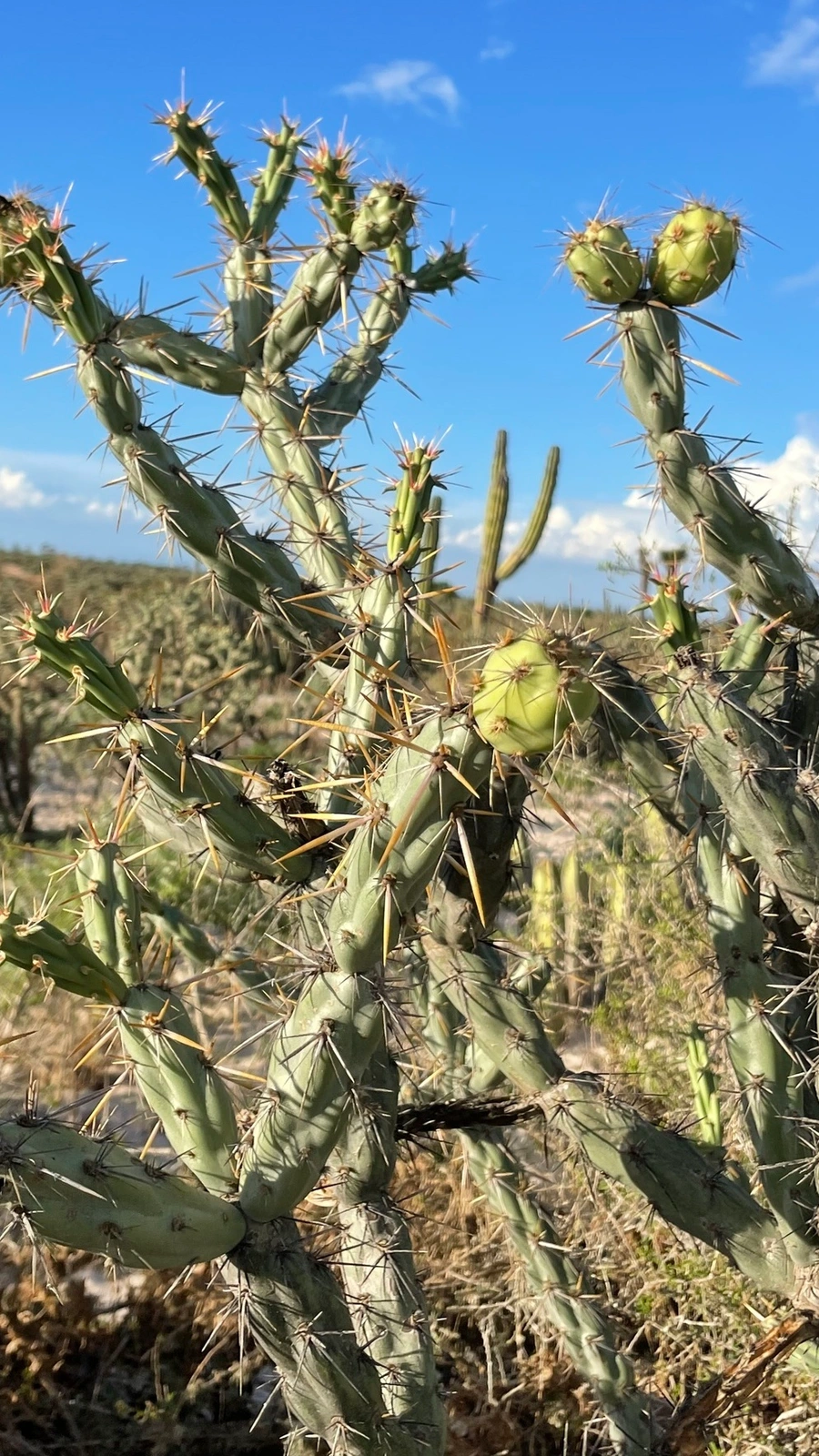 Reference image
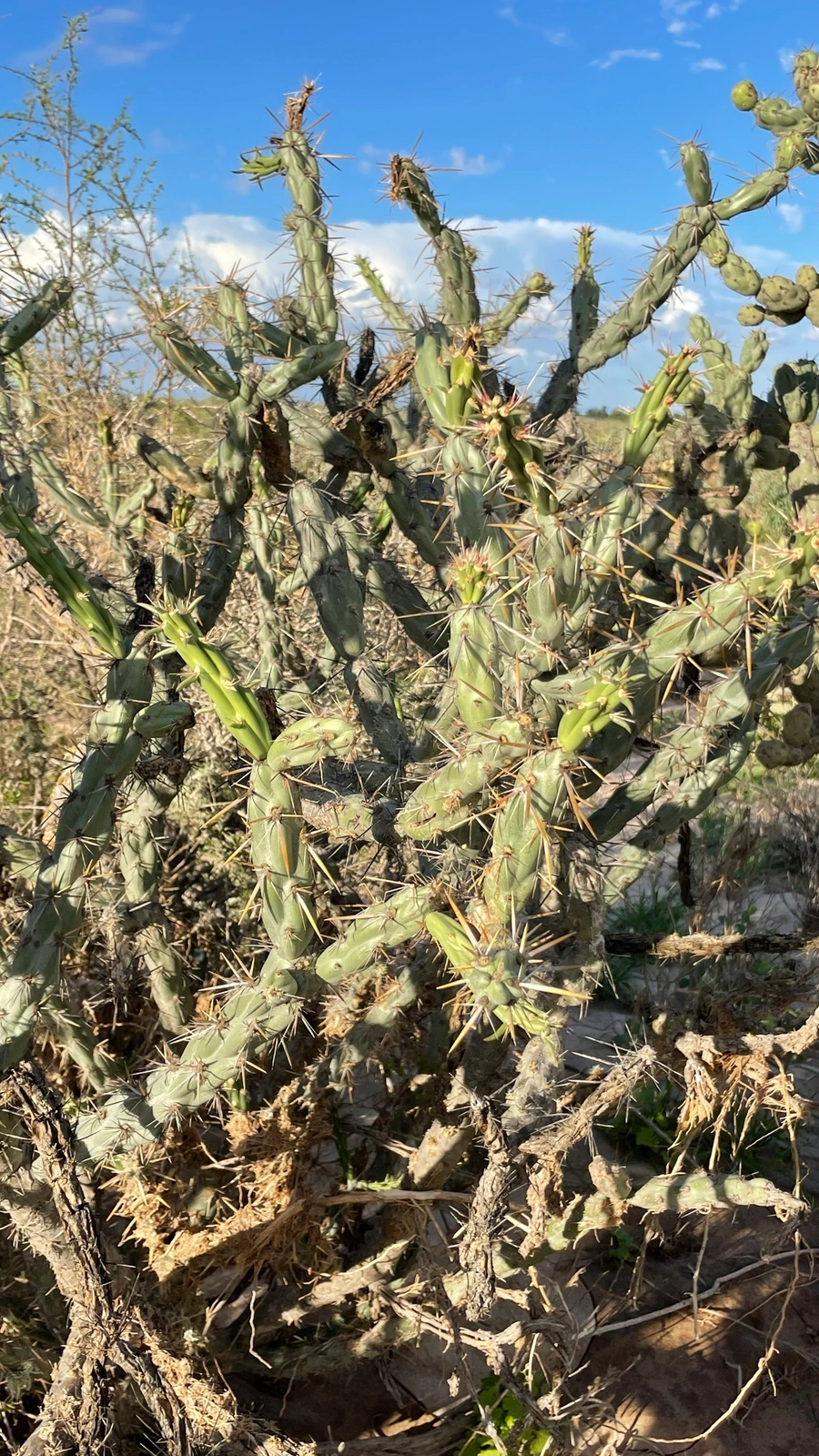 Reference image
Calmalli Cholla
Cylindropuntia calmalliana is a shrubby, succulent cactus species belonging to the family Cactaceae. Commonly referred to as a cholla, this species is well-adapted to arid desert ecosystems and is characterized by its cylindrical, jointed stems and defensive spines 1.
The species epithet calmalliana refers to the historic mining area of Calmalli in Baja California, Mexico, where the plant was historically documented. The genus Cylindropuntia was segregated from Opuntia due to its cylindrical stem segments and the presence of paper-like sheaths covering the spines 2.
Native to northwestern Mexico, specifically the states of Baja California and parts of Sonora, this cactus thrives in desert scrub, gravelly slopes, and dry alluvial plains. It is highly resilient to intense solar radiation and prolonged drought conditions 1.
This succulent shrub features cylindrical, grayish-green jointed segments with prominent tubercles. The areoles bear sharp, defensive spines enclosed in papery sheaths that reflect sunlight. In late spring, it produces pale yellowish-green to bronze-toned flowers, followed by dry, spineless fruits.
In cultivation, Cylindropuntia calmalliana requires a location with full, direct sun and extremely well-draining soil. Watering should follow the 'soak and dry' method, allowing the medium to dry out completely between waterings. During winter, watering must be suspended almost entirely to prevent root rot.
The most frequent mistakes are overwatering and utilizing dense, clay-heavy soils. Poor light conditions indoors lead to etiolation, where the stems become weak, thin, and pale as they stretch toward light.
Requires full, direct sun; insufficient light causes weak, leggy growth.
Water thoroughly only when soil is bone dry; keep dry during winter.
Use highly porous mineral soil with plenty of coarse sand and pumice.
Spines have microscopic barbs that easily attach to skin and fur; keep away from pets.
Very easy to maintain if provided with maximum sunlight and zero overwatering.
Native to the arid desert regions and dry shrublands of the Baja California peninsula and surrounding areas in northwestern Mexico.
