
Light
Full Sun
Requires full sun, ideally 6 to 8 hours of direct sunlight daily for robust spine development.
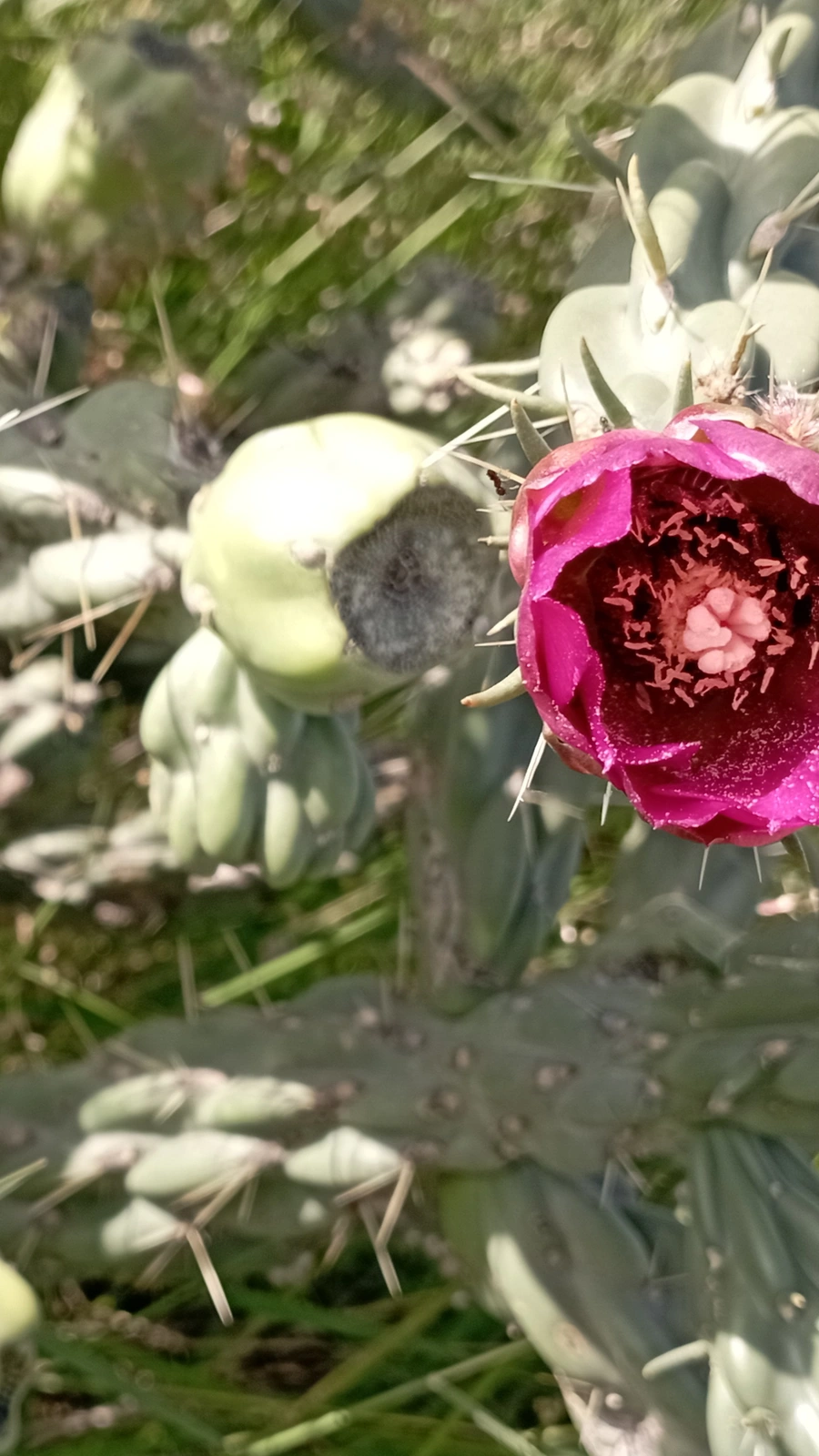 Reference image
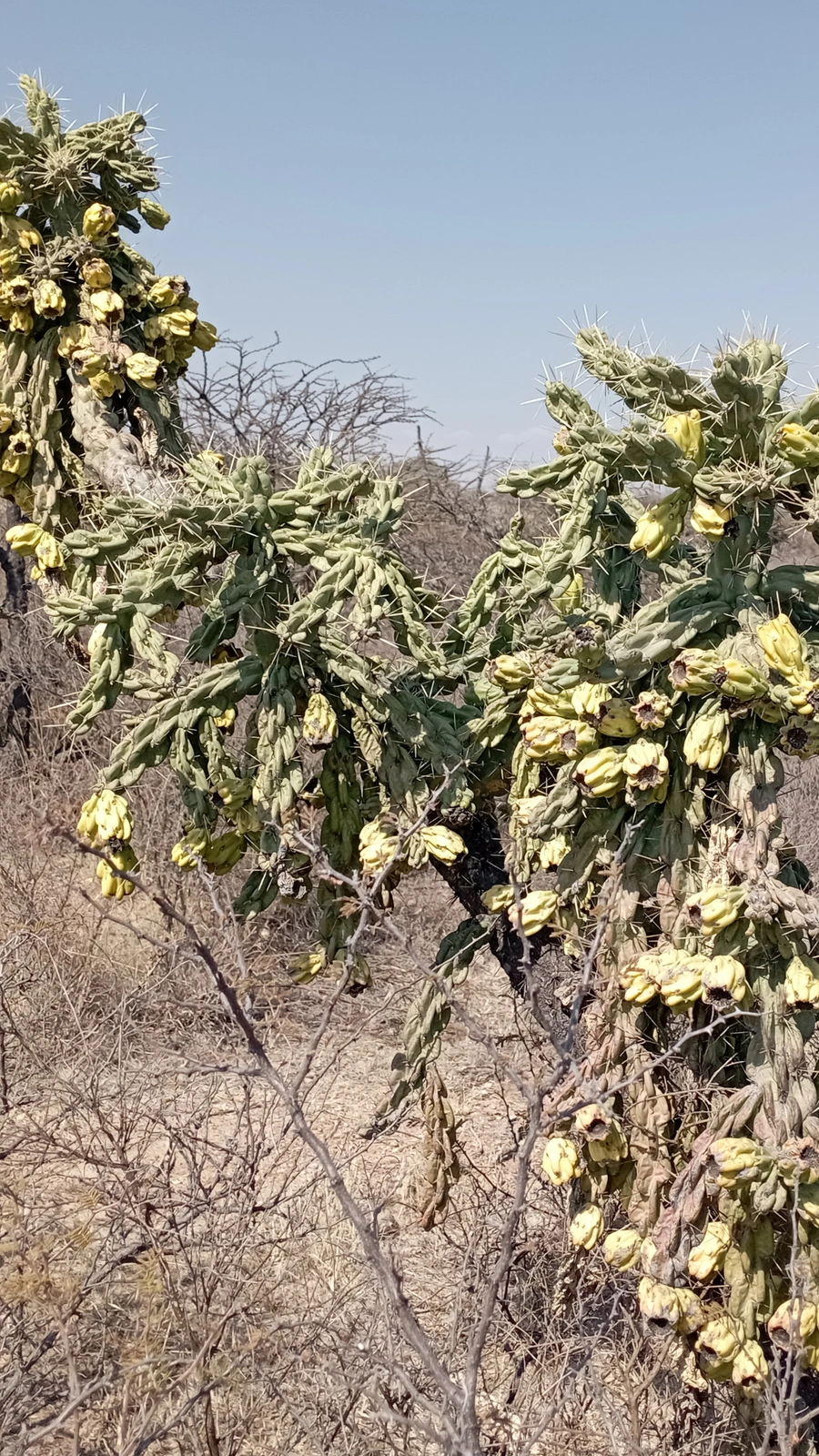 Reference image
Cardenche Cholla
Cylindropuntia × cardenche is a natural hybrid cactus within the family Cactaceae, highly adapted to arid and semi-arid desert environments 1. Growing as a succulent shrub, this plant is recognized for its sculptural form and dense covering of papery-sheathed spines.
This taxon is recognized as a natural hybrid, likely resulting from the cross between Cylindropuntia imbricata and Cylindropuntia tunicata 2. It is commonly referred to as 'cardenche' in its native region, referencing its heavily spined, jointed stems.
Its native range is concentrated in Mexico, spanning northern and central regions including Aguascalientes, Coahuila, Durango, Guanajuato, Hidalgo, Nuevo León, San Luis Potosí, and Tamaulipas 1. It thrives in gravelly desert plains, limestone hills, and dry shrublands of the Chihuahuan desert ecosystem.
This succulent shrub features cylindrical, jointed stems that are light green to grayish-green, covered in prominent tubercles. The aeroles produce stiff, needle-like spines enclosed in translucent, papery sheaths that reflect sunlight. Flowers typically range from yellowish-bronze to purplish 2.
In cultivation, it requires full sun exposure and extremely sharp drainage. Potting medium should consist largely of mineral substrates like pumice, coarse sand, and lava rock. Watering must be sparse, allowing the soil to dry out completely between sessions.
Overwatering and poor ventilation are the leading causes of root rot. Lack of sufficient direct sunlight leads to etiolation, weak stems, and loss of the characteristic dense spine development.
Requires full sun, ideally 6 to 8 hours of direct sunlight daily for robust spine development.
Water deeply but infrequently. Allow the substrate to dry out entirely between waterings.
Use a mineral-heavy, porous mix containing pumice, gravel, and minimal organic matter.
Armed with highly tenacious, sharp spines with papery sheaths. Keep away from pets and children.
Low maintenance once light and drainage needs are met, but handling requires extreme care.
Native to the arid regions of northern and central Mexico, where it populates limestone-rich desert soils and scrublands under intense sunlight.
