
Light
Full Sun
Requires full sun, ideally 6-8 hours of direct sunlight daily.
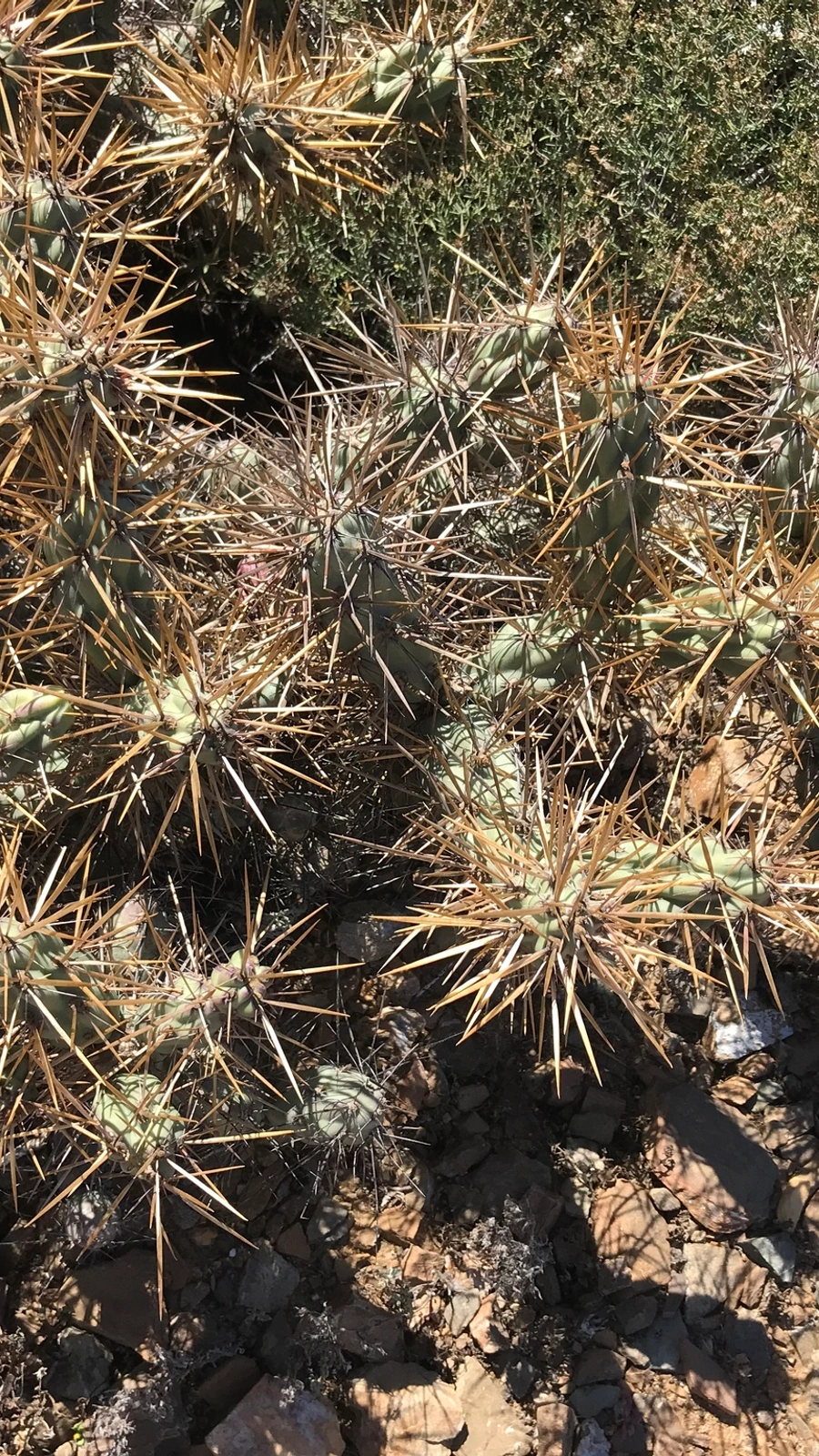 Reference image
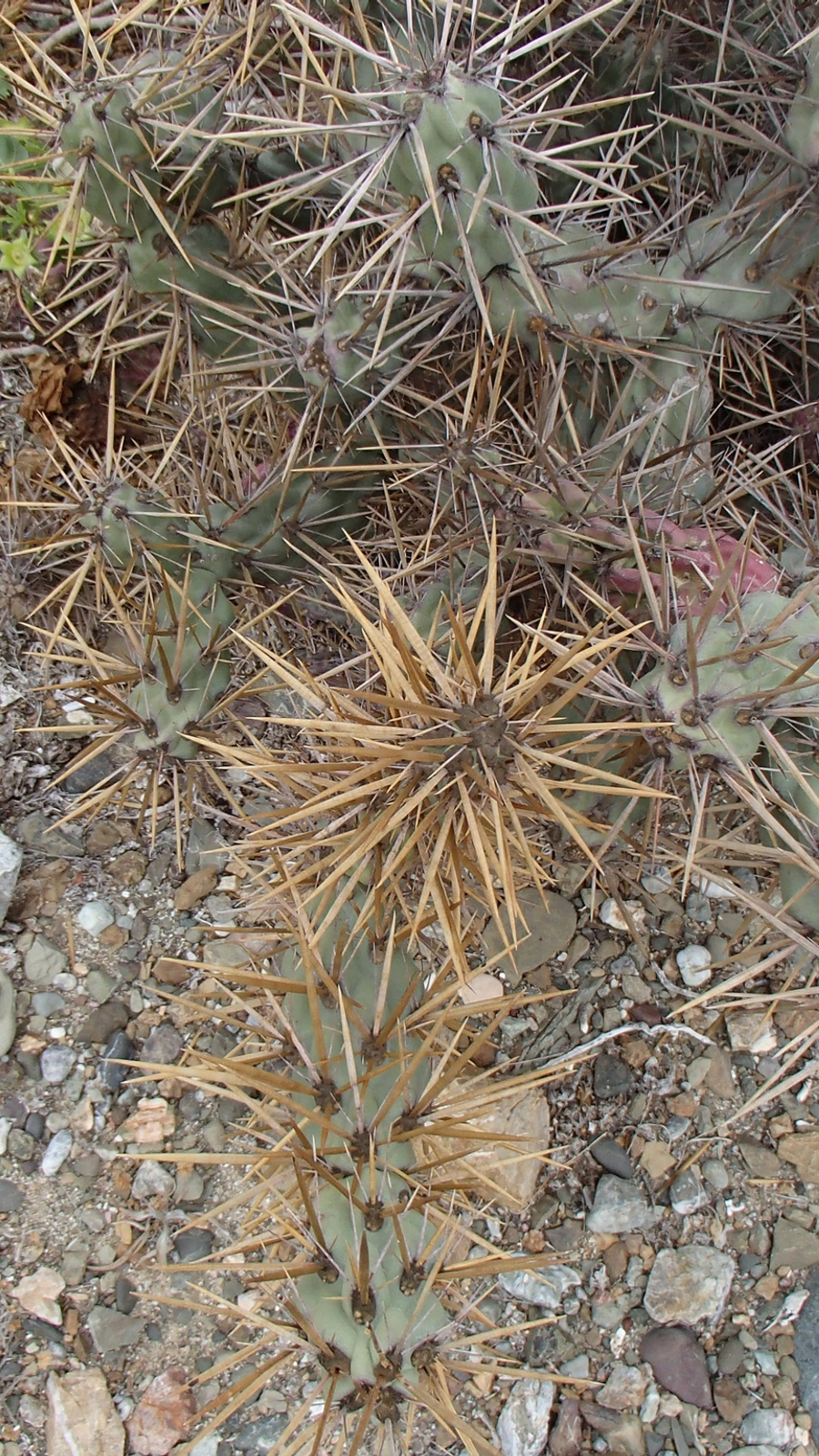 Reference image
Cedros Island Cholla
Cylindropuntia cedrosensis is a highly resilient, shrubby succulent cactus species within the Cactaceae family. Known for its heavily spined cylindrical joints, it is an exemplary extremophyte adapted to harsh desert environments.
The genus Cylindropuntia was historically grouped under Opuntia, but modern molecular phylogenetics recognized it as a distinct genus characterized by cylindrical stem segments and papery sheaths covering the spines 1. The specific epithet 'cedrosensis' denotes its primary native collection site on Cedros Island, Mexico.
This species is native to northwestern Mexico, including the state of Sonora, Baja California, and specifically Isla de Cedros 2. It thrives in hyper-arid desert scrublands, coastal sage scrubs, and rocky hillsides, where soils are highly mineralized, gravelly, and extremely well-draining.
Cylindropuntia cedrosensis exhibits a branching, shrubby growth habit with segmented, cylindrical stems covered in prominent tubercles. The spines are numerous, sharp, pale yellow to brownish, and enclosed in thin, papery sheaths that reflect intense desert sunlight. In spring, it produces attractive yellowish-green flowers at the stem tips, followed by spiny, dry fruits.
In cultivation, it requires absolute maximum solar exposure to maintain its compact growth form and strong spine density. It must be planted in gritty, nutrient-poor mineral soil. Watering should be highly restricted, following an 'infrequent but deep' cycle in summer and remaining dry in winter.
The most critical mistake is overwatering or utilizing organic-rich potting soils, which rapidly cause basal rot. Inadequate light exposure leads to weak, thin, and elongated stem segments (etiolation).
Requires full sun, ideally 6-8 hours of direct sunlight daily.
Water only when the soil is bone-dry. Suspend watering almost entirely in winter.
Extremely porous mineral mix rich in pumice, gravel, and coarse sand.
Not biochemically toxic, but its physical spines and micro-barbed glochids present a severe physical hazard to pets and children.
Moderate, requiring strict watering control and proper handling safety.
Endemic to the extremely arid, sun-drenched rocky hillsides and desert scrublands of Baja California and the associated islands of northwestern Mexico.
