
Light
Full Sun
Requires full, direct sunlight. Poor light causes weak, thin, and pale growth.
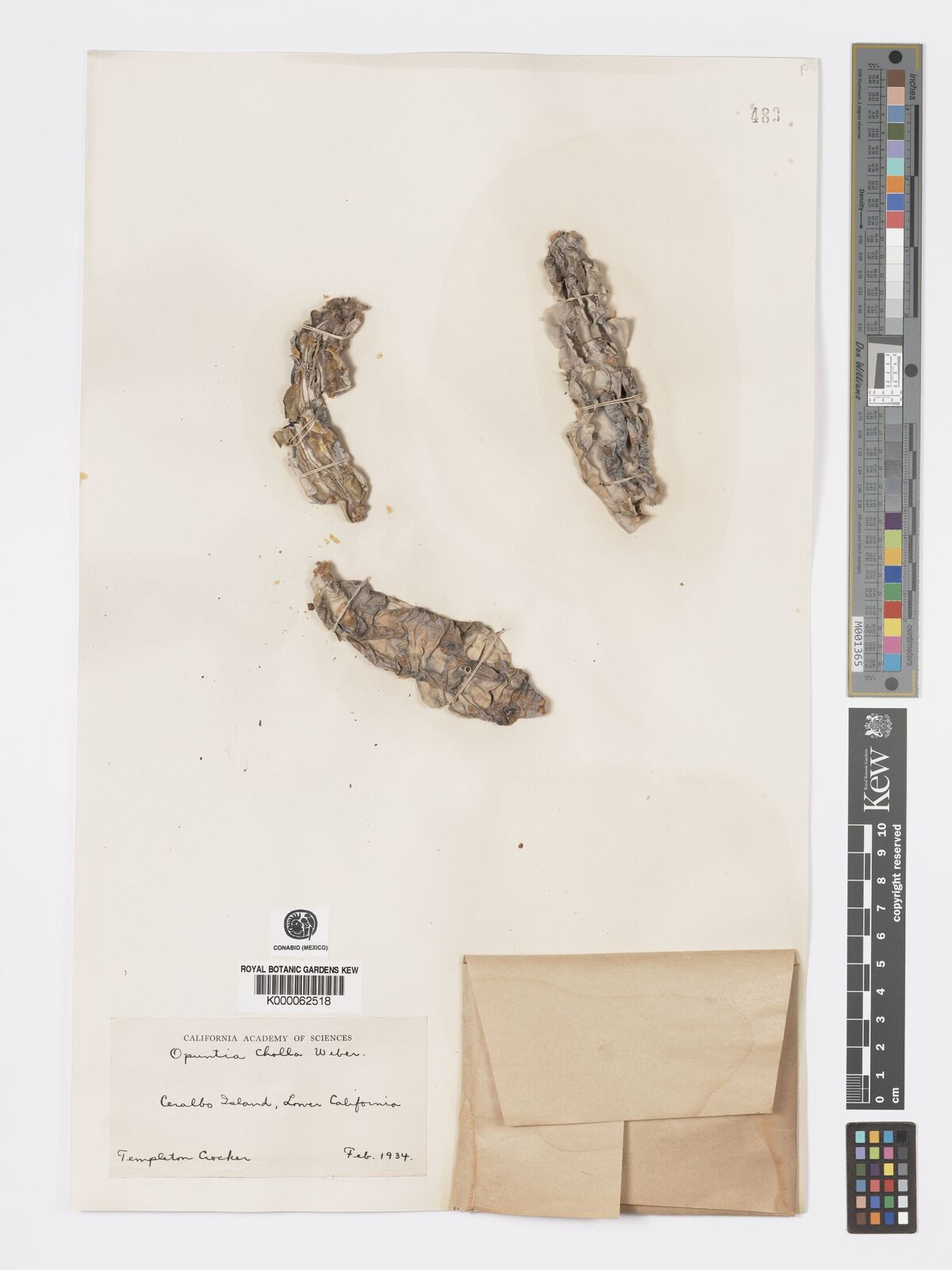 Reference image
Chain-link Cholla
Cylindropuntia cholla, commonly known as the chain-link cholla, is a robust, shrubby cactus species belonging to the family Cactaceae. Known for its heavily spined, segmented branches, this plant plays an essential ecological role in arid desert environments, providing nesting sites for desert birds and creating natural barriers 1.
Originally described as Opuntia cholla, it was later classified under the genus Cylindropuntia due to its cylindrical stem segments. The common name "cholla" is widely used in North America to describe various shrubby cacti with jointed, cylindrical stems 2.
This species is native to northwestern Mexico, particularly abundant throughout the Baja California peninsula and the state of Sonora 3. It thrives in dry shrublands, coastal plains, and rocky hillsides from sea level up to 1,200 meters, typically growing in sandy, gravelly, or limestone-rich soils 1.
Cylindropuntia cholla forms a highly branched, tree-like shrub reaching heights of 1 to 3 meters. Its gray-green stem segments are cylindrical, fleshy, and easily detached when touched. The joints are densely armed with sharp, sheathed spines measuring 1.5 to 3 cm in length. During late spring, the plant produces vibrant pink to magenta flowers at the tips of the branches. These are followed by green, spineless, often sterile fruits that remain on the plant, forming hanging chains over several seasons 2.
In cultivation, this plant requires minimal intervention. It demands full sun and exceptional soil drainage. Watering should be infrequent, following the soak-and-dry method, and virtually suspended during the cold winter months. It is highly drought-tolerant and adapted to poor, mineral-rich substrates.
The most frequent errors in growing chain-link cholla are overwatering and inadequate light exposure. Keeping the plant in a humid indoor environment or using dense, moisture-retaining soil will quickly cause root rot and stem collapse 3.
Requires full, direct sunlight. Poor light causes weak, thin, and pale growth.
Extremely drought-tolerant. Water sparingly in summer, and keep dry in winter.
Coarse, gritty, and fast-draining mineral mix with plenty of pumice and sand.
Caution: Barbed spines easily detach and hook into skin. Keep away from pets.
Low maintenance and highly resilient if kept dry and given sufficient sunlight.
Endemic to the arid regions of northwestern Mexico, specifically inhabiting coastal terraces, plains, and dry slopes of the Baja California peninsula and adjacent islands.
