
Light
Full Sun
Requires full, direct sun. Ideal for south-facing windows or hot outdoor balconies.
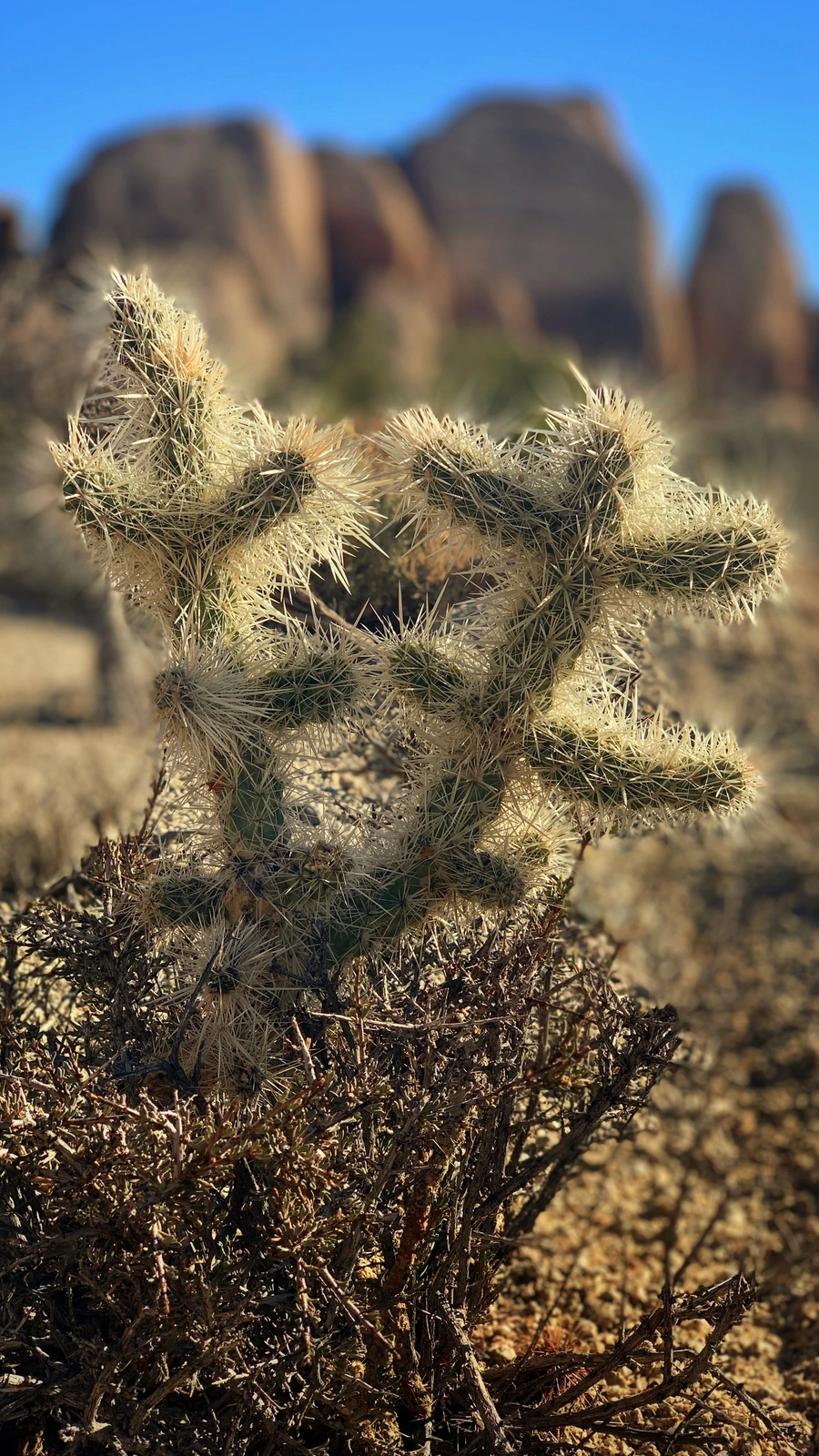 Reference image
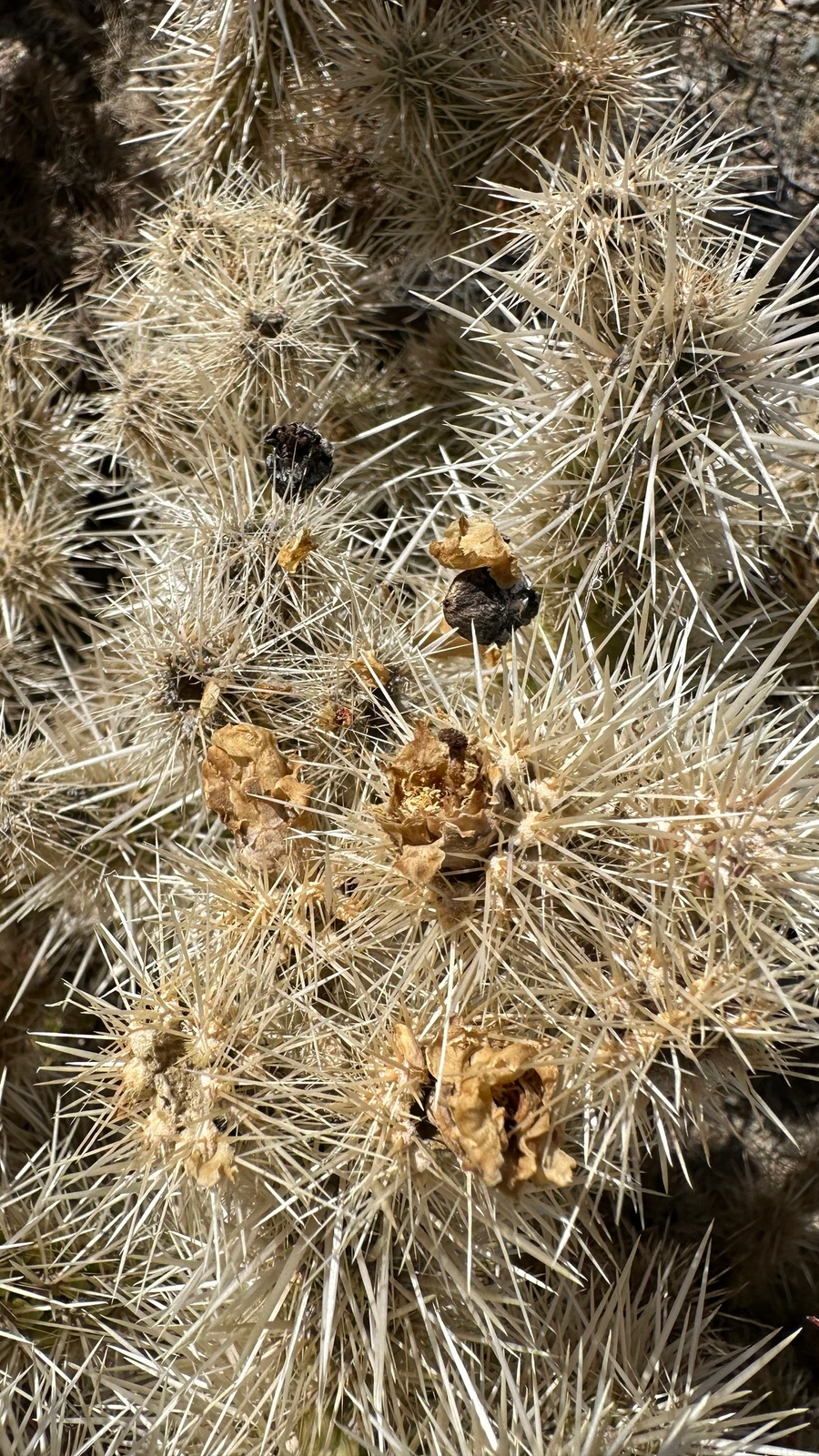 Reference image
Chuckwalla Cholla
Cylindropuntia chuckwallensis, commonly known as the Chuckwalla Cholla, is an upright, shrubby succulent cactus belonging to the Cactaceae family. This species is highly adapted to extreme arid desert environments, characterized by its heavily armed, segmented cylindrical stems.
The species is named after the Chuckwalla Mountains in southeastern California, where it is prominently found. The genus Cylindropuntia is distinguished from Opuntia by its cylindrical jointed stems and paper-like sheaths surrounding the spines. It was previously classified as a variant of C. echinocarpa before genetic and morphological studies established its status as a distinct species 1.
Cylindropuntia chuckwallensis is native to the Southwestern United States, particularly within the Mojave and Colorado deserts of California 2. It grows primarily in sandy plains, rocky slopes, and dry shrublands, thriving in nutrient-poor, highly mineralized soils under full sun exposure.
This cactus forms a densely branched shrub reaching heights of 1 to 1.5 meters. The stems are green to grey-green, made up of easily detached, cylindrical joints. The areoles bear formidable, sharp spines enclosed in pale yellow to tan papery sheaths. In late spring, it produces attractive greenish-yellow flowers, followed by dry, highly spiny fruits.
In cultivation, Cylindropuntia chuckwallensis requires maximum direct sunlight and an exceptionally well-draining substrate. Overwatering is the primary cause of decline; the soil must dry out completely between waterings. During winter dormancy, watering should be suspended almost entirely.
The most frequent mistakes include planting in rich, moisture-retaining soils or keeping the plant in shaded conditions. Insufficient light leads to etiolation, causing weak, elongated growth and a lack of spine development.
Requires full, direct sun. Ideal for south-facing windows or hot outdoor balconies.
Allow the soil to dry out completely between waterings. Reduce watering to almost zero in winter.
Use a specialized mineral-rich cactus mix with high proportions of pumice, perlite, and coarse sand.
Spines are extremely sharp, barbed, and easily detach. Keep out of reach of children and pets.
Very easy to care for, provided it receives enough sunlight and is not overwatered.
Native to the Mojave and Colorado Deserts of California and neighboring areas, where it grows in gravelly soils, rocky slopes, and desert washes. It is accustomed to intense heat, high UV radiation, and minimal rainfall.
