
Light
Full Sun
Requires full, direct sun all year round. Needs at least 6-8 hours of direct sunlight daily.
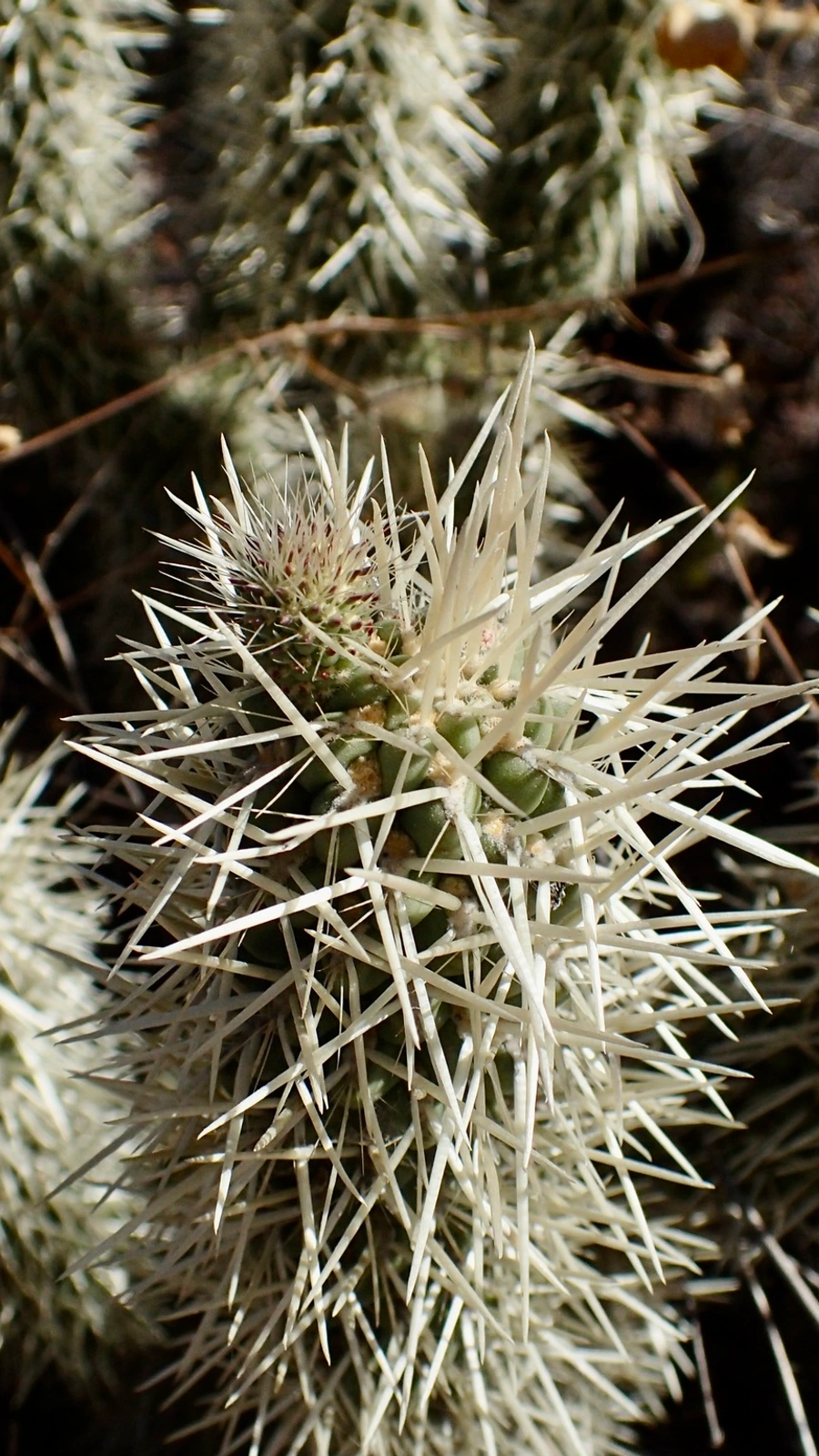 Reference image
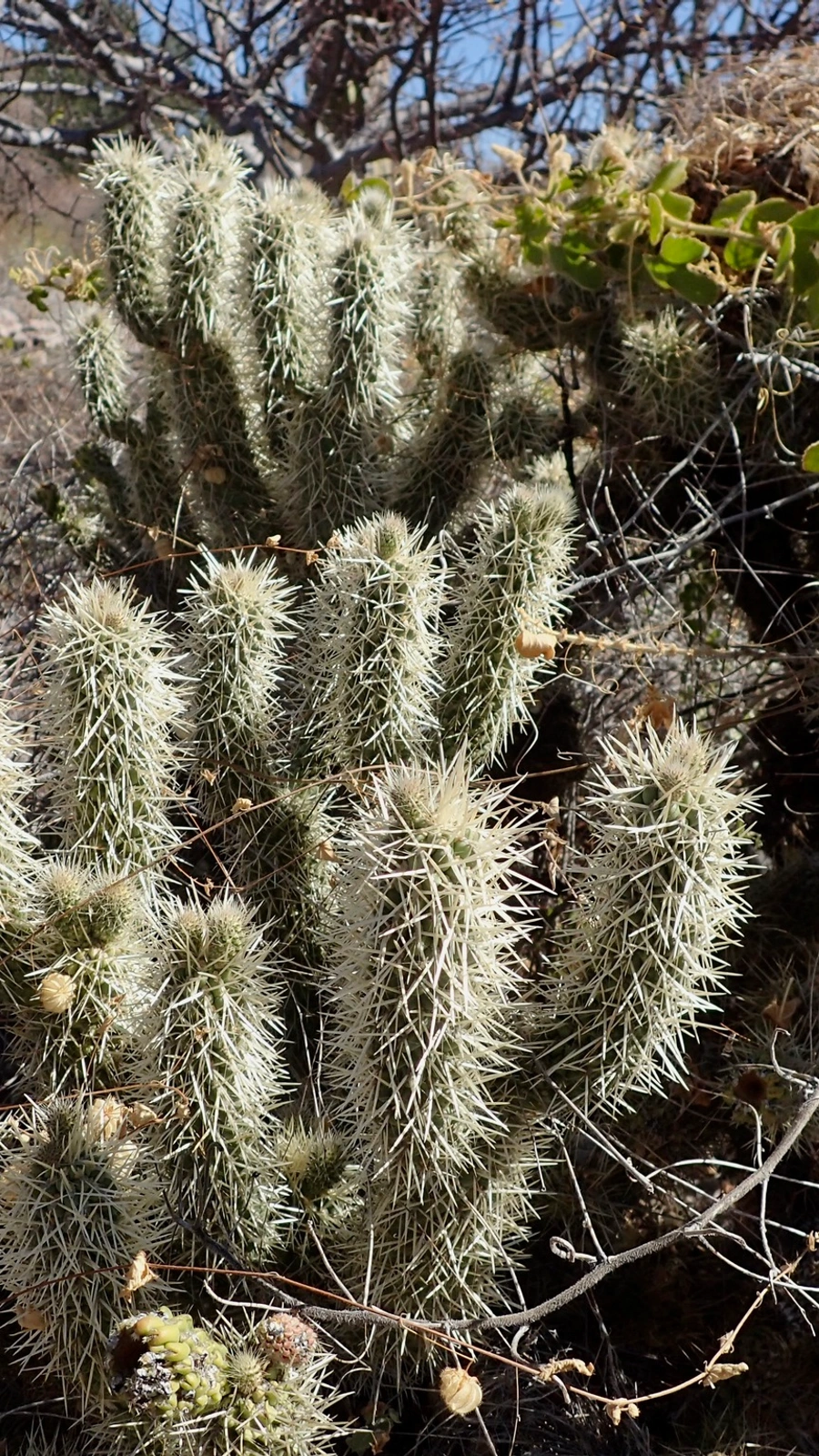 Reference image
Ciribe Cholla
Cylindropuntia ciribe, commonly known as the Ciribe Cholla, is a highly spiny, drought-tolerant succulent shrub belonging to the family Cactaceae 1. This species is remarkably adapted to survive in extreme desert environments with very little moisture.
Scientifically described within the genus Cylindropuntia, the species epithet "ciribe" derives from the indigenous vernacular name used in its native range 2. It is distinguished from common prickly pears by its cylindrical, jointed stem segments rather than flat pads.
This species is native to Mexico, specifically occurring in the Baja California peninsula and parts of the Sonoran Desert 1. It thrives in gravelly slopes, dry washes, and desert shrublands where soil nutrients are low but mineral drainage is high.
Cylindropuntia ciribe forms a heavily branched shrub reaching up to 1.5 meters in height. The cylindrical joints are grey-green with prominent tubercles. Its sharp, yellowish-brown spines are covered in papery sheaths that easily detach and hook into skin. Pale yellow-green flowers bloom in late spring 2.
In cultivation, it requires absolute full sun to maintain its compact growth form and bright spine coloration. The potting medium must be highly porous, containing high amounts of coarse sand, pumice, or gravel. Watering should be deep but infrequent.
The most critical error is overwatering, especially during winter dormancy, which leads to rapid root rot 1. Poor air circulation combined with high humidity and inadequate light exposure causes weakened stems and susceptibility to pests.
Requires full, direct sun all year round. Needs at least 6-8 hours of direct sunlight daily.
Water only when the substrate is completely bone-dry. Reduce watering to a minimum in winter.
Use a mineral-rich cactus mix with a high percentage of pumice, perlite, and coarse sand for rapid drainage.
Warning! Possesses extremely sharp, barbed spines that easily attach to skin and clothing. Keep away from pets and children.
Moderately easy if you avoid overwatering, but handling requires extreme caution due to the aggressive spines.
Native to the northwestern regions of Mexico, primarily found in the Baja California peninsula and the arid expanses of the Sonoran Desert. It is perfectly adapted to sandy, rocky soils and extremely high temperatures.
