
Light
Full Sun
Needs at least 6 hours of direct, intense sunlight daily. A south-facing outdoor area or greenhouse is ideal.
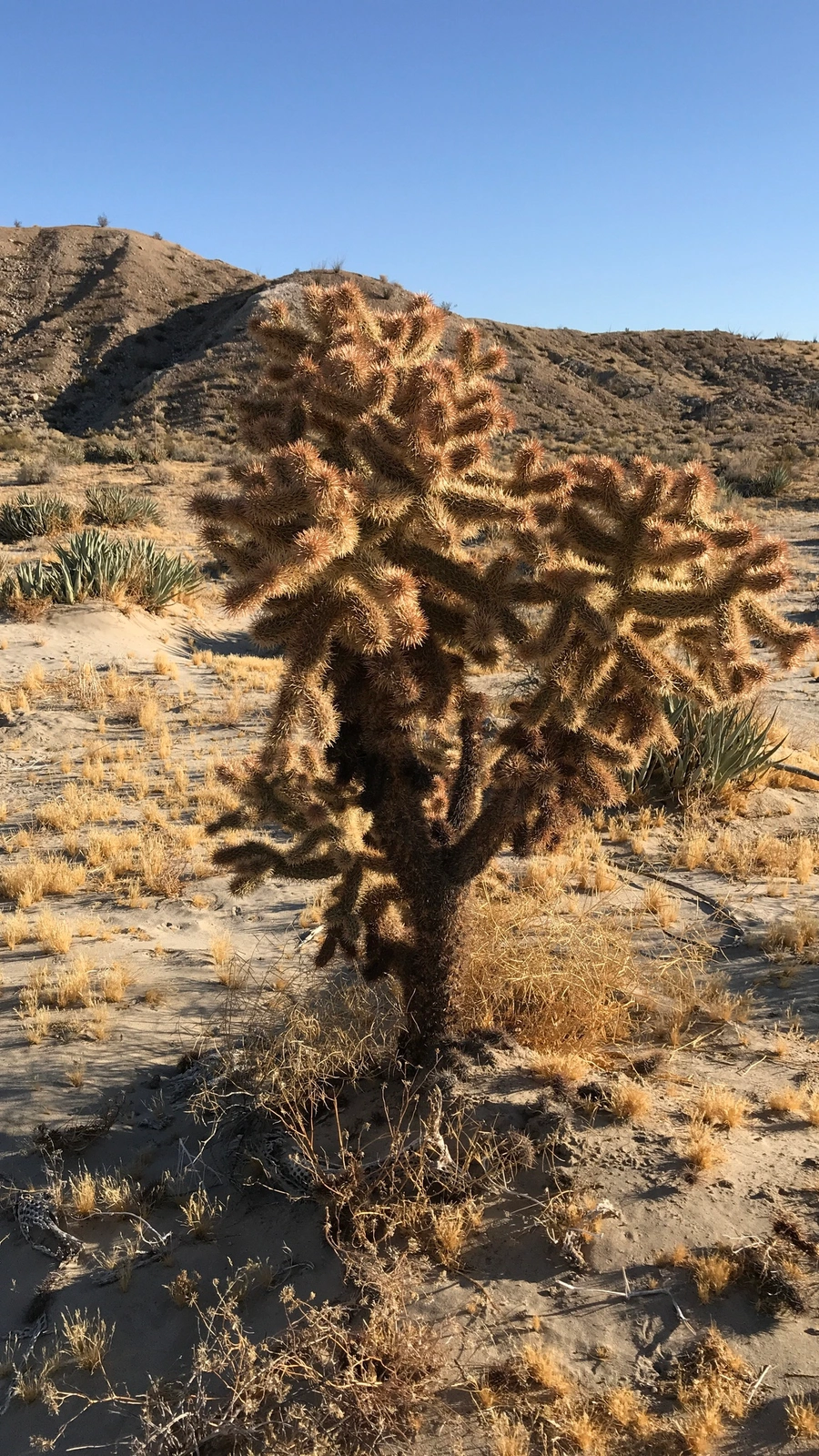 Reference image
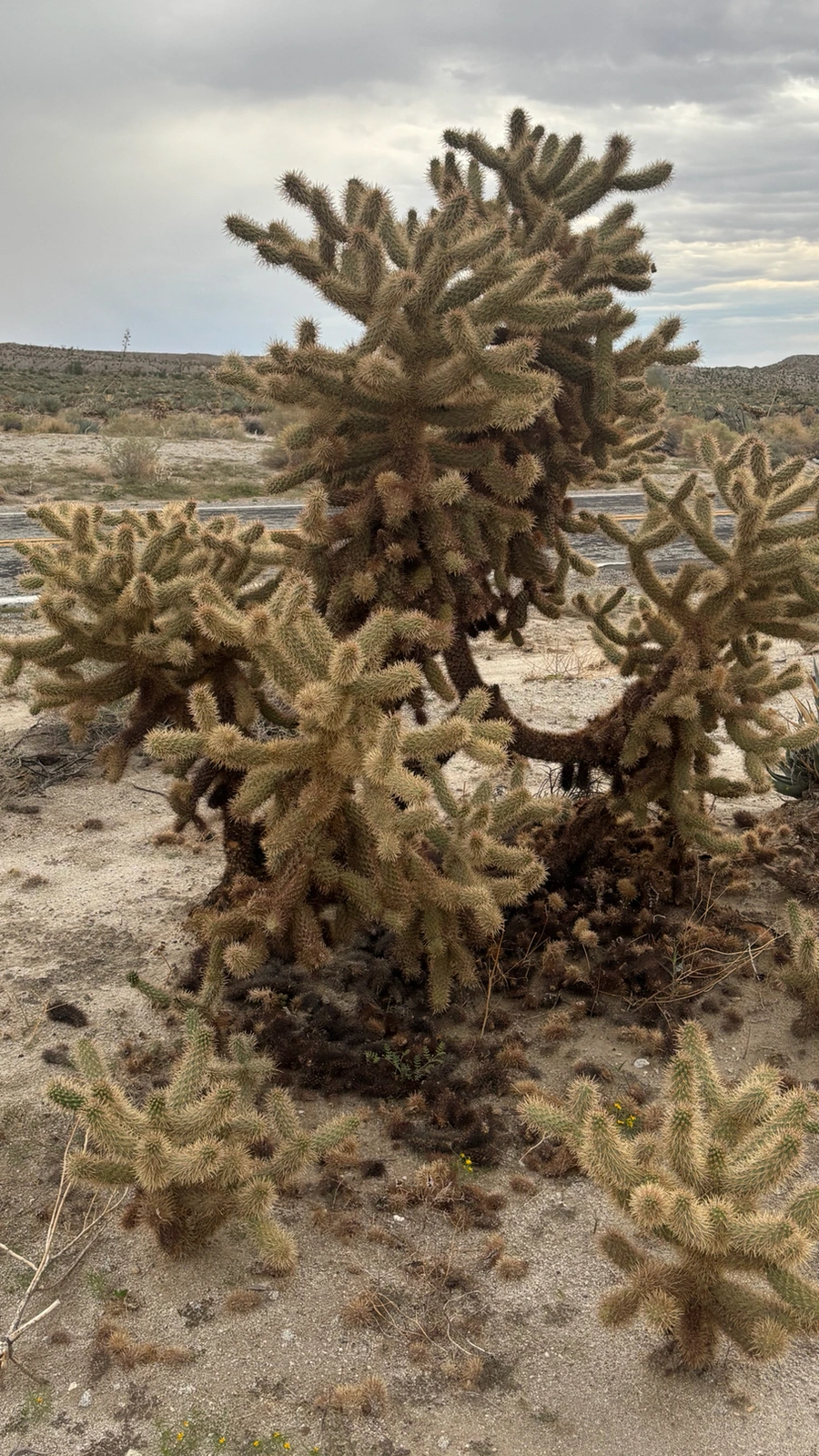 Reference image
Pinkflower Cholla
Cylindropuntia fosbergii, commonly known as the pinkflower cholla or Mason Valley cholla, is a rare and heavily spined succulent shrub belonging to the Cactaceae family 1. It is well-known for its striking, formidable appearance and extreme adaptation to arid desert environments.
Originally classified as a variety of Opuntia bigelovii, taxonomic updates established it as a distinct species within the genus Cylindropuntia 2. The specific epithet honors the prominent American botanist F. Raymond Fosberg.
This species is highly localized and endemic to southern California (particularly Mason Valley in San Diego County) and neighboring Baja California, Mexico 1. It thrives in dry gravelly slopes, alluvial washes, and desert shrublands.
It grows as a densely branched, tree-like shrub reaching heights of 1.5 to 2 meters. Its cylindrical, jointed stem segments are heavily armed with golden-brown to silvery barbed spines. In spring, it produces attractive pinkish to bronze-green flowers.
It requires full sun and extremely well-draining, gritty soil to prevent root issues. Watering should be highly restricted, following a "soak and dry" method during active growth and kept completely dry in winter.
The most frequent mistake is overwatering, which rapidly leads to root and stem rot 2. Inadequate light causes weak, spindly growth and loss of natural spine density.
Needs at least 6 hours of direct, intense sunlight daily. A south-facing outdoor area or greenhouse is ideal.
Water only when the substrate is bone dry. Cease watering during the cold winter dormancy.
Use a specialized mineral-rich cactus mix with plenty of pumice, perlite, and coarse sand.
Possesses dangerously barbed spines that cling easily to skin and fabric. Keep out of reach of pets and children.
Low-maintenance in terms of water, but high-risk to handle due to aggressive and painful spines.
Endemic to highly restricted desert zones including the Mason Valley in San Diego County and dry, gravelly hillsides extending into northern Baja California.
