
Light
Full Sun
Requires full sun, minimum 6 to 8 hours of direct sunlight daily. Indoors, it needs a strong grow light.
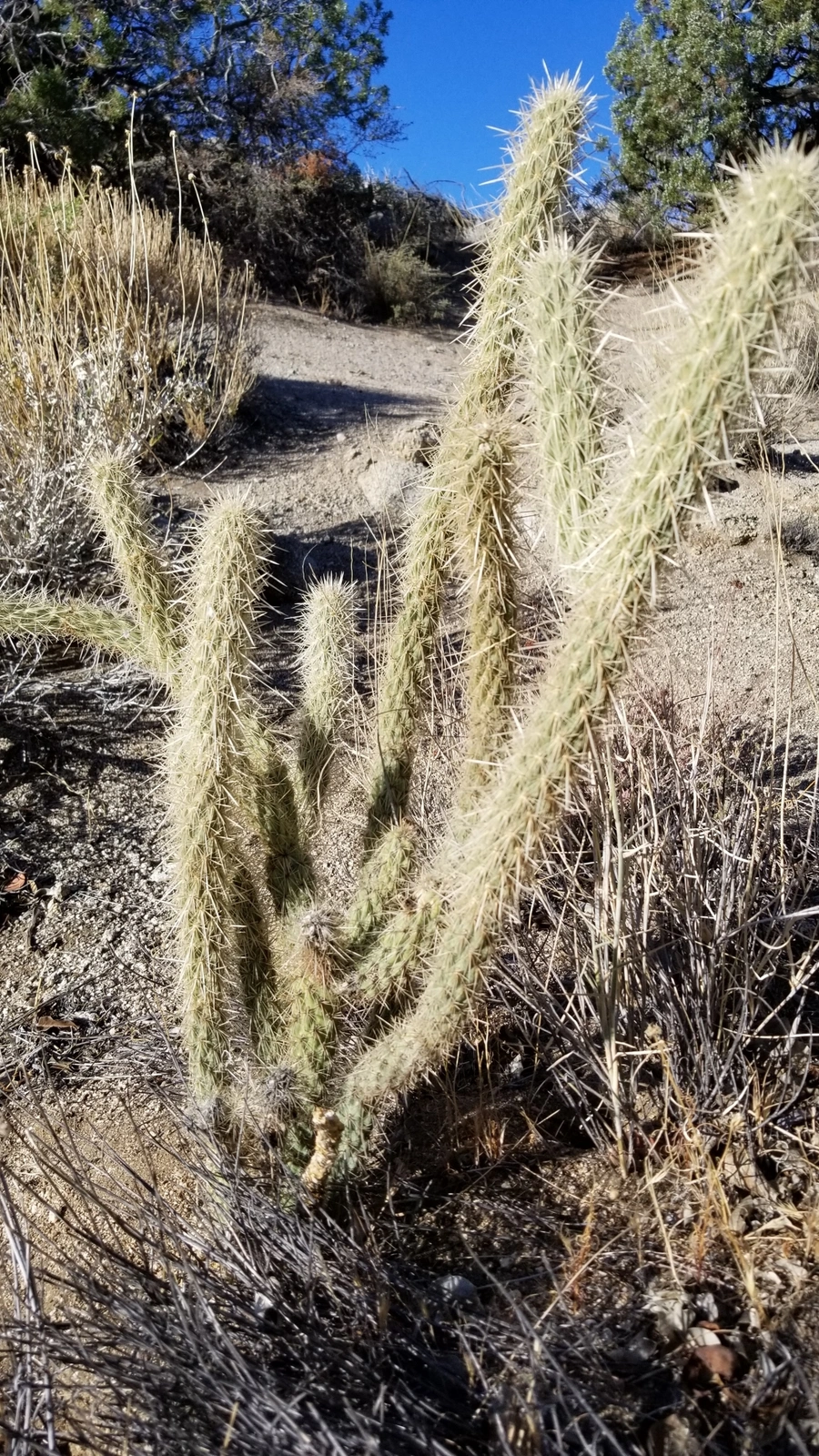 Reference image
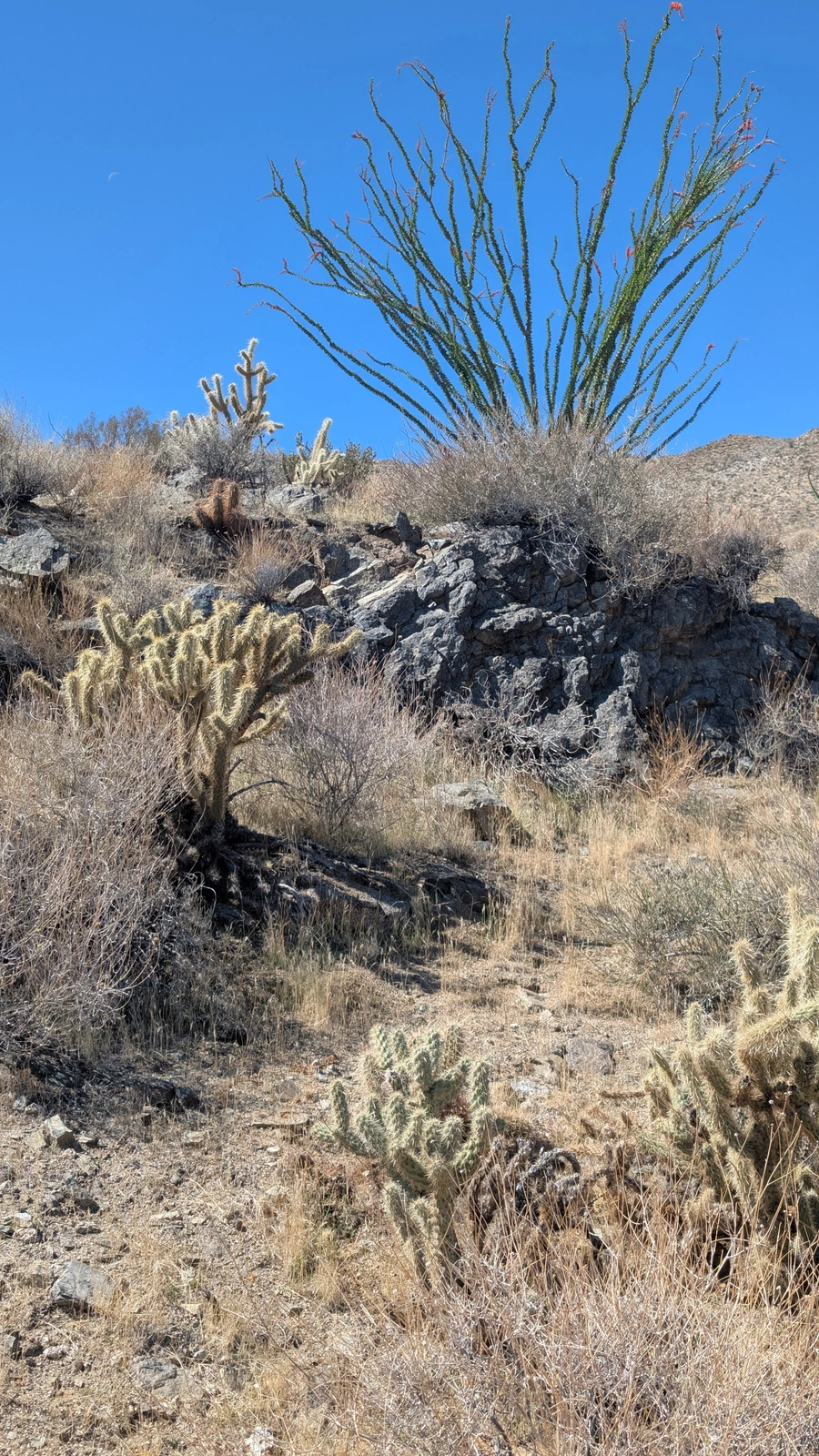 Reference image
Gander's Cholla
Cylindropuntia ganderi, commonly known as Gander's cholla, is a robust, spiny succulent shrub native to the desert biomes of western North America. It belongs to the Cactaceae family and is known for its intricate, branching cylindrical joints.
This species is classified under the genus Cylindropuntia 1. The specific epithet 'ganderi' honors the prominent California botanist Frank Gander, who extensively studied the flora of San Diego County. It was previously treated as a variety of Cylindropuntia acanthocarpa before being recognized as a distinct species 2.
Gander's cholla is native to Southern California (especially San Diego and Imperial counties), the Baja California Peninsula, and portions of Sonora, Mexico 1. It thrives in desert pavement, alluvial washes, dry rocky slopes, and desert scrub communities at elevations up to 1,000 meters above sea level.
The plant grows as a highly branched shrub reaching heights of 1 to 2 meters. Its green to yellow-green stem segments are cylindrical, covered in prominent tubercles. The areoles carry numerous stout, yellowish or white spines that turn gray with age, accompanied by irritating glochids. It produces yellowish-green to bronze-yellow cup-shaped flowers in late spring, followed by dry, spiny fruits.
In cultivation, it requires full sun, excellent drainage, and minimal watering. Due to its extreme spiness and large size, it is mostly suitable for outdoor xeriscaping or large containers in sunny, arid climates.
The most frequent mistakes are overwatering and planting in heavy, organic soil mixes. Wet feet, especially during the cold winter months, will quickly lead to root rot and plant death.
Requires full sun, minimum 6 to 8 hours of direct sunlight daily. Indoors, it needs a strong grow light.
Extremely drought-tolerant. Water sparingly in summer; keep completely dry in winter.
Use a mineral-heavy mix with coarse sand, pumice, and perlite. Avoid peat-rich soils.
Very hazardous. Armed with sharp spines and microscopic glochids that easily penetrate skin. Keep away from pets.
Moderate. Low maintenance regarding water, but highly challenging to handle or repot due to severe spines.
Indigenous to the arid regions of the Sonoran Desert, stretching from San Diego County down into Baja California and coastal northwestern Mexico.
