
Light
Full Sun
Requires full, direct sun. At least 6 hours of daily sunlight is necessary for robust spine and flower development.
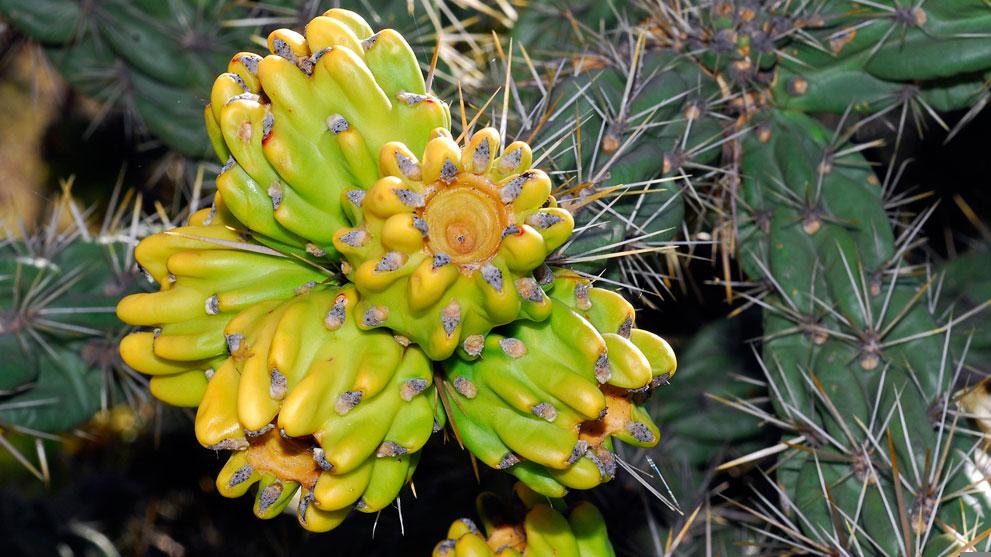 Reference image
Tree Cholla
Cylindropuntia imbricata, commonly known as tree cholla, cane cholla, or walking stick cholla, is a robust, tree-like succulent shrub belonging to the cactus family (Cactaceae). It is highly appreciated in xeriscaping for its dramatic architectural form, severe armaments, and vibrant summer blossoms 1.
Originally described under the genus Cereus as Cereus imbricatus, it was later reassigned to Cylindropuntia due to its cylindrical jointed stems. The specific epithet "imbricata" refers to the overlapping appearance of the prominent tubercles on its stem segments 2.
This species is native to the southwestern United States (including Texas, New Mexico, Colorado, and Oklahoma) and northern to central Mexico. It thrives in desert grasslands, dry shrublands, and rocky slopes at elevations ranging from 1,200 to 2,300 meters 1. It is well-adapted to high-desert environments with harsh winter freezing.
Growing 1 to 3 meters tall, it features a woody, arborescent trunk branching into cylindrical, gray-green segments. The stems are covered with prominent tubercles, each bearing sharp, barbed spines enclosed in papery, silver-yellow sheaths. In late spring and early summer, it produces showy, magenta to purple flowers, followed by bright yellow, persistent, cone-shaped fruits that remain through the winter 2.
Tree cholla requires full sun and extremely well-draining, gravelly soil. Water only when the soil is completely dry during the growing season, and withhold water during winter. It is exceptionally cold-hardy, surviving temperatures below -20°C if kept dry 1.
The most prevalent mistakes are overwatering and planting in heavy clay soils, both of which cause rapid root rot. Insufficient sunlight leads to weak, leggy growth and prevents the plant from flowering 2.
Requires full, direct sun. At least 6 hours of daily sunlight is necessary for robust spine and flower development.
Drought-tolerant. Allow the soil to dry out 100% between waterings, and keep completely dry in winter.
Use a mineral-heavy mix with coarse sand, gravel, and pumice. Avoid rich organic compost.
Extremely sharp, barbed spines. Keep away from pets, children, and high-traffic pathways.
Very easy to grow, but handling requires extreme caution due to physical hazards.
Indigenous to the high-elevation deserts and arid grasslands of New Mexico, Colorado, Texas, and Northern Mexico. It is exceptionally adapted to both extreme heat and intense winter freezes.
