
Light
Full Sun
Requires full sun. At least 6 hours of direct sunlight daily is essential for healthy growth.
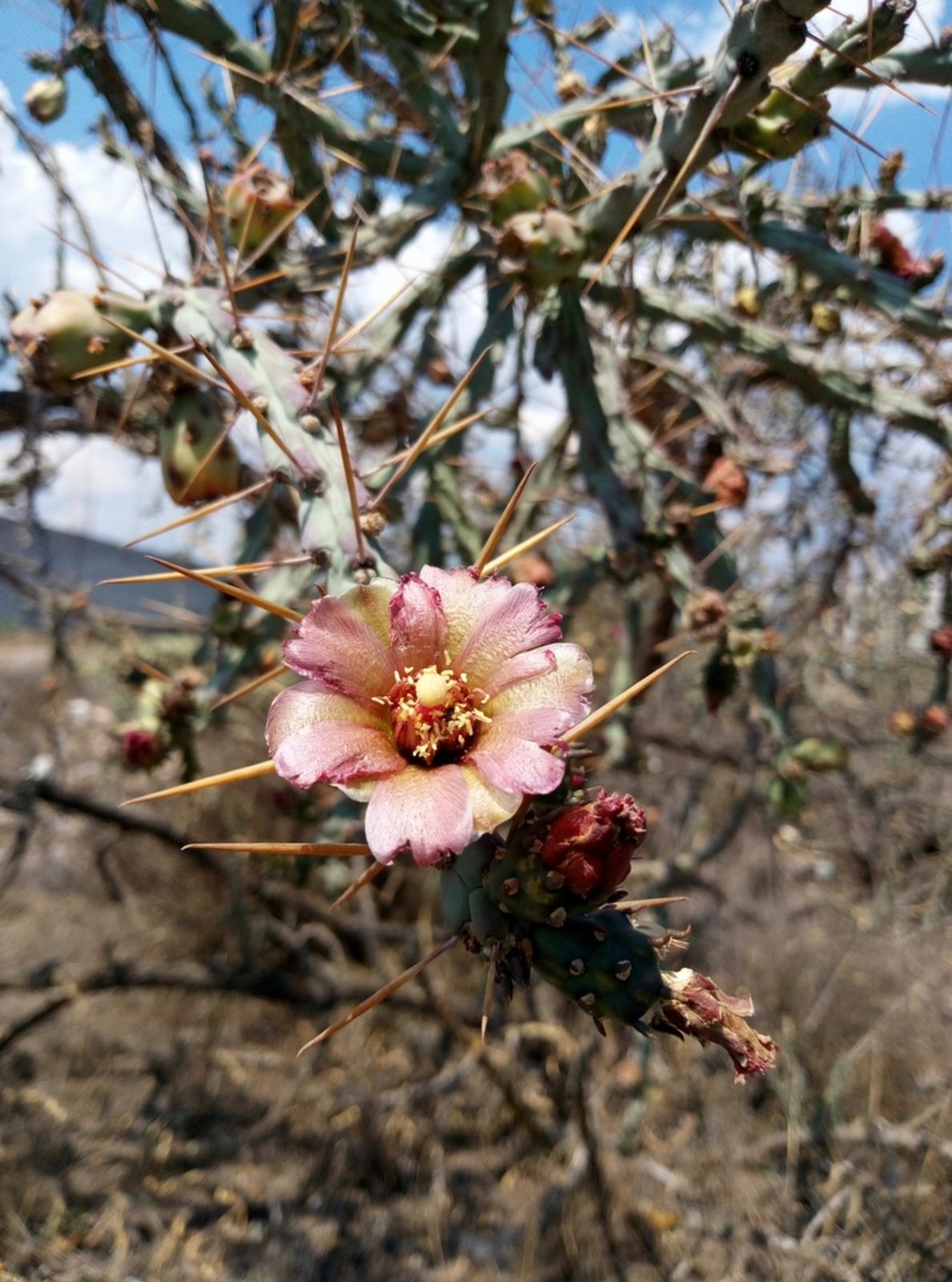 Reference image
Klein's Pencil Cholla
Cylindropuntia kleiniae, commonly known as Klein's pencil cholla, is a shrubby, cylindrical cactus belonging to the family Cactaceae. It is celebrated for its slender stems and remarkable drought tolerance 1.
Originally described under the genus Opuntia as Opuntia kleiniae, modern taxonomic consensus places it in Cylindropuntia due to its cylindrical jointed stems. The specific epithet honors Jakob Theodor Klein, a German botanist 2.
Its native range extends across northern and central Mexico into the southwestern United States, primarily Texas and New Mexico 1. It thrives in desert grasslands, dry shrublands, and limestone hillsides, often growing alongside other desert scrub species.
This succulent shrub features thin, cylindrical, jointed segments that are grayish-green, sometimes tinged with purple under drought or cold stress. The spines are covered with papery sheaths. In late spring, it produces beautiful bronze, greenish-purple, or reddish flowers, followed by smooth, reddish, fleshy fruits 2.
In cultivation, Cylindropuntia kleiniae requires full sun and exceptionally well-draining soil. It is highly cold-hardy compared to other succulents, making it suitable for xeriscaping in temperate zones with dry winters 1.
The most frequent issue is root rot caused by overwatering or compacted soil. Insufficient sunlight leads to etiolation, where stems grow weak, pale, and unusually thin 2.
Requires full sun. At least 6 hours of direct sunlight daily is essential for healthy growth.
Allow the potting mix to dry out completely before watering. Reduce to a minimum in winter.
Requires highly porous, gritty cactus soil rich in pumice, gravel, and coarse sand.
Features sharp spines and irritating glochids. Toxic and physically hazardous to pets and children.
Extremely easy for beginners, provided it is not overwatered and receives adequate light.
Native to the Chihuahuan desert regions spanning northern Mexico and the states of Texas and New Mexico in the United States, typically found in arid shrublands and gravelly slopes.
