
Light
Full Sun
Requires full sun and bright direct light to promote healthy branching and vibrant winter berries.
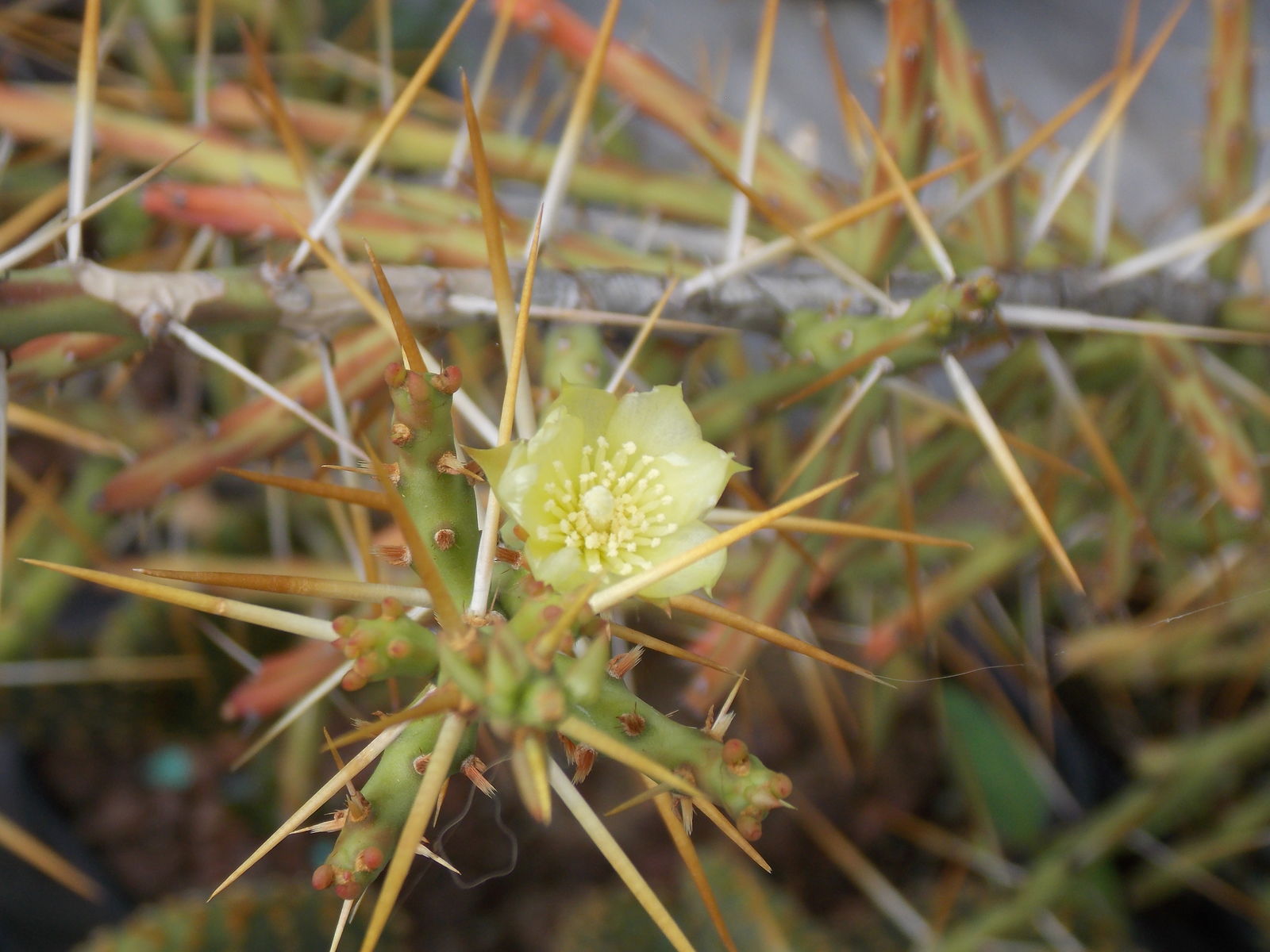 Reference image
Christmas Cholla
Cylindropuntia leptocaulis, commonly known as Christmas Cholla, Desert Christmas Cactus, or Pencil Cholla, is a perennial, shrubby cactus species belonging to the family Cactaceae. Known for its slender branches and vibrant red winter-ripening fruits, it is a striking ornamental plant in desert landscapes and arid collections 1.
This species was first described by George Engelmann in 1845 as Opuntia leptocaulis and was later moved to the genus Cylindropuntia due to its cylindrical stem structure. The specific epithet leptocaulis is derived from Greek, meaning 'slender-stemmed', referencing its pencil-thin branches 2.
Christmas Cholla is native to the Southwestern United States (Texas, New Mexico, Arizona, Oklahoma) and northern Mexico. It thrives in desert scrublands, grasslands, and limestone slopes from sea level up to 1,500 meters, often growing under nurse plants like mesquite 1.
This desert shrub can grow from 50 to 150 cm tall. Its highly branched stems are cylindrical, pale green to grayish-green, and only 3 to 6 mm in diameter. Spines are typically single per areole, yellowish, 2 to 5 cm long, and enclosed in paper-like sheaths. It produces small, greenish-yellow flowers in summer, followed by brilliant, fleshy red berries that persist throughout the winter 2.
In cultivation, Cylindropuntia leptocaulis is highly drought-tolerant and cold-hardy, surviving temperatures down to -12°C. It requires full sun and exceptionally well-draining, sandy-gritty soil. Watering should be infrequent, allowing the substrate to dry out completely between sessions.
Overwatering and poor drainage are the primary causes of root rot and plant decline. Insufficient sunlight results in weak, thin growth and a lack of flowers and fruit. Handling the plant without heavy gloves can lead to painful skin irritation due to the tiny, barbed glochids.
Requires full sun and bright direct light to promote healthy branching and vibrant winter berries.
Highly drought-tolerant; only water when the potting mix is dry to the bone.
Needs an extremely porous cactus mix with plenty of sand, pumice, and gravel.
Equipped with tiny barbed glochids that easily lodge in skin; keep away from children and pets.
Very low-maintenance, requiring minimal attention once established in a bright, sunny spot.
Native to the Chihuahuan and Sonoran desert systems, this species is typically found growing in dry sandy flats, gravelly plains, and rocky limestone slopes, where it has adapted to withstand extreme desert temperatures.
