
Cylindropuntia molesta

Molesta Cholla

Overview

Cylindropuntia molesta, commonly known as the Molesta Cholla, is a robust, shrubby succulent native to the desert ecosystems of northwestern Mexico. Known for its menacing and clinging spine structure, it is a resilient survivor in arid landscapes 1.

Taxonomy and Naming

Belonging to the Cactaceae family, this species was historically grouped under the genus Opuntia but was later reassigned to Cylindropuntia due to its cylindrical stem segments. The specific epithet molesta is derived from Latin, meaning 'troublesome' or 'annoying', directly referencing the painful, barbed spines that easily attach to passing animals and humans 2.

Distribution and Habitat

This species is primarily native to Mexico, particularly across the Baja California peninsula (both North and South) and portions of Sonora. It thrives in desert environments, rocky slopes, and sandy alluvial plains at elevations ranging from sea level up to 1,000 meters 1.

Appearance

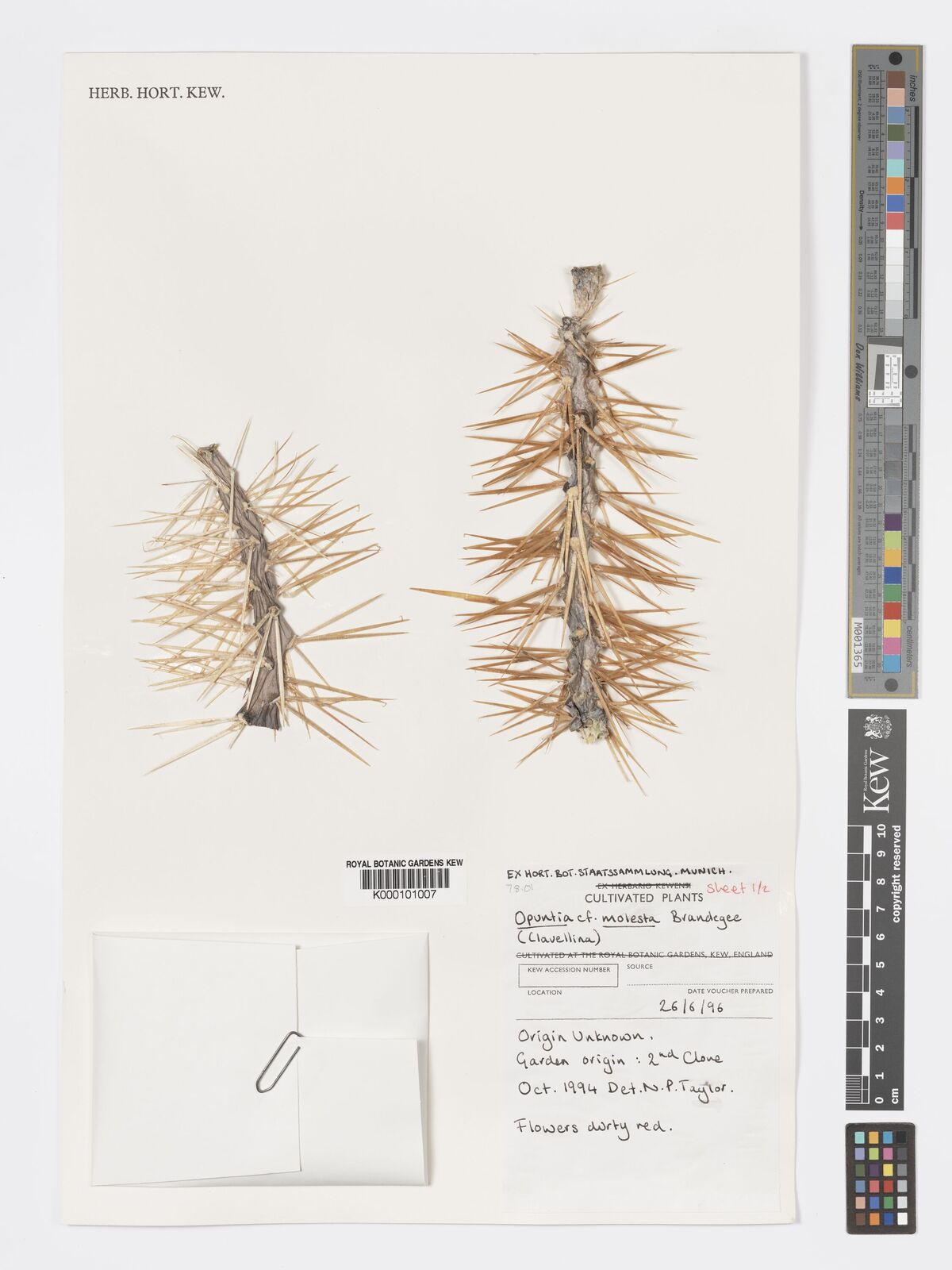
The Molesta Cholla grows as an erect, heavily branched shrub reaching heights of 1 to 2 meters. It features cylindrical, green to purplish-green stem joints that detach easily. The areoles bear fierce, sheathed spines ranging from silvery-white to tan. Its flowers appear in spring and summer, displaying shades of brownish-green, bronze, or dull yellow, followed by spiny, dry fruits 2.

Cultivation

In cultivation, it requires very little maintenance but demands careful handling. It prefers full sun and extremely well-draining, mineral-based soil. Water should be applied sparingly, with a strict dry period during winter months to prevent root rot 1.

Common Cultivation Mistakes

Overwatering and using organic-rich, heavy soils are the most common causes of failure. Insufficient light leads to weak, stretched joints (etiolation) that lose their structural integrity.

Bibliography

References

  1. Plants of the World Online (POWO), Kew Science. 'Cylindropuntia molesta'.
  2. International Plant Names Index (IPNI). 'Cylindropuntia molesta entry'.
Light

Full Sun

Requires full, direct sun for at least 6 hours daily to maintain stem rigidity.
Watering

14-35 Days

Water only when the substrate is completely dry. Keep dry in winter.

Soil

Well-drained, sandy and gravelly cactus mineral mix

Requires sharp-draining mineral soil with high pumice and sand content.

Safety

Contact/Ingestion Risk

Extremely sharp, barbed spines. Highly dangerous to pets and barefoot walkers.

Difficulty

Moderate

Easy to keep alive due to drought tolerance, but hard to repot due to nasty spines.

Native Habitat

Mexico (Baja California, Sonora)

Native to the arid desert plains and rocky, sunny slopes of Baja California and Sonora in Mexico.

Frequently Asked Questions

Is Molesta Cholla suitable for indoor home cultivation?
Due to its extremely sharp and painful barbed spines, it is not recommended for indoor homes with small children or pets. It is best grown in protected outdoor spots or sunny, restricted balconies.
How often should it be watered?
In summer, water only after the soil has completely dried out (about once every 10-14 days). In winter, almost entirely withhold water, providing a light drink once a month at most.
Is it frost hardy in winter?
It can tolerate light, brief frosts down to -5°C (23°F) if the soil is kept completely dry. In wet winter climates, it must be protected from freezing.
What is the best soil mix for this cactus?
It requires an extremely well-draining, mineral-heavy substrate. A mix of 70% pumice, lava rock, and coarse sand with 30% peat works perfectly.
Why are the spines of this cactus so painful?
The spines possess microscopic backward-pointing barbs. Once they penetrate the skin, they lock in place, making removal difficult and painful.
What should I do if the spines get stuck in my skin?
Use fine tweezers to pull out larger spines. For tiny, invisible glochids, apply sticky tape or white glue to the area, let it dry, and peel it off to remove them.
What is required for it to bloom?
Abundant direct sunlight during spring and summer, coupled with a cool, dry winter dormancy period, is essential to stimulate blooming.
When and how should repotting be done?
Repot every 2-3 years in early spring. Always wear thick leather gloves and use a rolled newspaper or tongs to handle the spiny stems safely.
Is it toxic to pets?
While not chemically toxic, it is mechanically highly dangerous. The barbed spines can cause severe injury to the mouths, paws, and eyes of cats and dogs.
Does it grow fast?
It has a moderate growth rate for a cactus. Under optimal sun and watering conditions, it will produce several new stem segments each year, forming a shrub.