
Cylindropuntia multigeniculata

Blue Diamond Cholla

Overview

Cylindropuntia multigeniculata, commonly known as the Blue Diamond Cholla, is a highly armored, succulent shrub belonging to the family Cactaceae. It is celebrated for its incredibly dense spination and exceptional resilience in extremely arid environments 1.

Taxonomy and Naming

Scientifically described within the genus Cylindropuntia, the specific epithet multigeniculata translates to 'many-jointed' or 'highly bent', referencing the heavily segmented and branching habit of the stems. It has previously been classified under the genus Opuntia 2.

Distribution and Habitat

This species is native to the Southwestern United States, particularly within southern Nevada (especially around the Blue Diamond Hills) and northwestern Arizona. It thrives on limestone outcrops, gravelly slopes, and desert washes of the Mojave Desert, typically at elevations between 900 and 1,500 meters 1.

Appearance

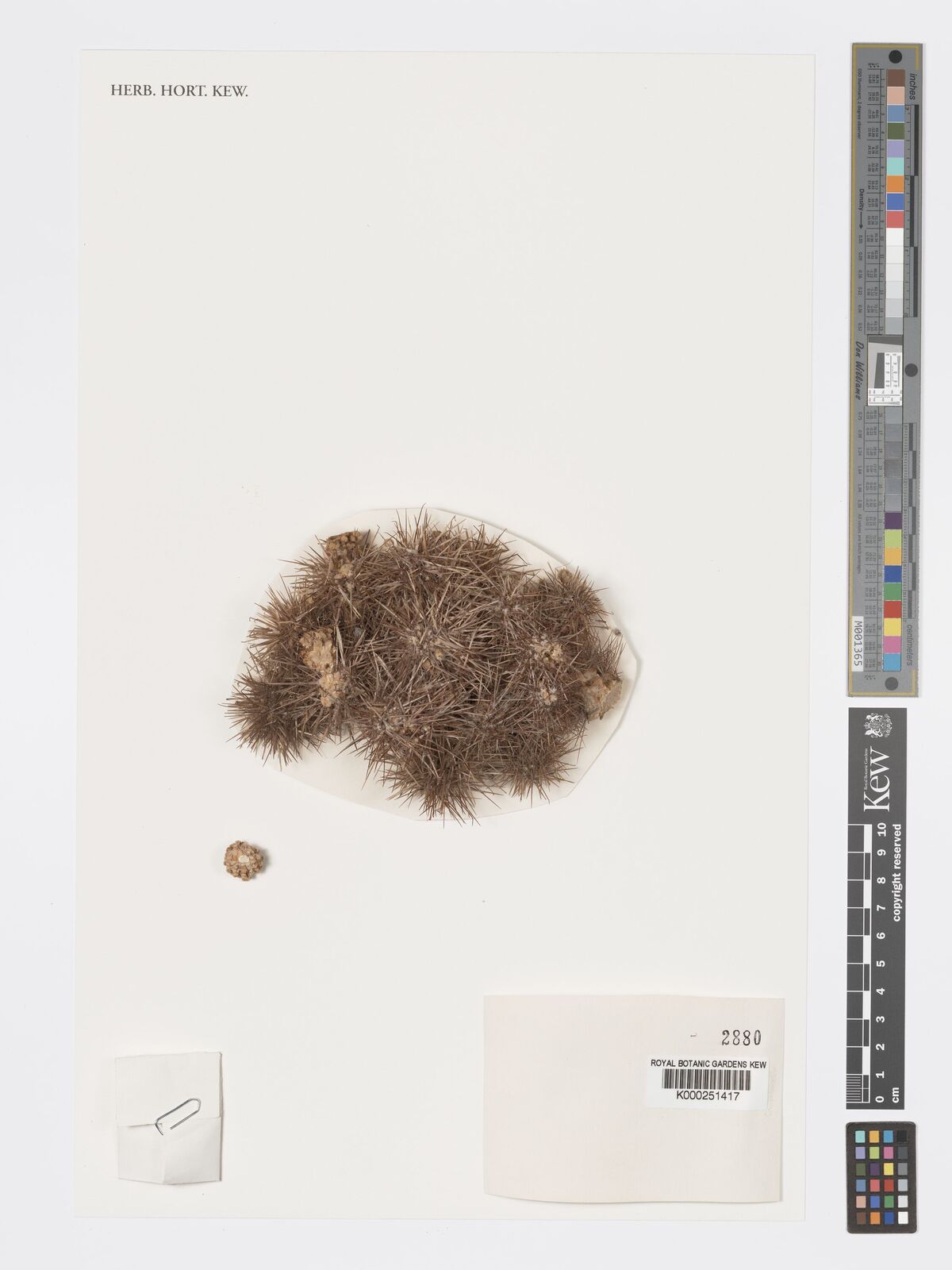
Cylindropuntia multigeniculata forms a densely branched shrub reaching up to 1.5 meters tall. The cylindrical segments are short, highly tuberculate, and completely obscured by a formidable armor of yellow to pale-gray spines. In late spring, it produces attractive greenish-yellow flowers at the tips of the stems, followed by dry, spiny fruits 2.

Cultivation

In cultivation, this plant requires absolute full sun and well-aerated, gritty mineral soil. It is remarkably cold-hardy if kept completely dry during winter. Watering should follow a soak-and-dry method during active growth.

Common Cultivation Mistakes

The most prevalent issue is waterlogging or using soils with high organic content, which inevitably triggers root rot 1. Insufficient sunlight will cause weak, etiolated growth and poor spine development.

References

  1. Plants of the World Online (POWO), Kew Royal Botanic Gardens.
  2. GBIF (Global Biodiversity Information Facility) Database.
Light

Full Sun

Requires full, direct sun for at least 6 to 8 hours daily to maintain spine density.
Watering

15-60 Days

Water deeply but infrequently, only when the substrate has dried out completely.

Soil

Well-draining, sandy and pumiceous cactus soil

Requires a gritty, mineral-heavy substrate with excellent drainage and minimal organic matter.

Safety

Contact/Ingestion Risk

Warning: Armed with highly sharp, barbed spines. Keep out of reach of children and pets.

Difficulty

Moderate

Very easy to grow regarding water needs, but handling the sharp spines is moderately difficult.

Native Habitat

Southwestern USA (Nevada, Arizona)

Native to the Mojave Desert, specifically found on limestone-rich hillsides, dry slopes, and gravelly washes in southern Nevada and parts of Arizona.

Frequently Asked Questions

Can Blue Diamond Cholla be grown indoors?
Yes, but it requires a very bright south- or west-facing window receiving at least 6 hours of direct sunlight. Insufficient light will cause weak, stretched growth (etiolation).
How often should I water my Blue Diamond Cholla?
Water roughly once every 15 days in summer, ensuring the soil is bone-dry between waterings. In winter, suspend watering almost completely, or give a tiny splash once a month.
What is the best soil for Blue Diamond Cholla?
A highly porous cactus mix containing pumice, perlite, coarse sand, and a minimal amount of peat is ideal. Heavy, clay-based soils that retain water will quickly rot the roots.
Is this cactus toxic to pets?
It is not chemically toxic, but its extremely sharp, barbed spines can cause severe physical injury to paws, mouths, or eyes of curious pets.
How fast does the Blue Diamond Cholla grow?
Being a desert-adapted species, its growth rate is very slow. It may only produce a few centimeters of new joint growth per year.
What precautions should I take when repotting?
Never touch it with bare hands. Use thick leather gardening gloves, and hold the plant with newspaper rolls or metal tongs to transfer it safely to its new pot.
Does the Blue Diamond Cholla bloom?
Yes, mature plants produce beautiful, cup-shaped, greenish-yellow flowers at the tips of the segments in late spring to early summer.
Is this plant cold-hardy in winter?
Yes, it is frost-tolerant down to about -10°C (14°F), provided the soil is kept absolutely dry. Cold combined with moisture is fatal.
The stem of my cactus is getting soft. What should I do?
Softening is a sign of root rot due to overwatering. Stop watering immediately, cut away any mushy parts with a sterile knife, and try to propagate healthy segments.
How can I propagate the Cholla cactus?
You can easily propagate it by detaching a stem segment in spring or summer, letting the cut end callously dry for a few days, and then planting it in sandy soil.