
Light
Full Sun
Requires full, direct sun to maintain spine density and healthy growth.
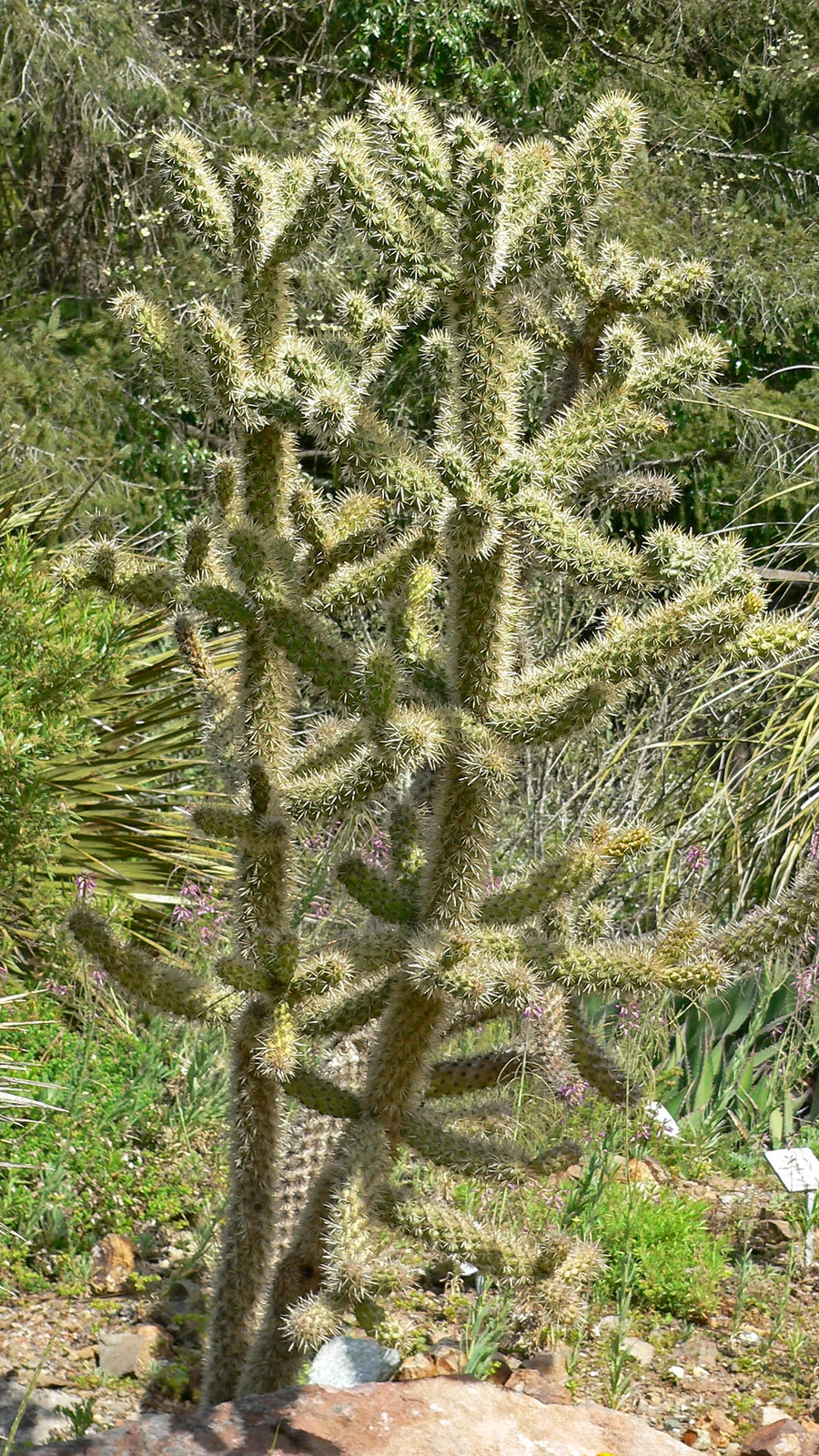 Reference image
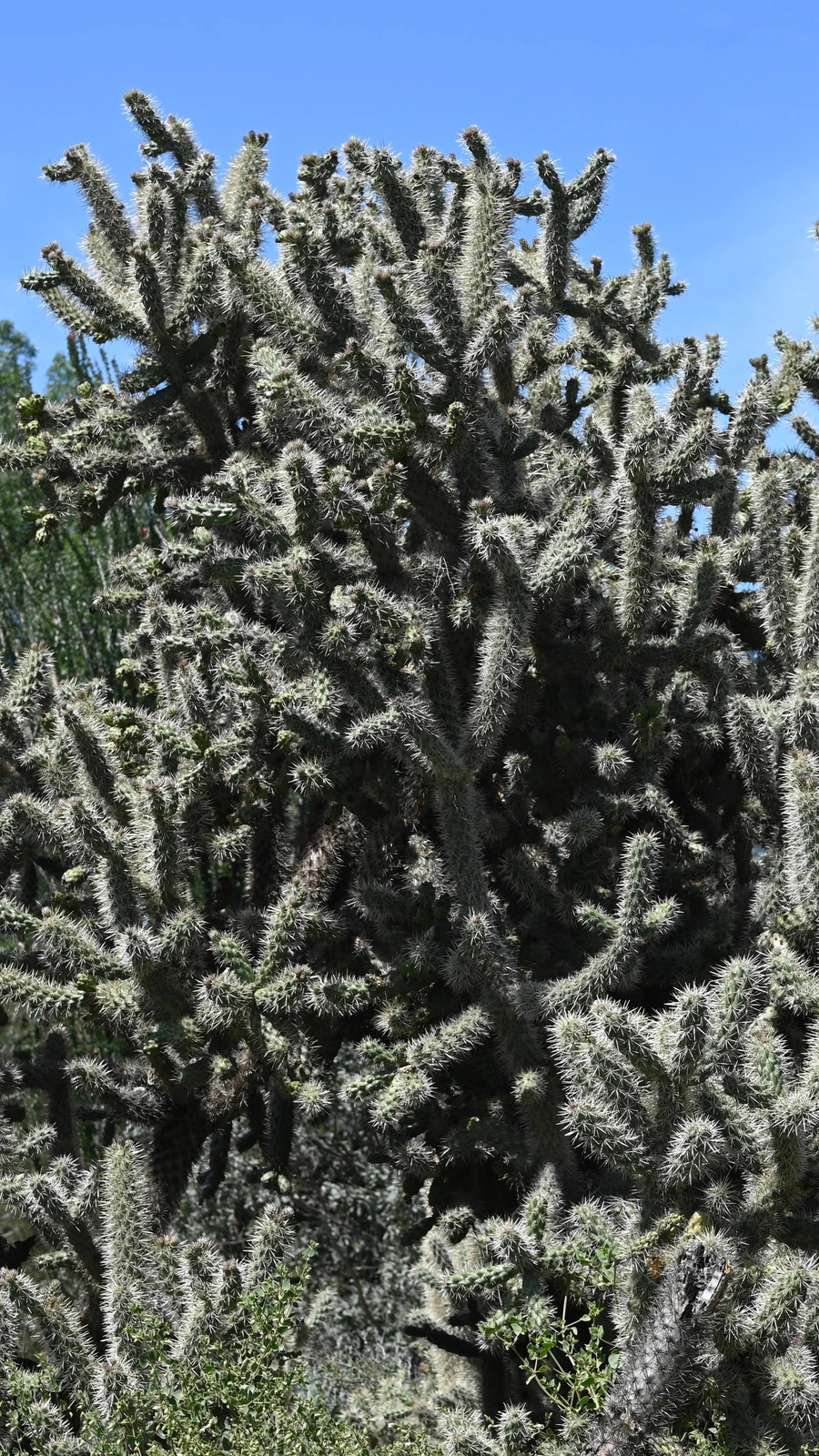 Reference image
Munz's Cholla
Cylindropuntia munzii, commonly known as Munz's cholla, is an impressive, heavily spined succulent shrub or small tree belonging to the Cactaceae family. Highly adapted to arid environments, it is appreciated in xeric landscaping for its sculptural form and shimmering spination 1.
The species epithet honors the prominent American botanist Philip A. Munz. The genus Cylindropuntia is distinct from Opuntia due to its cylindrical stem segments and the presence of papery sheaths covering the spines, a key diagnostic feature for identification 2.
This species is native to the southwestern United States and northwestern Mexico, particularly within the Colorado and Mojave deserts of Southern California and Baja California 1. It thrives on dry, rocky slopes, gravelly washes, and alluvial plains 2.
Cylindropuntia munzii forms a well-branched, tree-like structure reaching heights of 1.5 to 2.5 meters. Stems are composed of cylindrical joints densely armed with silver-to-tan spines. In late spring, it produces flowers ranging from greenish-yellow to bronze-red, which develop into dry, fleshy fruits 2.
In cultivation, it requires minimal intervention. Full sun is essential to preserve its dense spine density and overall vigor. Well-draining, mineral-rich gritty soils prevent moisture retention around the root system. Water thoroughly only when the soil medium has dried out completely.
The most prevalent mistakes are overwatering and low light exposure. Excessive moisture quickly leads to root rot. Insufficient sunlight results in weak, stretched stems (etiolation) and sparse, dull spines.
Requires full, direct sun to maintain spine density and healthy growth.
Allow soil to dry out completely. Reduce watering to zero in winter.
Requires extremely well-draining, gritty soil with low organic matter.
Spines are extremely sharp, barbed, and dangerous to touch; keep away from pets.
Moderate; very easy if kept dry and sunny, but unforgiving of wet roots.
Naturally distributed across the gravelly alluvial plains and dry mountain slopes of the Sonoran and Colorado deserts. It is perfectly adapted to survive in harsh, low-rainfall conditions and intense heat.
