
Light
Full Sun
Requires full sun. An outdoor southern exposure or a very bright greenhouse is essential for robust growth.
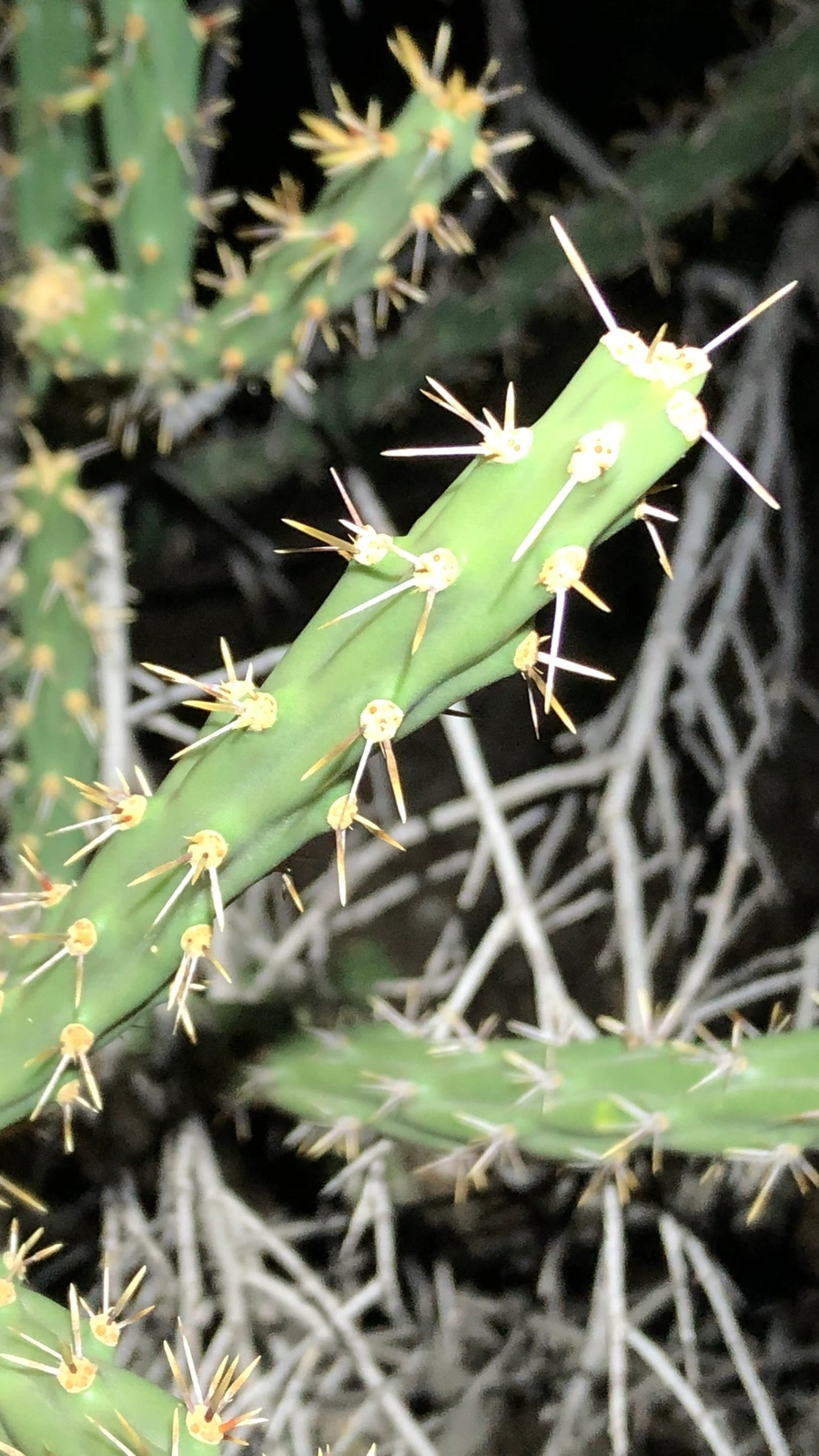 Reference image
Neoarbuscula Cholla
Cylindropuntia × neoarbuscula is a naturally occurring hybrid cholla cactus belonging to the Cactaceae family 1. Exhibiting a shrubby or subshrubby growth habit, this plant is well-adapted to extremely arid desert conditions and stands out with its densely spined cylindrical joints.
This hybrid taxon arises from the natural crossbreeding of Cylindropuntia arbuscula and Cylindropuntia spinosior 2. The genus name Cylindropuntia refers to the characteristic cylindrical joints, while the hybrid epithet neoarbuscula denotes its close morphological alliance and resemblance to one of its parental species.
It is native to the southwestern United States, primarily within Arizona, and extends into northern Mexico 1. It thrives in dry desert shrublands, rocky slopes, and sandy washes where soil drainage is exceptional.
The cactus features slender, cylindrical, and jointed stems. Prominent tubercles cover the surface, bearing sharp spines covered in papery sheaths. In late spring, it produces attractive flowers ranging from yellowish-bronze to dull purple, followed by fleshy, tuberculate green fruits.
This species demands full sun exposure and excellent air circulation. Watering should be done deeply but infrequently, only after the substrate has completely dried out 2. During the winter dormancy, watering must be suspended almost entirely to prevent root decline.
The most prevalent issue is overwatering. Wet soil leads rapidly to root rot and stem decay. Additionally, keeping the plant in shaded conditions causes etiolation, resulting in weak, elongated, and pale green stems.
Requires full sun. An outdoor southern exposure or a very bright greenhouse is essential for robust growth.
Drench thoroughly and allow to dry completely. Virtually eliminate watering during the cold winter months.
Use a specialized cactus mix enriched with gravel, pumice, or coarse sand for rapid drainage.
Caution: Armed with sharp spines and irritating glochids that can easily lodge in skin and pet fur.
Cultivation is very easy if watering is kept minimal, but physical handling requires extreme caution.
Inhabits the gravelly desert flats and lower slopes of the Sonoran Desert, thriving under intense heat and dry conditions.
