
Light
Full Sun
Requires full sun. Place in the brightest possible spot, ideally receiving 6+ hours of direct sunlight daily.
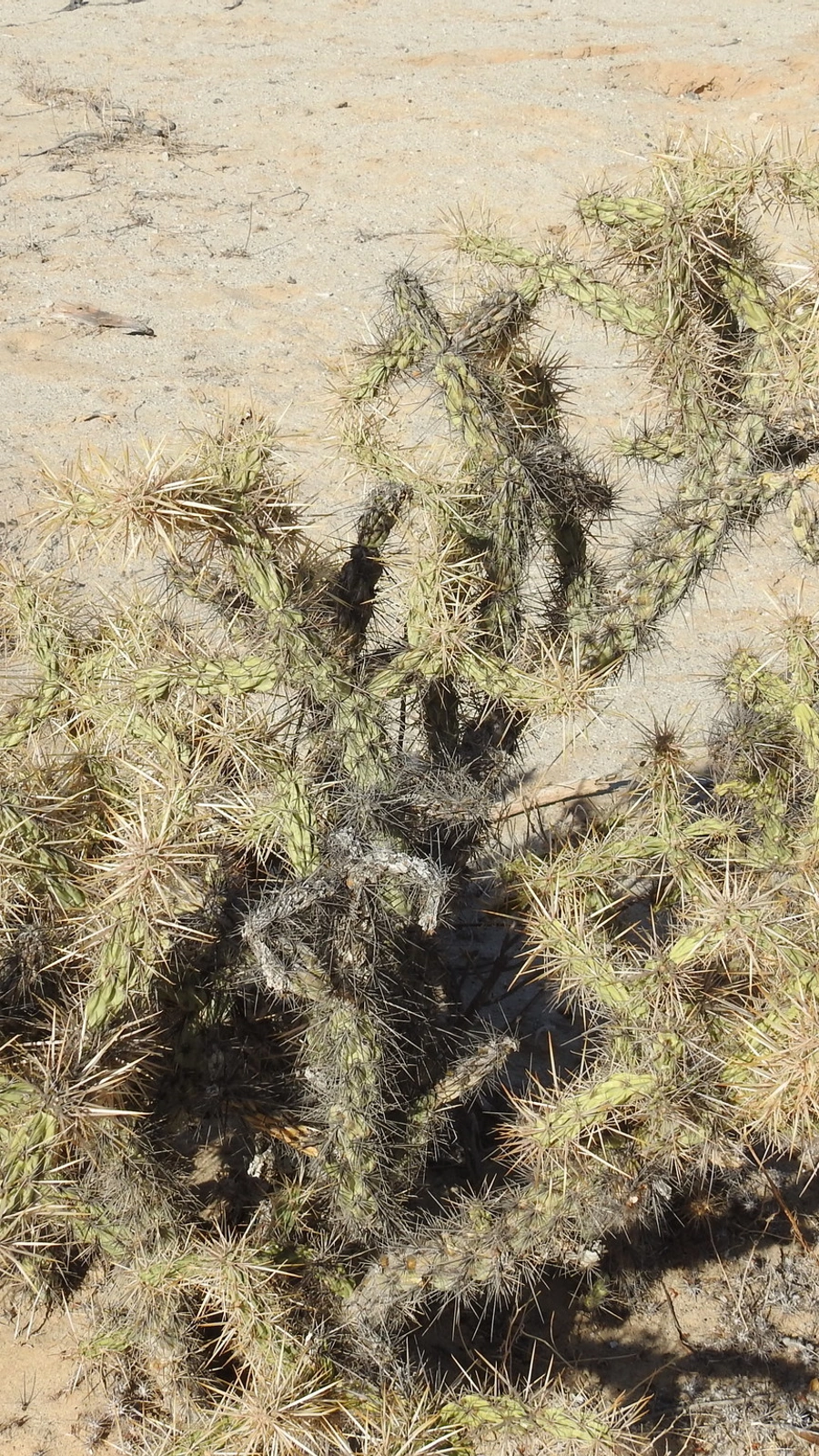 Reference image
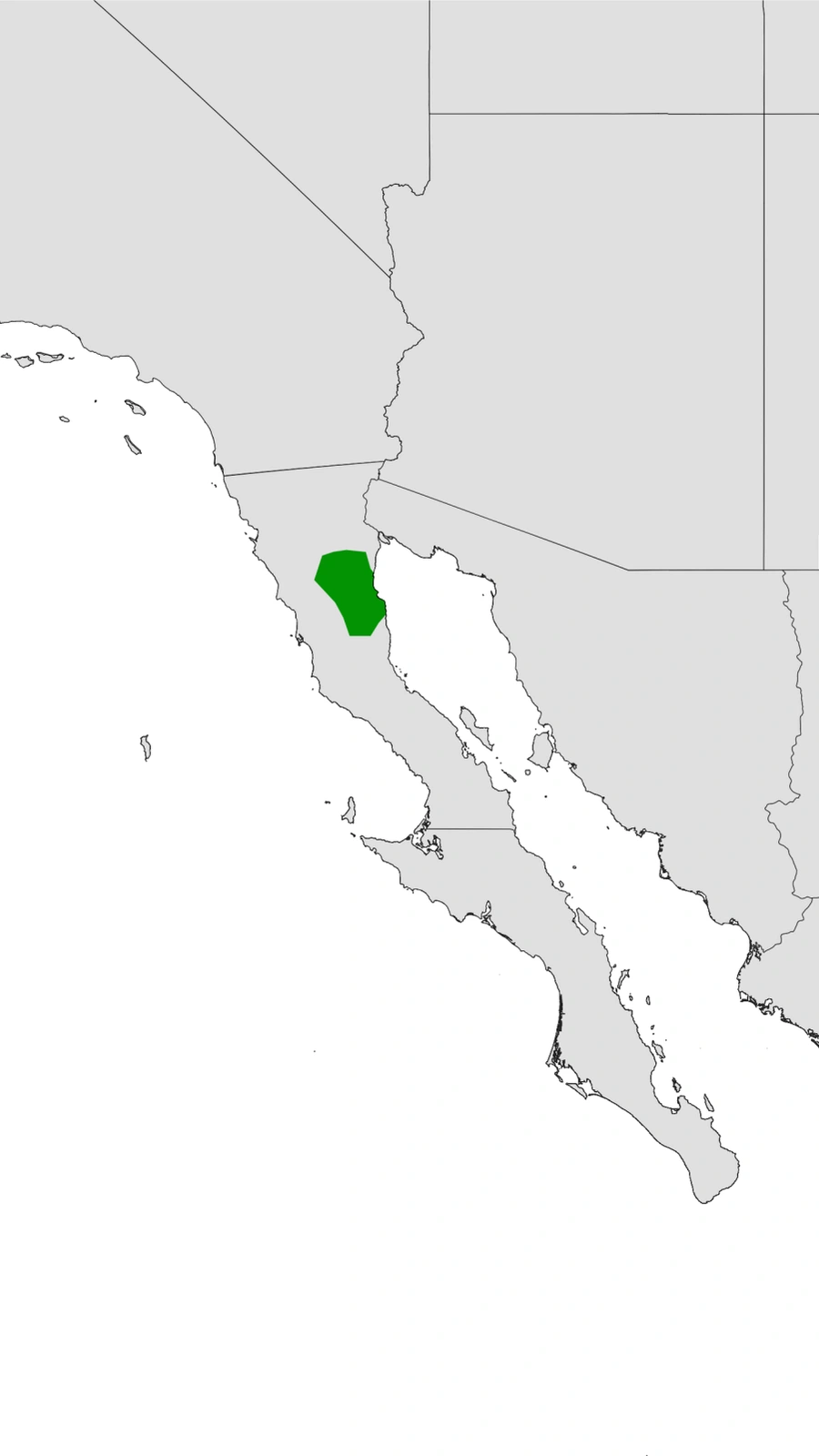 Reference image
San Felipe Cholla
Cylindropuntia sanfelipensis, commonly known as the San Felipe Cholla, is a highly drought-tolerant, spiny succulent shrub belonging to the Cactaceae family. It is well-adapted to surviving the harsh conditions of extremely arid desert regions 1.
This species was formally described by botanist Jon P. Rebman 2. The genus Cylindropuntia is characterized by cylindrical stem segments, distinguishing it from the flat-jointed Opuntia species. The specific epithet 'sanfelipensis' refers to its native occurrence near San Felipe in Baja California 1.
San Felipe Cholla is endemic to the northeastern desert regions of Baja California, Mexico 2. It populates gravelly slopes, sandy desert flats, and alluvial fans within extremely dry desert shrublands 3.
It forms a heavily branched, shrubby mound. The stem segments are cylindrical, grayish-green, and densely armed with sharp, sheathed spines that vary from golden-yellow to silvery-white 1. The flowers, which bloom in spring, range in color from pale yellow to brownish-bronze.
In cultivation, this plant requires maximum direct sunlight and exceptionally well-draining mineral soil. It is susceptible to frost damage in wet conditions, so winter watering must be avoided entirely to prevent root rot 3.
The most frequent issue is overwatering coupled with poorly drained soil, which quickly leads to root and stem rot. Insufficient sunlight will cause the stems to stretch, weaken, and lose their dense spine coverage 1.
Requires full sun. Place in the brightest possible spot, ideally receiving 6+ hours of direct sunlight daily.
Water deeply only when the soil is completely dry. Suspend watering almost entirely in winter.
Use a strictly mineral mix containing pumice, gravel, and coarse sand with very little organic matter.
Highly dangerous due to sharp, barbed spines (glochids) that attach easily to skin. Keep away from pets and children.
Moderate. Physically difficult to handle due to spines, but horticulturally very resilient and low-maintenance.
Endemic to the arid desert regions of northeastern Baja California, Mexico, thriving in sandy flats and rocky slopes near the Gulf of California.
