
Light
Full Sun
Requires full sun, meaning at least 6 hours of direct sunlight daily for healthy spine development.
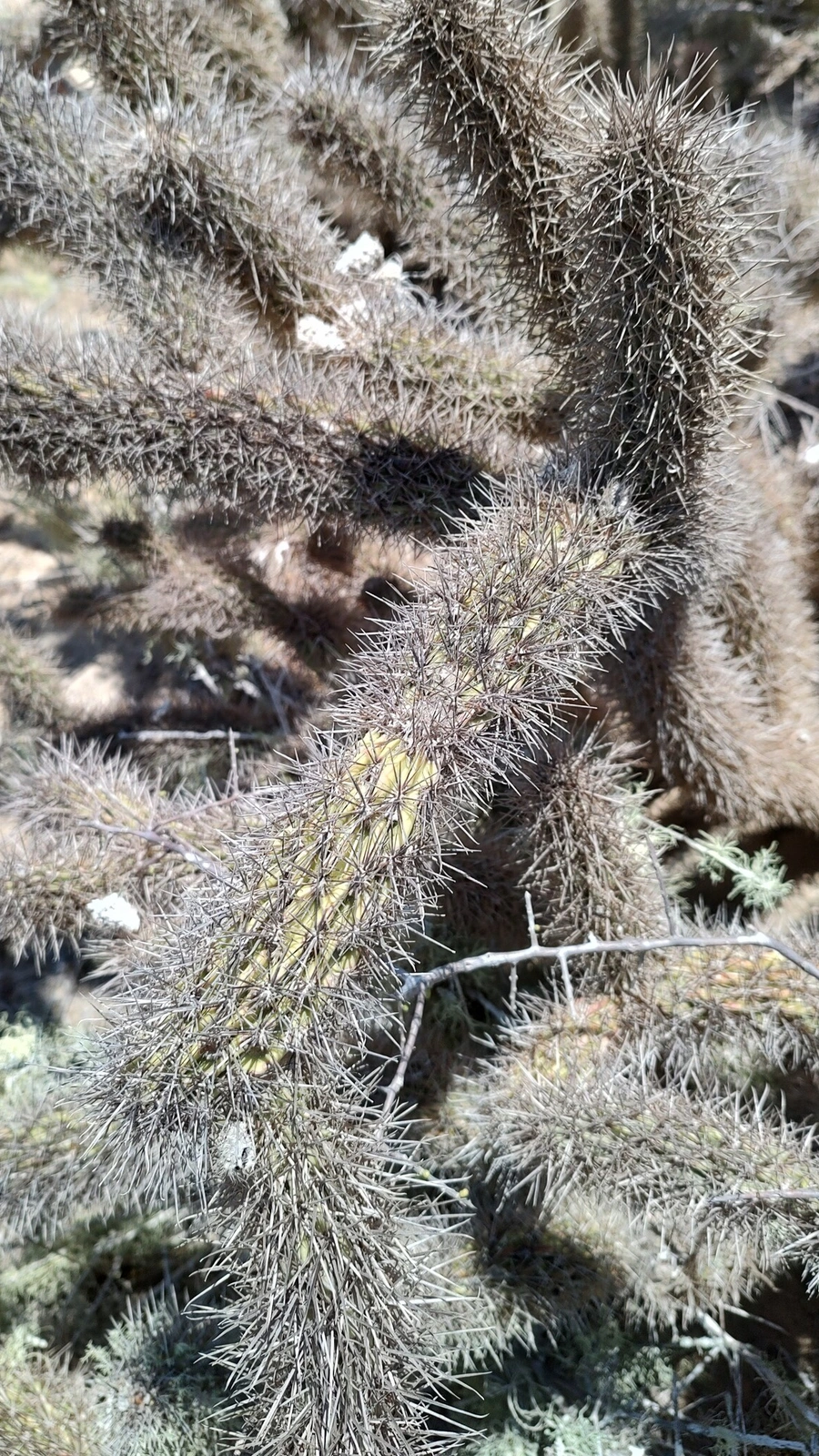 Reference image
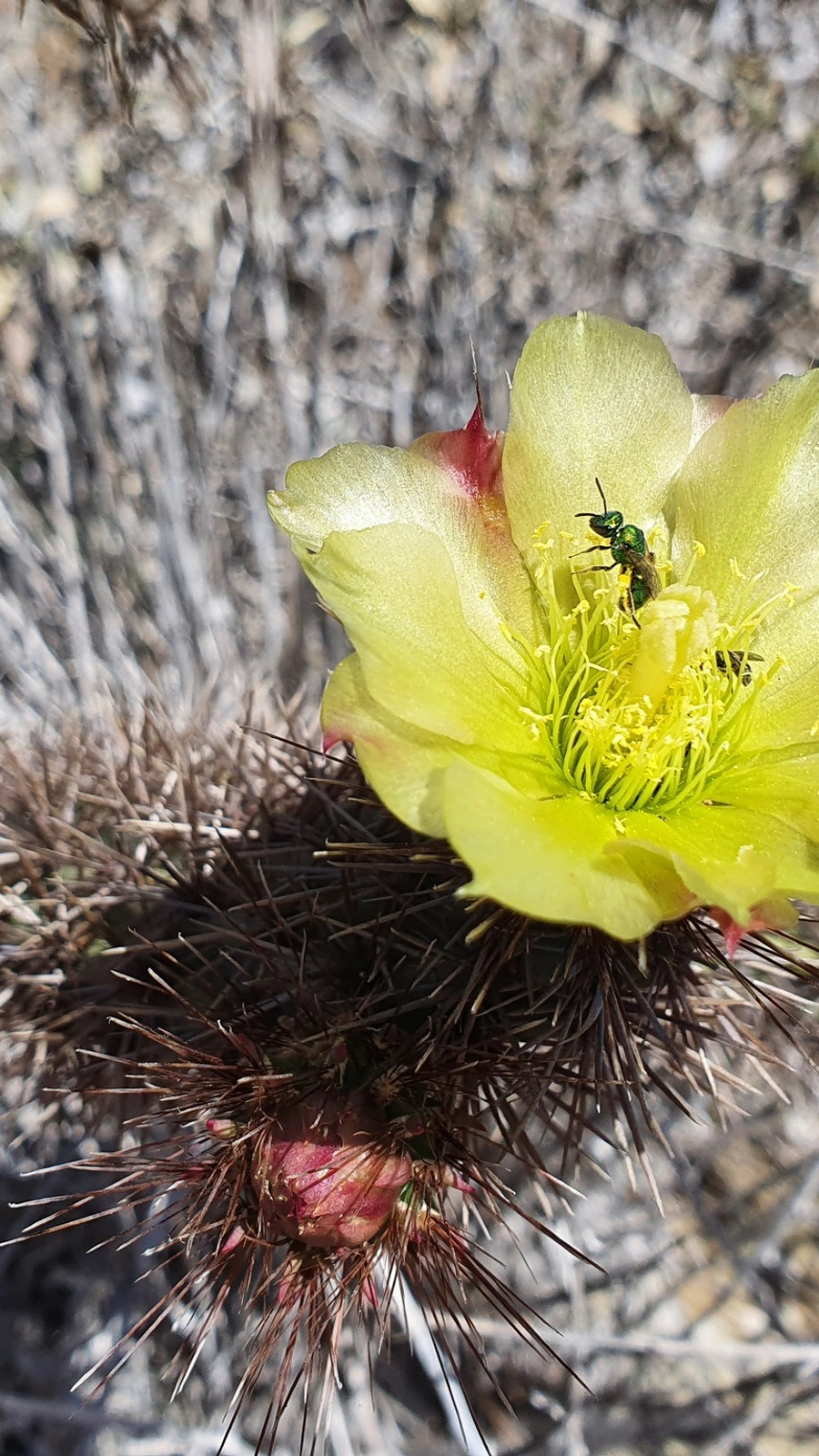 Reference image
Santa Maria Cholla
Cylindropuntia santamaria is a shrubby, heavily spined succulent belonging to the family Cactaceae. Commonly known as a 'cholla', this group of cacti is well-known for their cylindrical, jointed stems that separate easily 1.
Originally described under the genus Opuntia, it was later classified under Cylindropuntia due to its characteristic cylindrical stems and papery spine sheaths. The specific epithet 'santamaria' refers to Bahia Santa Maria in Baja California, Mexico, where the species was first discovered 2.
This species is endemic to Baja California Sur, Mexico, specifically occurring around the coastal plains of Santa Maria Bay and adjacent islands 3. It thrives in hyper-arid desert scrublands, sandy slopes, and rocky terrains near sea level, fully exposed to intense sunlight.
It exhibits an erect, branching, shrubby habit. The stems are green to grayish-green, deeply tuberculate, and composed of segmented joints. Areoles bear numerous needle-like spines covered in papery sheaths that reflect harsh sunlight. The flowers are typically yellow to greenish-yellow 4.
In cultivation, it requires maximum direct sunlight and exceptional drainage. A strictly mineral-based soil mix with minimal organic matter is essential. Watering should be highly restricted, especially during the cold winter dormancy period.
The most prevalent mistake is overwatering in heavy, clay-rich soil, which leads to immediate root rot. Growing this desert native in shady indoor conditions causes weak, elongated stem growth (etiolation) and loss of spines.
Requires full sun, meaning at least 6 hours of direct sunlight daily for healthy spine development.
Water deeply once every two weeks in summer. Keep entirely dry in winter to prevent root rot.
Use a specialized mineral cactus mix high in pumice, coarse sand, and perlite.
The barbed spines are painful and difficult to remove. Keep well out of reach of children and pets.
Moderate. Highly drought-tolerant but extremely sensitive to overwatering and dark indoor locations.
Native to the coastal desert slopes and barrier islands of the Santa Maria Bay region in Baja California Sur, Mexico, where it grows in dry, sandy, and windswept environments.
