
Light
Full Sun
Requires full, direct sunlight for several hours a day. Indoors, place it by the brightest south-facing window.
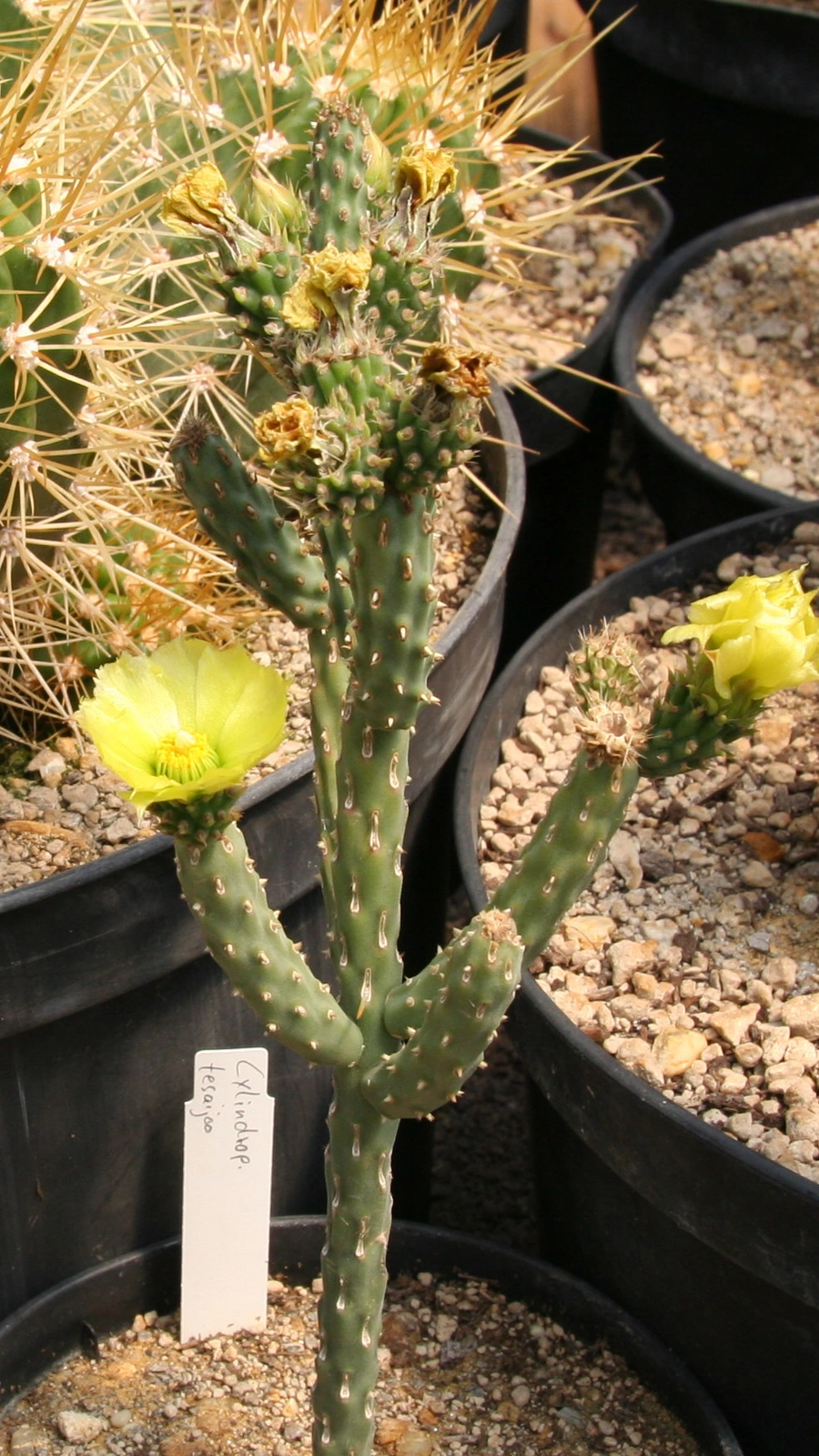 Reference image
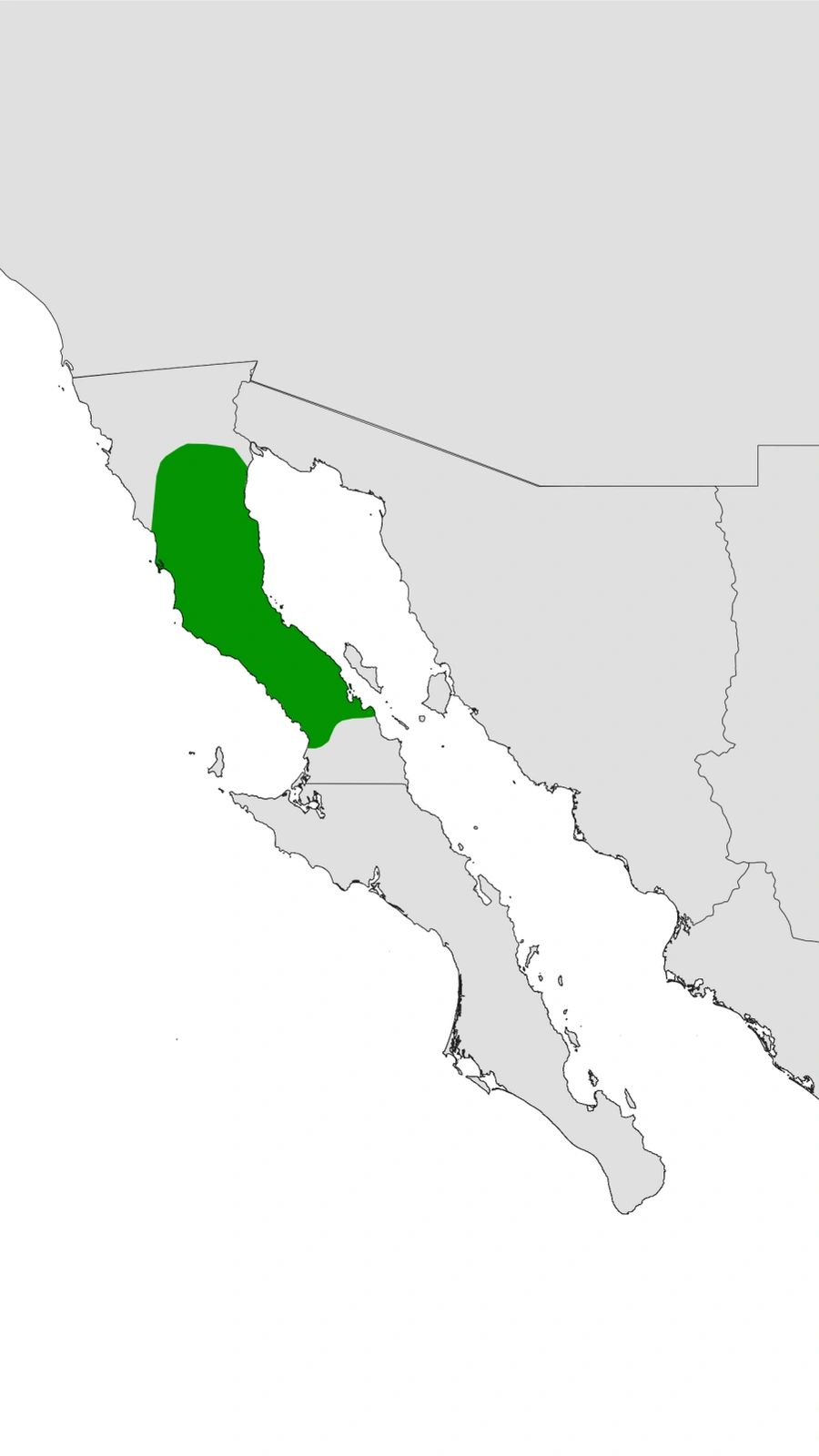 Reference image
Tesajo Cholla
Cylindropuntia tesajo, commonly known as the Tesajo Cholla or Pencil Cholla, is a highly drought-resistant, slender-stemmed succulent subshrub belonging to the family Cactaceae. It is celebrated for its intricate branching habits and survival strategies in extreme desert biomes.
Originally described by George Engelmann as Opuntia tesajo, this species was subsequently reassigned to the genus Cylindropuntia due to its cylindrical jointed stem morphology 1. The specific epithet "tesajo" is derived from the regional vernacular term referencing the dry, stringy appearance of its stems and spines.
This species is endemic to Mexico, prominently found across the Baja California Peninsula (both Baja California and Baja California Sur) and parts of the Sonora Desert 2. It thrives in hyper-arid desert valleys, rocky slopes, and dry shrublands at elevations ranging from sea level up to 1,200 meters.
Cylindropuntia tesajo forms a densely branched shrub reaching up to 1.5 meters in height. The stems are cylindrical, remarkably slender (0.5 to 1 cm in diameter), and display a light green to grayish hue. Areoles bear mostly solitary, occasionally up to 3, sharp grayish or yellow-brown spines. Small, inconspicuous pale-yellow or greenish flowers bloom in late spring, followed by dry, spineless fruits.
In cultivation, it requires full, direct sun and an exceptionally porous mineral substrate. Watering should be infrequent, employing the 'soak and dry' method, allowing the medium to dry out completely. While frost-hardy for short durations, protection from freezing winter dampness is vital.
The most prevalent failure is using organic-rich, heavy soils combined with overwatering, which invariably leads to root rot. Insufficient light leads to etiolation, rendering the thin branches weak and structurally compromised.
Requires full, direct sunlight for several hours a day. Indoors, place it by the brightest south-facing window.
Water thoroughly only when the soil is completely dry. Extremely susceptible to rot from overwatering.
Thrives in a highly porous, mineral-rich medium containing pumice, gravel, and minimal peat.
Equipped with extremely sharp, barbed spines. Keep out of reach of curious pets and children.
An easy-to-care-for succulent for those who can resist the urge to overwater.
Native to the arid, rocky desert regions of the Baja California Peninsula and Sonora, where it grows in dry gravelly plains.
