
Light
Full Sun
Requires full sun, preferably at least 6 hours of direct sunlight daily for healthy growth.
 Reference image
 Reference image
Four-Spined Cholla
Cylindropuntia × tetracantha is a unique, shrubby succulent cactus species belonging to the family Cactaceae. Known for its cylindrical stem segments and striking spination, this plant is a natural hybrid adapted to withstand the harsh conditions of arid desert environments 1.
Originally described as Opuntia tetracantha, it was later transferred to the genus Cylindropuntia due to its characteristic jointed, cylindrical stems. The specific epithet "tetracantha" translates from Latin as "four-spined," referencing the typical count of central spines clustered in each areole. It is recognized as a natural hybrid within its range 2.
This species is native to the Southwestern United States (primarily Arizona) and Northwestern Mexico (Sonora). It thrives in dry shrublands, desert flats, rocky slopes, and washes, adapting perfectly to poor, sandy soils and intense sunlight 1.
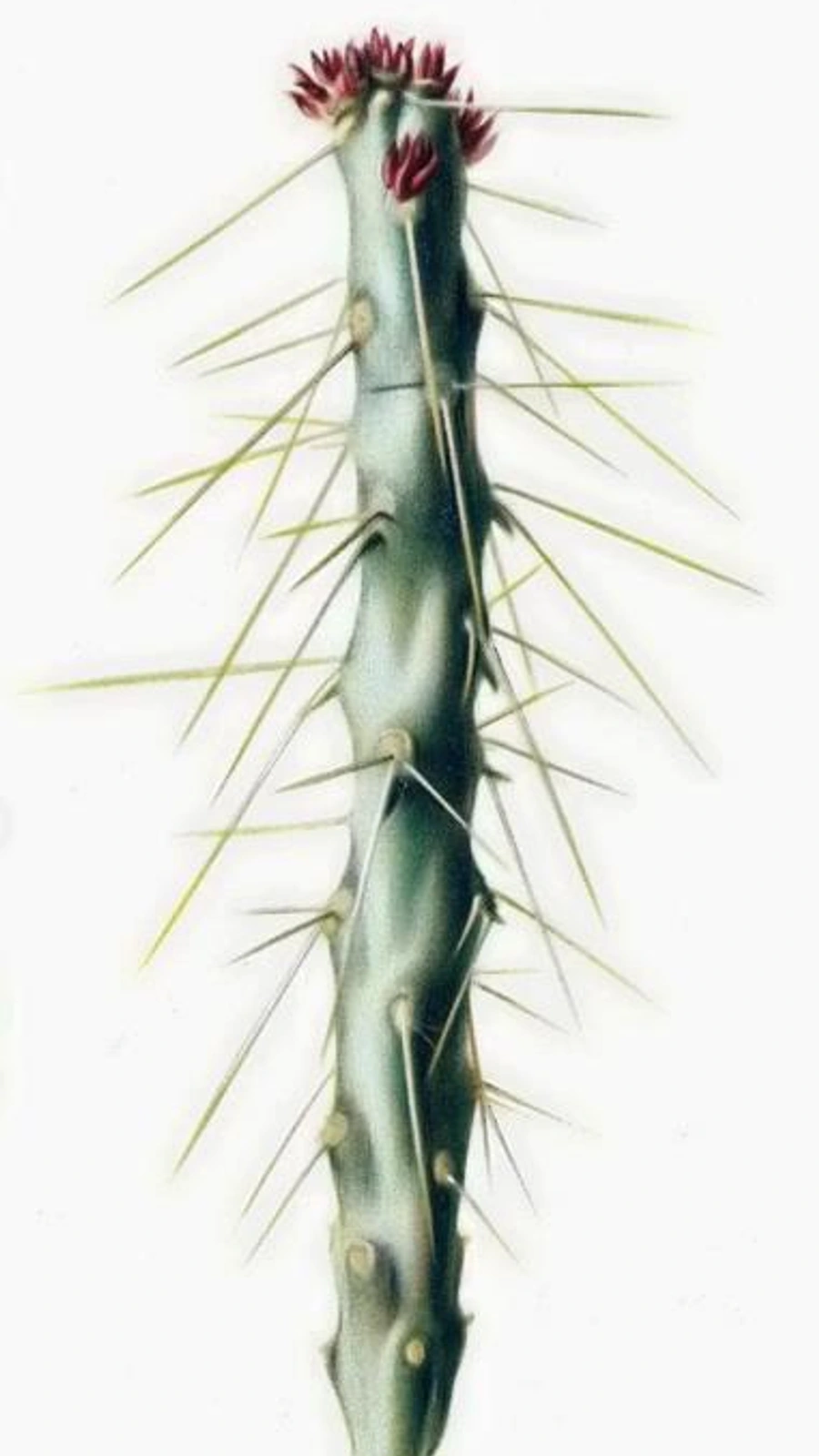
This cactus forms a branching, shrubby structure reaching heights of 1 to 1.5 meters. The stems are green to grayish-green and segmented. Each areole typically bears around 4 main spines of brownish or pinkish-gray hue, accompanied by fine glochids. Flowers are greenish-yellow, bronze, or purplish, yielding small reddish fruits 2.
In cultivation, it requires minimal maintenance. It thrives in full sun and demands excellent air circulation. Watering should follow the "soak and dry" method, allowing the substrate to dry completely between cycles. During winter, watering must be halted to prevent root decay 1.
Overwatering and using heavy, clay-rich soils are the main causes of decline, leading to rapid root rot. Keeping the plant in humid, poorly ventilated, or shaded indoor environments will lead to weak, etiolated growth.
Requires full sun, preferably at least 6 hours of direct sunlight daily for healthy growth.
Water thoroughly only when the soil is completely dry. Keep dry in winter.
Demands a highly porous substrate containing pumice, coarse sand, and gravel.
Equipped with sharp spines and irritating glochids; keep away from pets and curious children.
Very easy to maintain, provided it receives adequate sunlight and is not overwatered.
Naturally distributed throughout the arid zones of southern Arizona in the United States down into the Sonoran desert regions of northern Mexico, dwelling on rocky slopes and gravelly desert soils.
