Cylindropuntia thurberi

Thurber's Cholla

Overview

Cylindropuntia thurberi is a shrubby, branching cactus belonging to the family Cactaceae. Known for its distinct cylindrical joints and formidable spines, it is highly adapted to arid environments.

Taxonomy and Naming

Originally described by George Engelmann, the species belongs to the genus Cylindropuntia, characterized by jointed cylindrical stems 1. The specific epithet 'thurberi' honors George Thurber, an American botanist who collected plants in the boundary survey 2.

Distribution and Habitat

The species is native to Northwestern Mexico, including Sonora, Sinaloa, and parts of Chihuahua 3. It thrives in dry desert shrublands, rocky slopes, and bajadas, where it coexists with other desert scrub vegetation.

Appearance

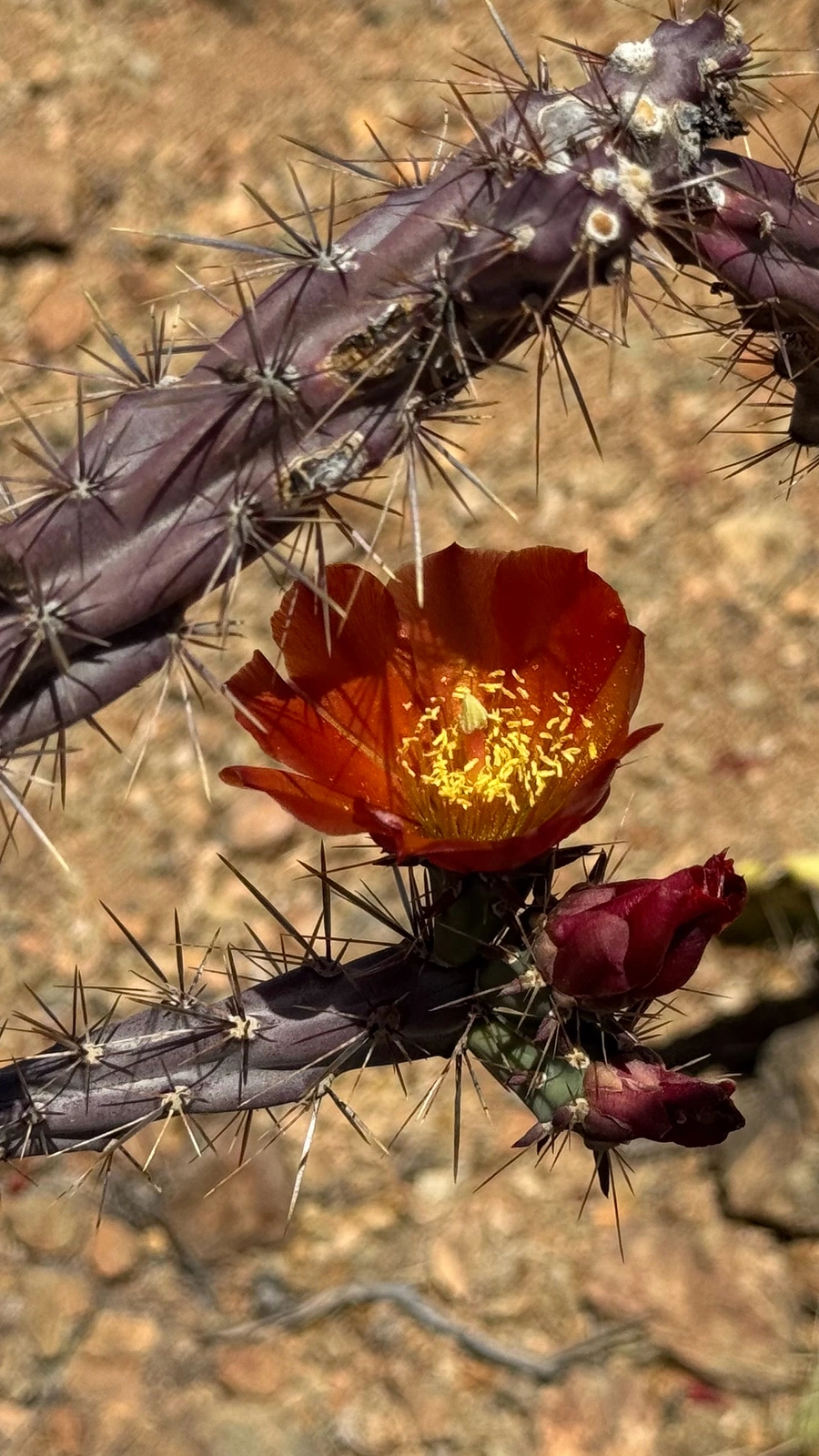
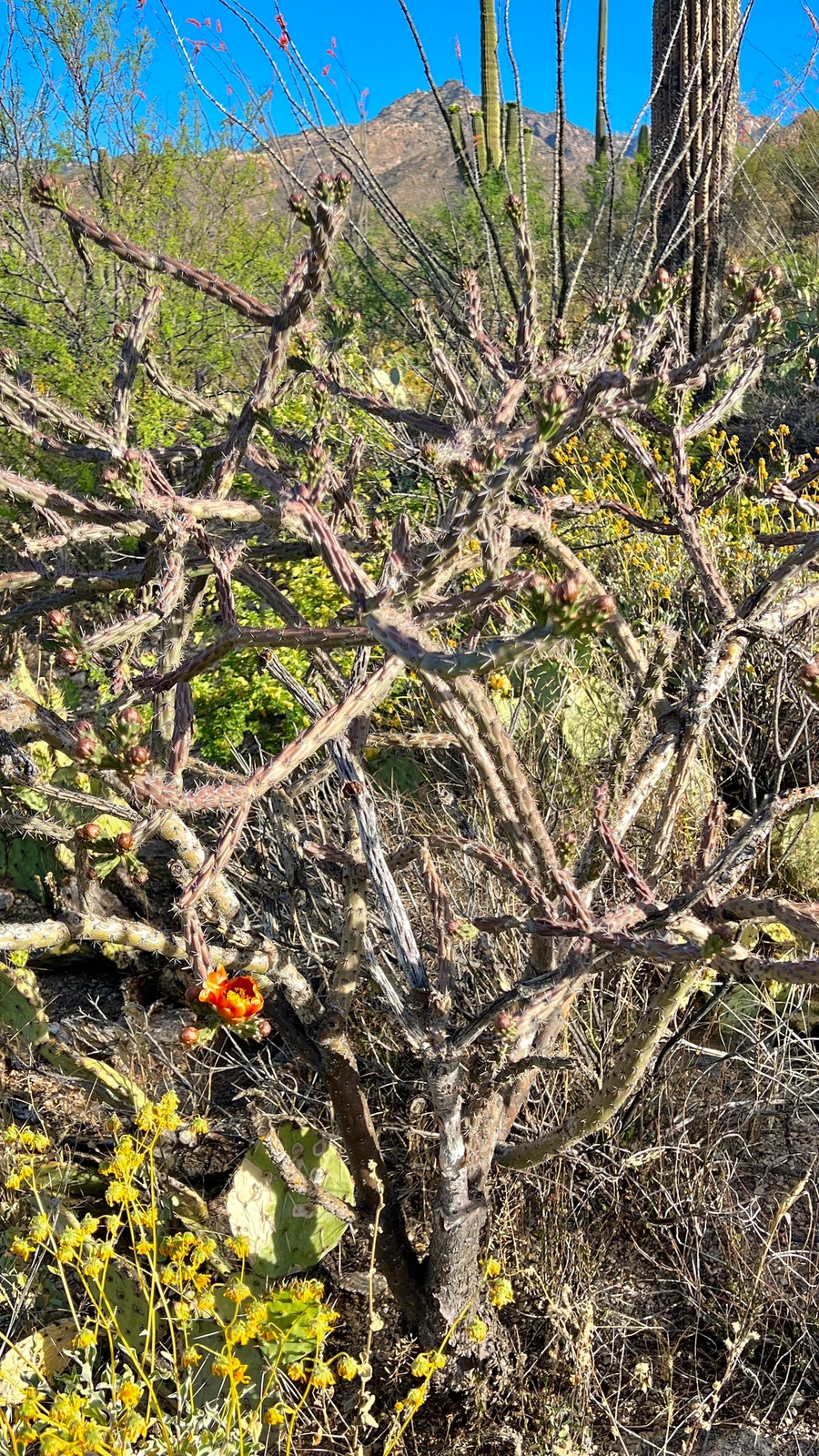
This succulent shrub typically grows up to 1.5 to 3 meters tall. Its jointed stems are green to grey-green, covered in tubercles. Each areole bears sharp, barbed spines covered in paper-like sheaths. Its flowers are typically brownish-red, bronze, or copper-colored, followed by dry spiny fruits 1.

Cultivation

In cultivation, Cylindropuntia thurberi requires full sun and exceptionally well-drained, porous soils. It is drought-tolerant and should be watered only when the substrate is completely dry. Overwintering must be done in dry conditions to prevent rot.

Common Care Mistakes

The most prevalent errors include overwatering, planting in moisture-retaining organic soil, and placing the cactus in low-light conditions, which inevitably leads to root rot or weak, leggy growth.

Bibliography

References

  1. Engelmann, G. (1856). Synopsis of the Cactaceae of the United States.
  2. Britton, N.L. & Rose, J.N. (1919). The Cactaceae. Carnegie Institution of Washington.
  3. Plants of the World Online (POWO). Kew Science: 'Cylindropuntia thurberi'.
Light

Full Sun

Requires full, direct sun for at least 6 hours daily to maintain form.
Watering

12-30 Days

Water only when soil is completely dry. Keep dry in winter.

Soil

Kool sandy and gravelly mineral cactus mix with maximum drainage

Very sandy, gravelly mineral substrate with low organic content.

Safety

Contact/Ingestion Risk

Highly dangerous barbed spines. Keep away from pets and kids.

Difficulty

Moderate

Easy to moderate; requires strict neglect regarding watering.

Native Habitat

Southwestern USA, Mexico

Native to the Sonoran Desert region, spreading across northwestern Mexican states on arid plains and rocky slopes.

Frequently Asked Questions

Can Cylindropuntia thurberi be grown indoors?
Yes, but it requires very high levels of direct sunlight. It should be kept on south-facing windowsills or under strong grow lights.
How often should I water Thurber's Cholla?
Water only when the soil is completely dry during summer (about every 10-15 days), and suspend watering almost entirely during winter.
What is the best soil mix for this cactus?
A highly mineral mix rich in pumice, lava rock, and coarse sand, with very low organic content and excellent drainage, is ideal.
Is Cylindropuntia thurberi toxic to pets?
It does not contain toxic chemicals, but its extremely sharp, barbed spines pose a serious physical danger to pets.
Does my plant need winter protection from cold?
It can withstand brief, light frosts (down to -5°C) if kept absolutely dry, but potted specimens should be protected from freezing.
How fast does Thurber's Cholla grow?
It has a slow-to-moderate growth rate. Under proper sun and watering conditions, it can produce a few centimeters of new growth annually.
How can I encourage it to bloom?
Ensure it receives maximum direct sunlight and allow it to experience a cool, completely dry resting period during winter.
What should I do if the spines get stuck in my skin?
Since the spines are barbed, do not pull them with bare hands. Use tweezers to carefully extract them, then disinfect the area.
When should I repot this cactus?
Repot every 2-3 years in spring when the plant outgrows its pot. Always use thick protective gloves to prevent injury.
What are the signs of rot and how can it be prevented?
Softening, blackening, or yellowing of the stem indicates rot. Cut back watering immediately, and propagate healthy top segments to save the plant.