
Light
Full Sun
Requires full sun. At least 6-8 hours of direct sunlight daily is critical for dense spine growth.
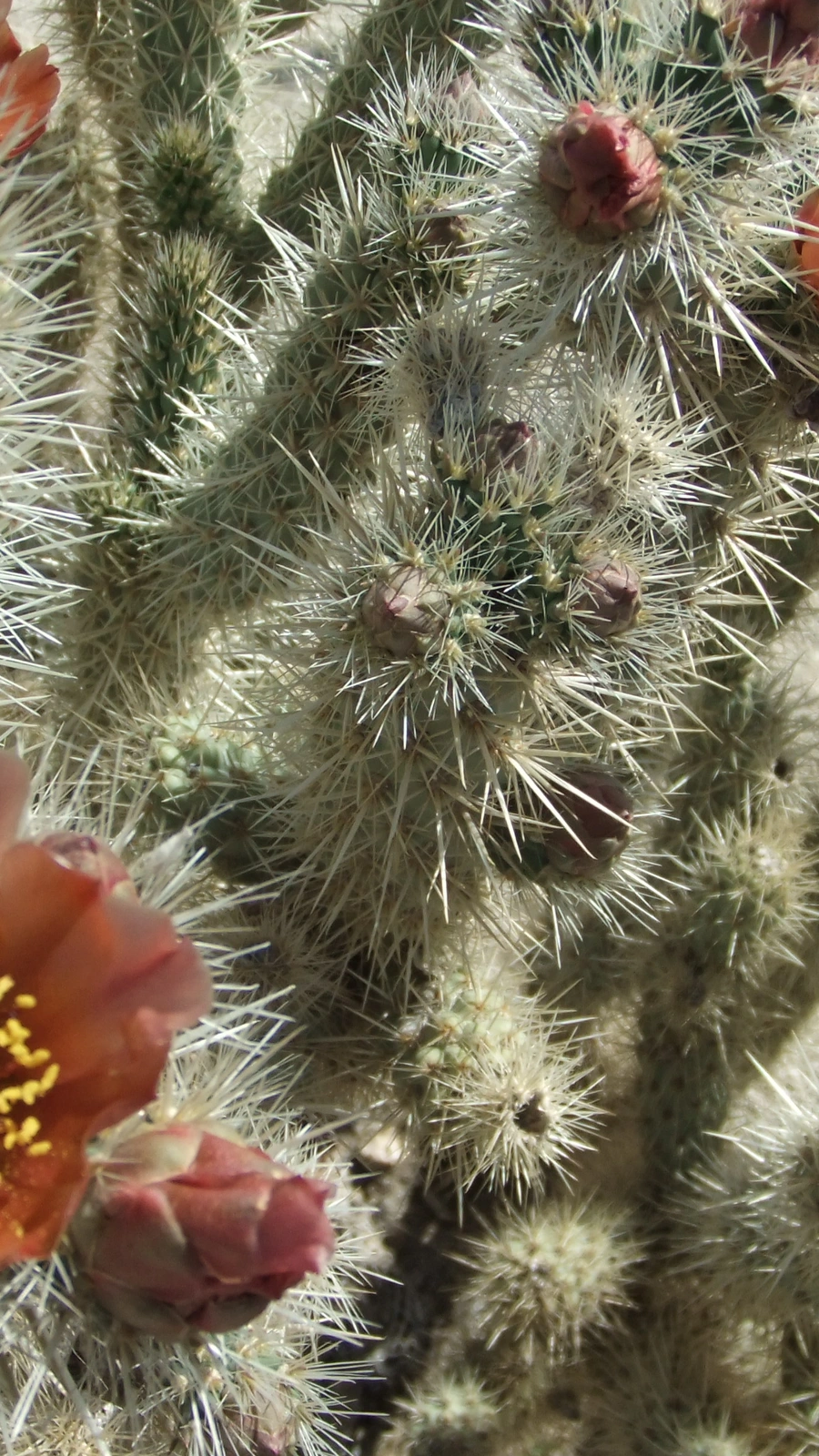 Reference image
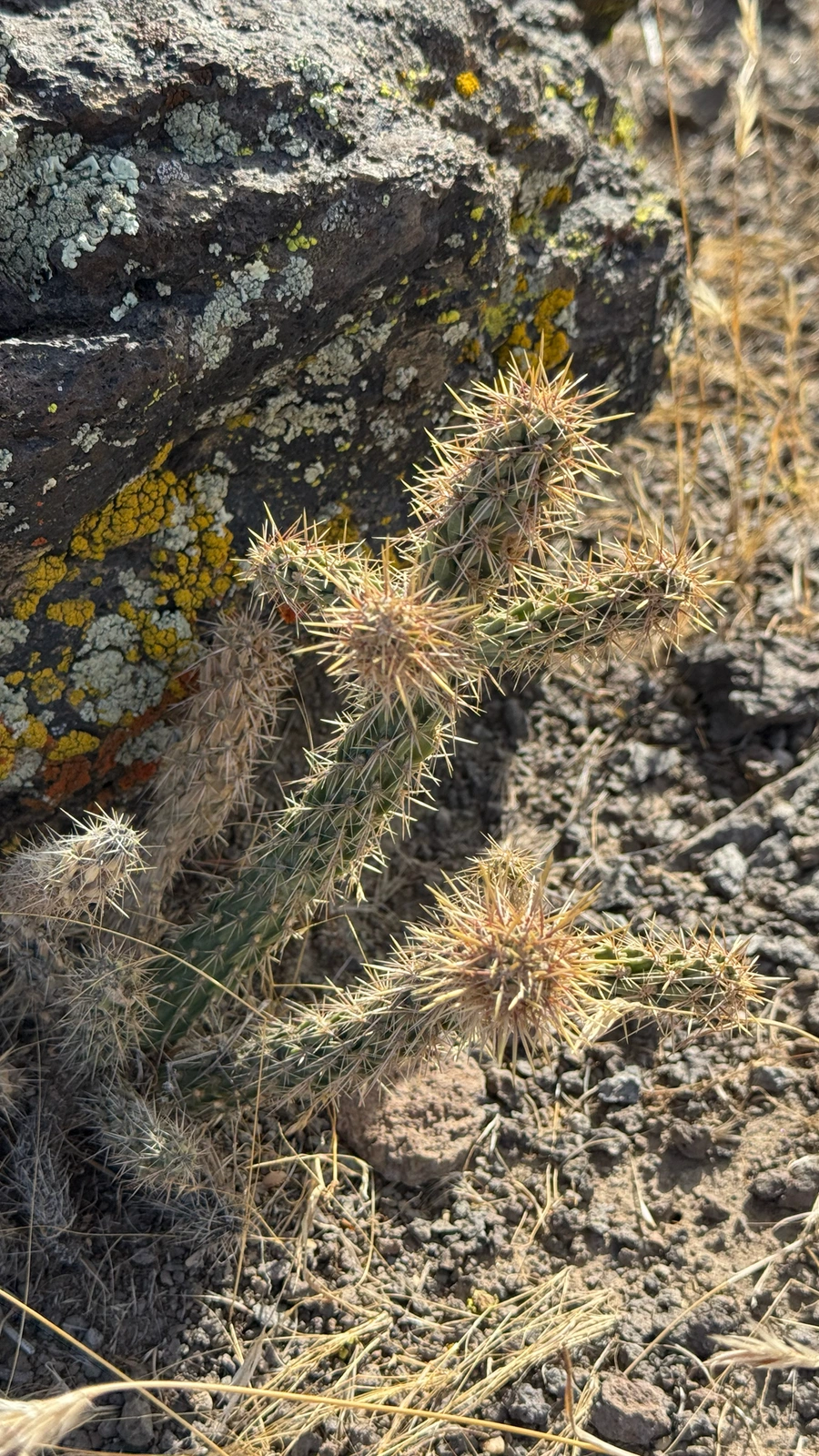 Reference image
Wolf's Cholla
Cylindropuntia wolfii is a robust, densely spiny succulent shrub belonging to the family Cactaceae. Known for its highly branched, cylindrical stems and formidable spine armor, it is an iconic representative of desert flora.
The species was named in honor of the botanist Carl Brandt Wolf. Historically classified under the genus Opuntia as Opuntia wolfii, modern phylogenetic classifications place it firmly within Cylindropuntia due to its cylindrical jointed stems 1.
This cactus is native to the Southwestern United States, particularly Southern California, and northwestern Mexico, including Baja California and parts of Sonora 2. It thrives in hyper-arid desert valleys, gravelly slopes, and dry shrublands.
Cylindropuntia wolfii forms an upright, shrubby structure reaching up to 1.5 meters in height. Stems are composed of cylindrical, green joints with prominent tubercles. The areoles carry numerous stout, yellow-brown spines covered in papery sheaths. In late spring, it produces brownish-yellow or greenish flowers, followed by dry, spiny fruits.
In cultivation, it requires an extremely porous mineral substrate and full, uninterrupted sunlight. It exhibits high drought tolerance and should only be watered when the substrate is bone dry. Excellent air circulation is essential.
Overwatering and placing the plant in heavy, organic soils are the primary causes of root rot. Lack of sufficient direct sunlight leads to weak, elongated growth and a lack of spine density.
Requires full sun. At least 6-8 hours of direct sunlight daily is critical for dense spine growth.
Drought-tolerant. Allow the soil to dry completely between waterings, and keep dry in winter.
Strictly mineral-based, well-draining soil with high pumice, sand, and gravel content.
Equipped with numerous sharp, barbed spines. Keep away from children and pets.
Low maintenance if provided with extreme drainage and intense light, but handling requires caution.
Naturally distributed across the arid deserts of southern California, Baja California, and Sonora, thriving on stony hillsides and in sandy desert washes under intense heat.
