
Light
Bright Indirect Light
Prefers bright, filtered sunlight; shield from direct afternoon sun.
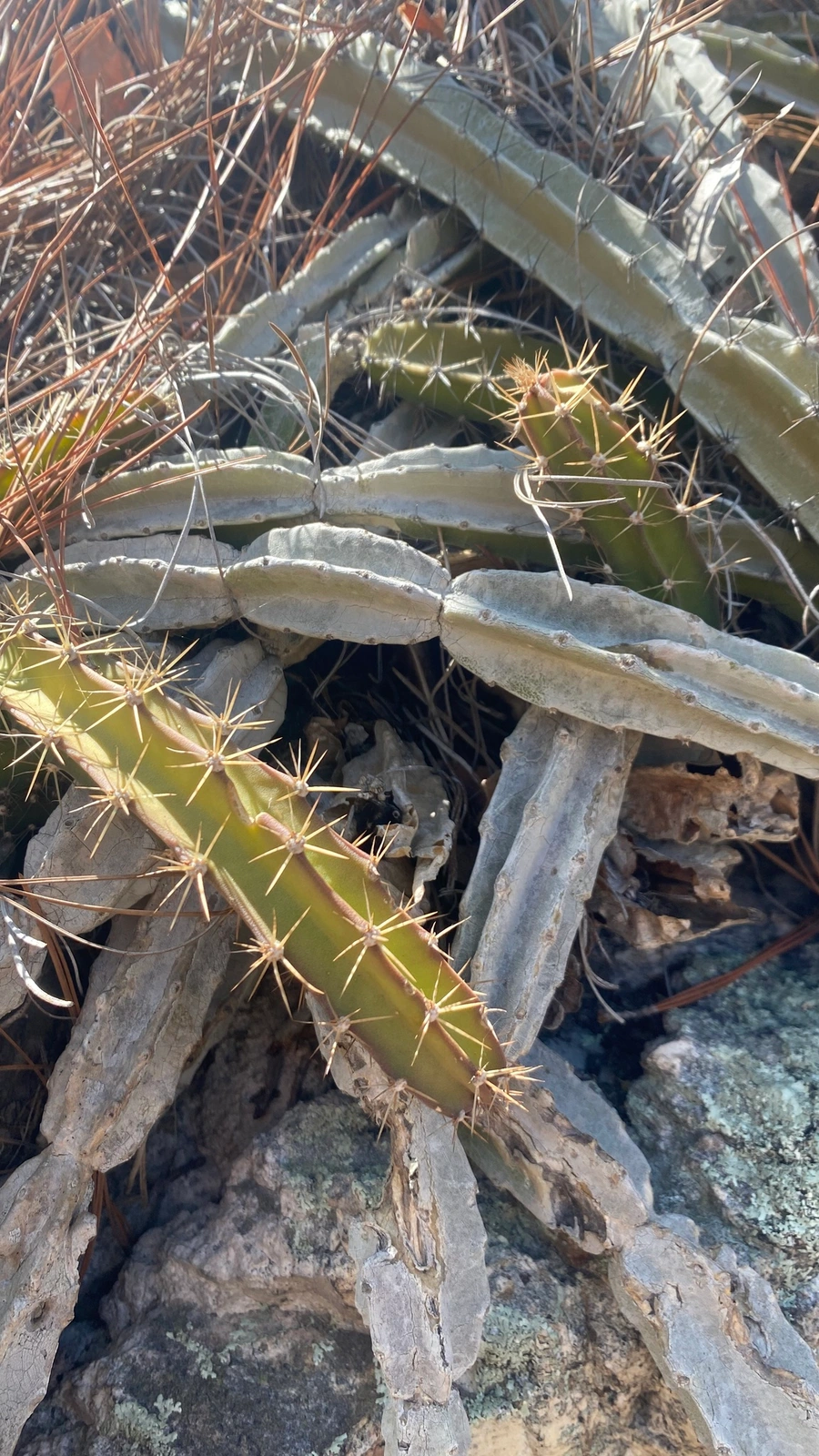 Reference image
Chontales Climbing Cactus
Deamia chontalensis is an exotic, scrambling, and climbing epiphytic or lithophytic cactus belonging to the family Cactaceae. Known for its segmented, winged stems that cascade beautifully from hanging baskets or cling to supports, it produces magnificent, nocturnal, fragrant white flowers that captivate collectors.
This species was historically described under various genera before being placed in the genus Deamia 1. The genus name honors the American botanist Charles C. Deam. The specific epithet chontalensis refers to the Chontales region of Nicaragua, or broadly to regions associated with the Chontal Maya highlands where early specimens and closely related taxa were observed 2.
Native to southern Mexico (such as Oaxaca and Chiapas) and Guatemala, Deamia chontalensis thrives in seasonally dry tropical biomes 1. In these habitats, it grows as an epiphyte on deciduous forest trees or climbs steep rocky cliffs as a lithophyte, adapting to periods of high humidity followed by dry seasons.
The plant features jointed, pendulous green stems with 3 to 6 wavy ribs. Small areoles line the margins, bearing short, fine, yellowish-brown spines. Its most striking feature is the large, nocturnal, funnelform flower, reaching up to 15 cm in diameter, presenting creamy white petals with yellowish outer tepals.
In cultivation, it requires a coarse, highly porous organic potting mix, resembling orchid or epiphytic cactus media. It appreciates bright, filtered sunlight and moderate humidity. Water thoroughly during the active growing season, allowing the top soil layer to dry between waterings, and restrict watering significantly in winter.
The most prevalent issue is root rot caused by dense, poorly draining soil or overwatering during winter dormancy. Keeping the plant in deep shade results in thin, weak stems and failure to initiate flower buds.
Prefers bright, filtered sunlight; shield from direct afternoon sun.
Water thoroughly once the top soil dries out; reduce drastically in winter.
An organic, porous mix of cactus soil, perlite, and orchid bark is ideal.
Features fine spines that can irritate skin; non-toxic but handle with gloves.
Moderate; requires attention to seasonal watering cycles and soil aeration.
Found scrambling over rocky outcrops and tree trunks in the warm, seasonally dry tropical forests of southern Mexico and Guatemala.
