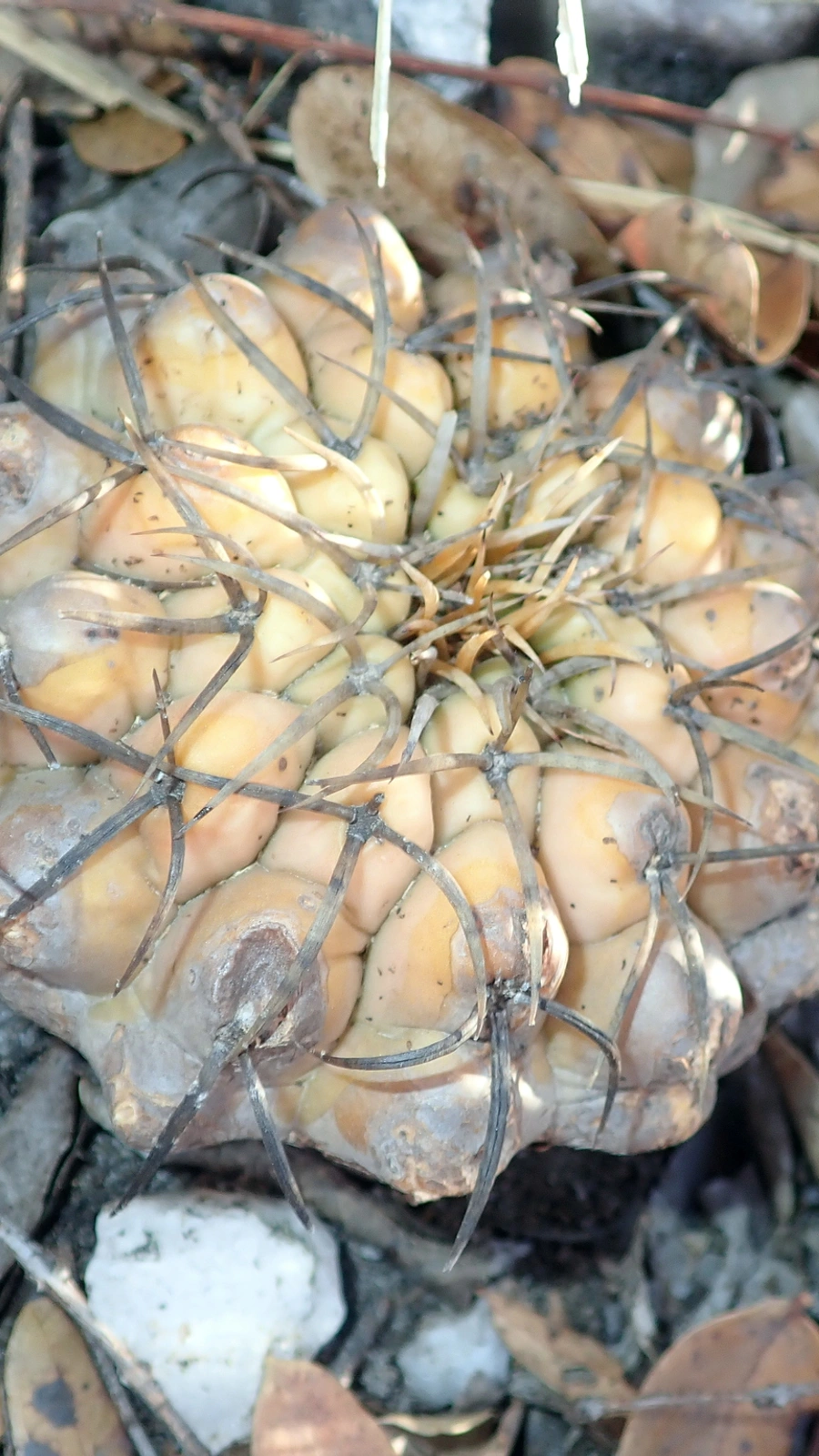
Discocactus boliviensis

Bolivian Disc Cactus

Overview

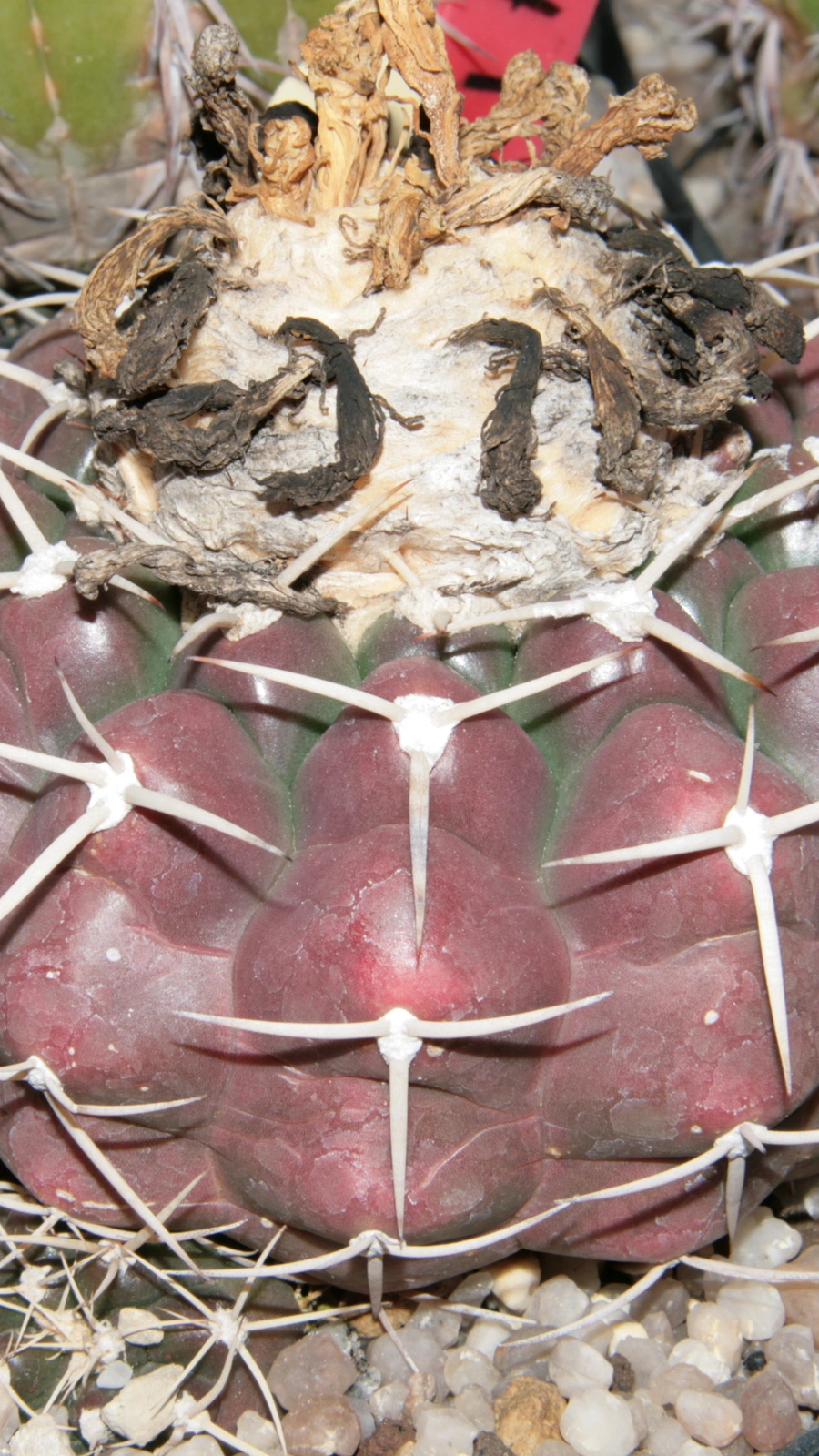
Discocactus boliviensis is a rare, critically endangered miniature cactus species belonging to the Cactaceae family 1. Renowned for its flat-globose stem and the white, woolly cephalium that develops at its apex, this species is highly prized among specialized succulent collectors.

Taxonomy and Naming

Belonging to the genus Discocactus, its generic name is derived from the Greek word 'diskos', referring to the flattened disc-like shape of the stem 2. It is classified within the tribe Trichocereeae.

Distribution and Habitat

This species is native to Bolivia, particularly restricted to the seasonally dry tropical biomes of the Santa Cruz department 1. It grows on rocky outcrops, quartz-rich gravel slopes, and skeletal soils under sparse deciduous canopy.

Appearance

The body is solitary, flattened globose, dark green to bronze-green, featuring prominent ribs adorned with robust, slightly curved spines. Upon reaching maturity, it produces a woolly terminal cephalium from which nocturnal, highly fragrant, white funnelform flowers emerge 3.

Cultivation

Members of the genus Discocactus are notoriously difficult to cultivate on their own roots due to an extremely sensitive root system 2. Consequently, they are frequently grown as grafted specimens. They demand high warmth, consistent air humidity, and strictly acidic, mineral substrates.

Common Mistakes in Care

Exposing the plant to temperatures below 12°C during winter, using hard/calcareous tap water, and overwatering after the cephalium has formed, which rapidly leads to root and basal rot, are the most frequent cultivation errors.

References

  1. Plants of the World Online (POWO), Kew Royal Botanic Gardens.
  2. Anderson, E. F. (2001). The Cactus Family. Timber Press.
  3. Hunt, D. (2006). The New Cactus Lexicon. DH Books.
Light

Filtered Sun

Requires bright filtered light, protect from scorching midday sun.
Watering

10-30 Days

Water only when substrate is completely dry, use soft rainwater.

Soil

Highly porous, acidic cactus mix rich in quartz sand and pumice

Strictly acidic, lime-free mix with quartz gravel and pumice.

Safety

Pet Friendly

Sharp spines can cause injury. Handle with care. Non-toxic to pets.

Difficulty

Hard

High sensitivity to cold, rot, and lime makes it an expert-level plant.

Native Habitat

South America, Bolivia

Confined to the seasonally dry tropical scrublands of Bolivia, growing in acidic quartzite soil pockets amongst gravelly hillsides.

Frequently Asked Questions

Can Discocactus boliviensis be grown indoors?
Yes, but it requires bright windows or greenhouses where temperature and humidity can be monitored. Grafted specimens adapt much more easily to typical indoor environments.
How often should I water it?
In summer, water once the substrate dries out completely (approx. every 10 days). In winter, reduce watering to a minimum (once a month) just to prevent the stem from excessive shriveling.
What type of water should be used?
Strictly use lime-free water. Calcareous tap water increases pH and damages the sensitive root system. Rainwater or purified acidic water is highly recommended.
What should the soil mix consist of?
It requires a lime-free, acidic, highly mineral substrate composed of quartz sand, lava granulates, and pumice, with very low organic matter.
What is a cephalium and when does it develop?
The cephalium is a woolly, felted structure at the apex of mature cacti. It develops once the plant reaches reproductive maturity (usually after 5-7 years), and flowers only arise from this structure.
What is the minimum winter temperature?
Due to its tropical origin, it is highly cold-sensitive. Winter temperatures should not drop below 12°C (54°F). The ideal overwintering temperature is around 15°C (59°F).
Is it toxic to pets?
It is non-toxic to pets. However, because of its sharp spines, it should be kept out of reach of curious animals and children to prevent physical injury.
When does it bloom and are the flowers fragrant?
Flowers open at night during the summer months and last for only one day. They emit an extremely sweet, strong, perfume-like exotic fragrance.
Why is it difficult to grow on its own roots?
Its roots are extremely prone to fungal rot, pH imbalances, and stagnant moisture. Therefore, growers usually graft them onto hardy rootstocks like *Cereus* or *Trichocereus*.
What is its growth rate?
It grows extremely slowly on its own roots. However, when grafted, its growth rate increases significantly, allowing it to reach blooming size within a few years.