
Light
Filtered Sun
Requires bright filtered light; avoid harsh, direct midday sun to prevent scorching.
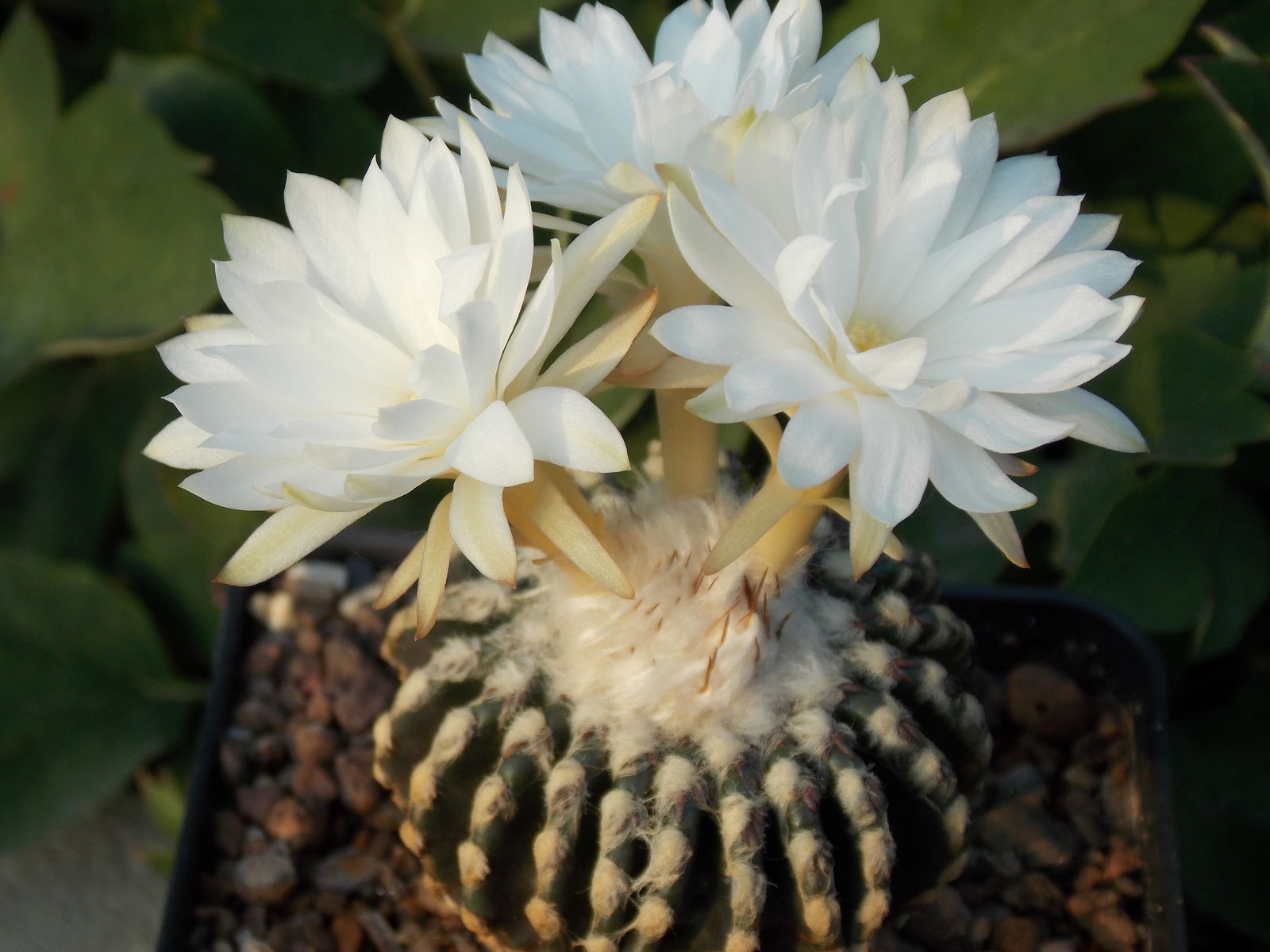 Reference image
Discocactus horstii is one of the most highly prized and sought-after miniature species in the Cactaceae family. Characterized by its flattened, dark globose stem and woolly terminal cephalium, this species represents the pinnacle of specialized succulent collections. Due to its extremely sensitive root system, it is widely considered an expert-only plant 1.
Discovered in the 1970s, the species was named in honor of Leopold Horst, a prominent German-Brazilian plant collector who explored the remote habitats of Minas Gerais. The genus name Discocactus is derived from the Greek 'diskos', referencing the flat, disc-like shape of the mature stems 2.
This species is micro-endemic to a small, highly specific region in northern Minas Gerais, Brazil. It thrives at elevations around 1,000 meters above sea level, growing in pure quartzite gravel, fine white sands, and rocky crevices within a seasonally dry tropical biome. The natural populations are classified as Endangered due to habitat destruction and illegal poaching 1.
The solitary stem is disk-shaped, dark green to purplish-black, reaching 5-7 cm in diameter. It features 12 to 22 low, tuberculate ribs adorned with tiny, pectinate white spines curved back against the body. Upon reaching maturity, the plant stops growing vegetatively and produces a woolly, bristly cephalium at its apex, from which large, nocturnal, sweet-scented white flowers emerge 2.
When grown on its own roots, it is exceptionally prone to rot; hence, it is frequently propagated as a graft on robust stocks such as Echinopsis or Hylocereus. It requires bright, filtered sunlight and absolute protection from frost. During winter, temperatures should not fall below 12°C 1.
The most frequent cause of failure is overwatering, especially during cooler winter months. Alkaline water or soil mixtures will quickly damage the root system, leading to chlorosis and subsequent fungal decay 2.
Requires bright filtered light; avoid harsh, direct midday sun to prevent scorching.
Water strictly on a soak-and-dry cycle during summer; keep completely dry in winter.
Requires a highly acidic, purely mineral substrate with quartz sand and pumice.
Non-toxic to pets, with tiny, non-aggressive pectinate spines, but physically delicate.
Highly challenging on its own roots; recommended mainly for experienced growers or as a graft.
Native to the high-altitude quartzite plains of northern Minas Gerais, Brazil, where it grows in nutrient-poor, acidic sandy soils under seasonally dry tropical conditions.
