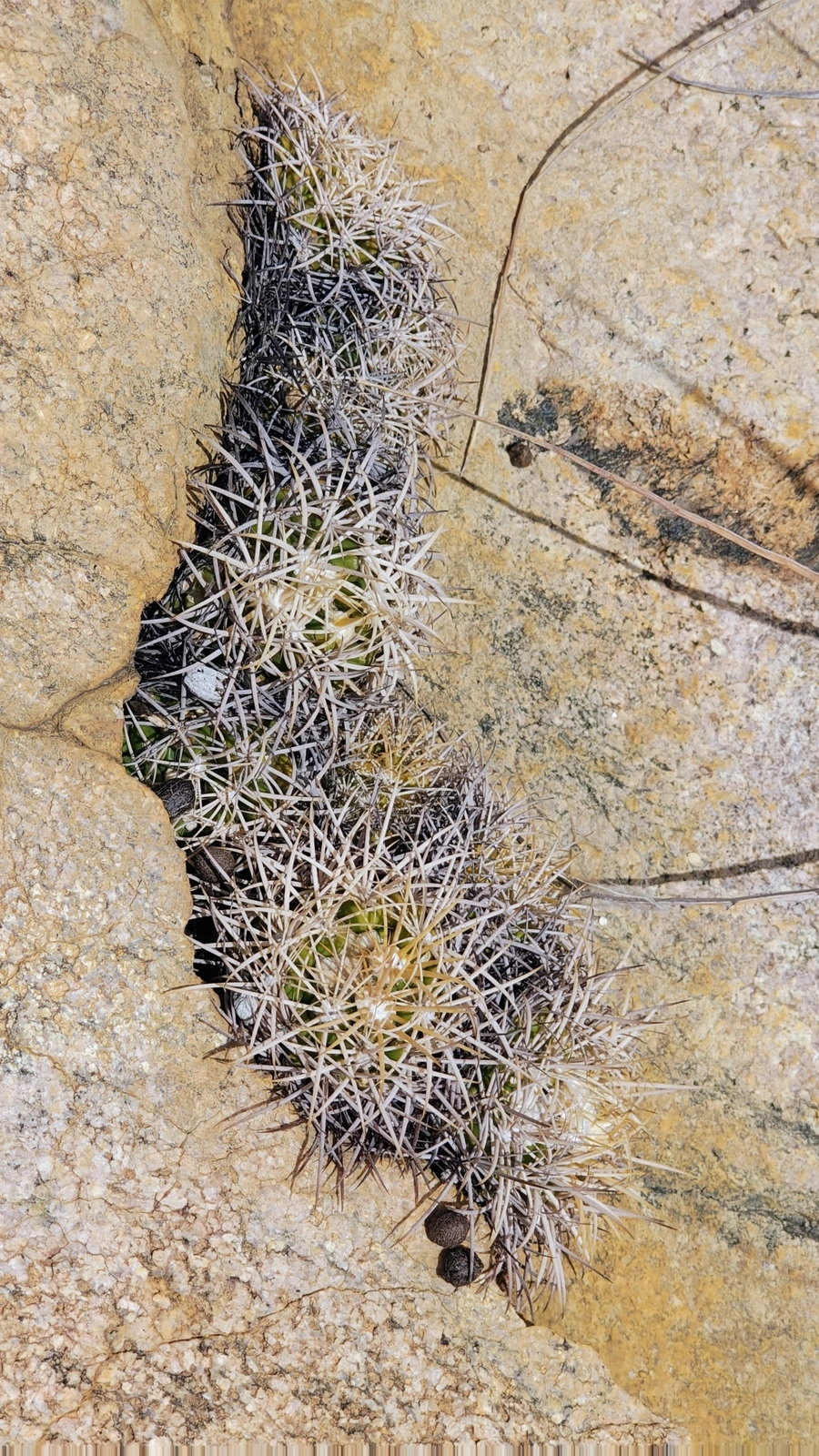
Discocactus zehntneri

Zehntner's Disc Cactus

Overview

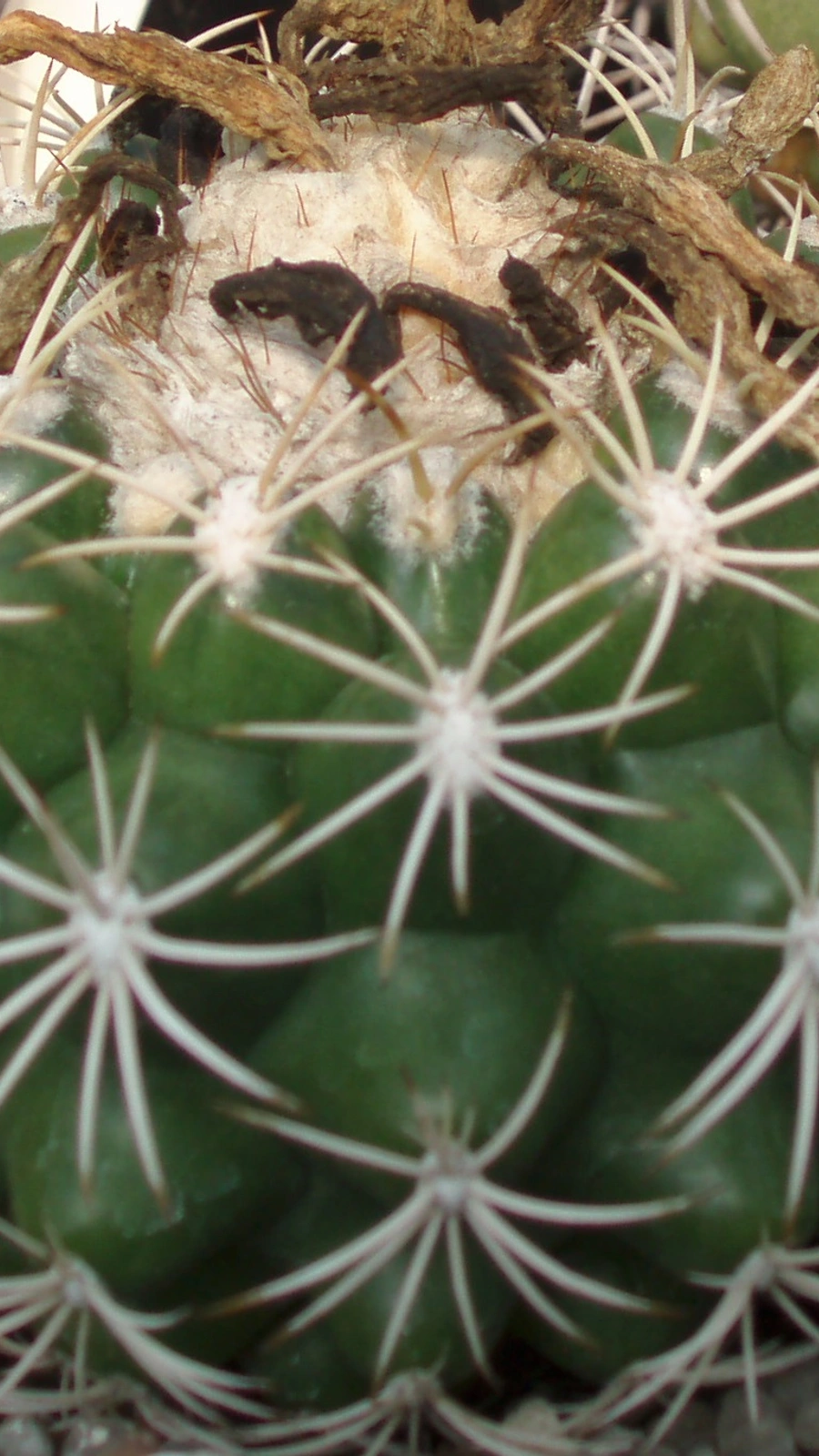
Discocactus zehntneri is a rare, globose cactus species in the family Cactaceae, famous for its flattened spherical stem and the distinctive woolly cephalium that forms at its apex upon maturity 1.

Taxonomy and naming

Named in honor of German botanist Leo Zehntner, this species was historically integrated into the highly specialized genus Discocactus. The generic name originates from the Greek word "diskos" (disc), describing the flattened shape of the stem 2.

Natural distribution and habitat

Native to the seasonally dry tropical Caatinga biome of northeastern Brazil, specifically across Bahia and Pernambuco. It thrives in rocky crevices, quartzite gravels, and sandy soils under extreme heat 1.

Appearance

The green to grayish-green stem features numerous ribs densely covered with curved, yellowish to brown spines. Once mature, it develops a white woolly cephalium from which nocturnal, intensely fragrant white flowers emerge 2.

Cultivation care

This species is highly demanding in cultivation. It requires constant warmth (minimum 12°C/54°F), filtered sunlight, and excellent air circulation. Water during active growth only when the soil is dry, and use a mineral-based mix.

Common care mistakes

Overwatering during the winter rest or exposing the plant to cool, damp conditions are the primary causes of failure, rapidly leading to fatal root rot.

References

  1. Plants of the World Online (POWO). Royal Botanic Gardens, Kew.
  2. Anderson, E. F. (2001). The Cactus Family. Timber Press.
Light

Filtered Sun

Requires bright filtered sunlight; avoid intense direct afternoon sun to prevent scorching.
Watering

7-25 Days

Allow the substrate to dry fully before watering. Keep completely dry in winter.

Soil

Highly well-draining cactus mix rich in pumice, river sand, and minimal organic matter.

Extremely porous mineral substrate with high pumice content and minimal organic matter.

Safety

Pet Friendly

Non-toxic, but possesses sharp spines that pose a physical hazard to curious pets.

Difficulty

Hard

Highly sensitive to rot and cold, recommended for advanced hobbyists.

Native Habitat

Northeastern Brazil

Endemic to the seasonally dry Caatinga region of Brazil, where it grows in pockets of sand and rocky outcrops under warm conditions.

Frequently Asked Questions

Can Discocactus zehntneri be grown indoors?
Yes, but it requires high temperatures, bright light, and excellent ventilation. Protect it from cold drafts during winter.
How often should I water this cactus?
Water about every 7 days in summer only when the soil is completely dry. In winter, stop watering entirely if kept at cool room temperatures.
What kind of soil does Zehntner's cactus prefer?
It prefers highly porous mineral soil containing mostly pumice, lava rock, and coarse sand, with organic matter kept under 10%.
What is the minimum temperature it can survive in winter?
This species is highly sensitive to cold. It should never be exposed to temperatures below 12°C (54°F); 15°C is ideal for winter.
What is a cephalium and when does it develop?
A cephalium is a woolly, bristly reproductive structure at the apex of the cactus. It develops once the plant reaches maturity (usually 5-7 years).
Are the flowers fragrant and when do they bloom?
Yes, the white flowers are intensely fragrant. They bloom at night during summer and wither by the next morning.
Does Discocactus zehntneri grow fast?
No, it is a very slow-growing species. It takes many years to reach maturity and produce its cephalium.
Is it toxic to pets?
It is not chemically toxic, but its sharp, curved spines can cause mechanical injury to pets' paws or mouths.
How can I prevent root rot?
Prevent it by watering only when the soil is completely dry, never leaving water in the saucer, and avoiding clay or heavy peat soils.
Is this cactus easy to propagate?
Since it rarely offsets, propagation is mainly by seed. Growing from seed is slow and delicate, requiring professional experience.