
Light
Bright Indirect Light
Protect from harsh direct sun; bright indirect or filtered sunlight is best.
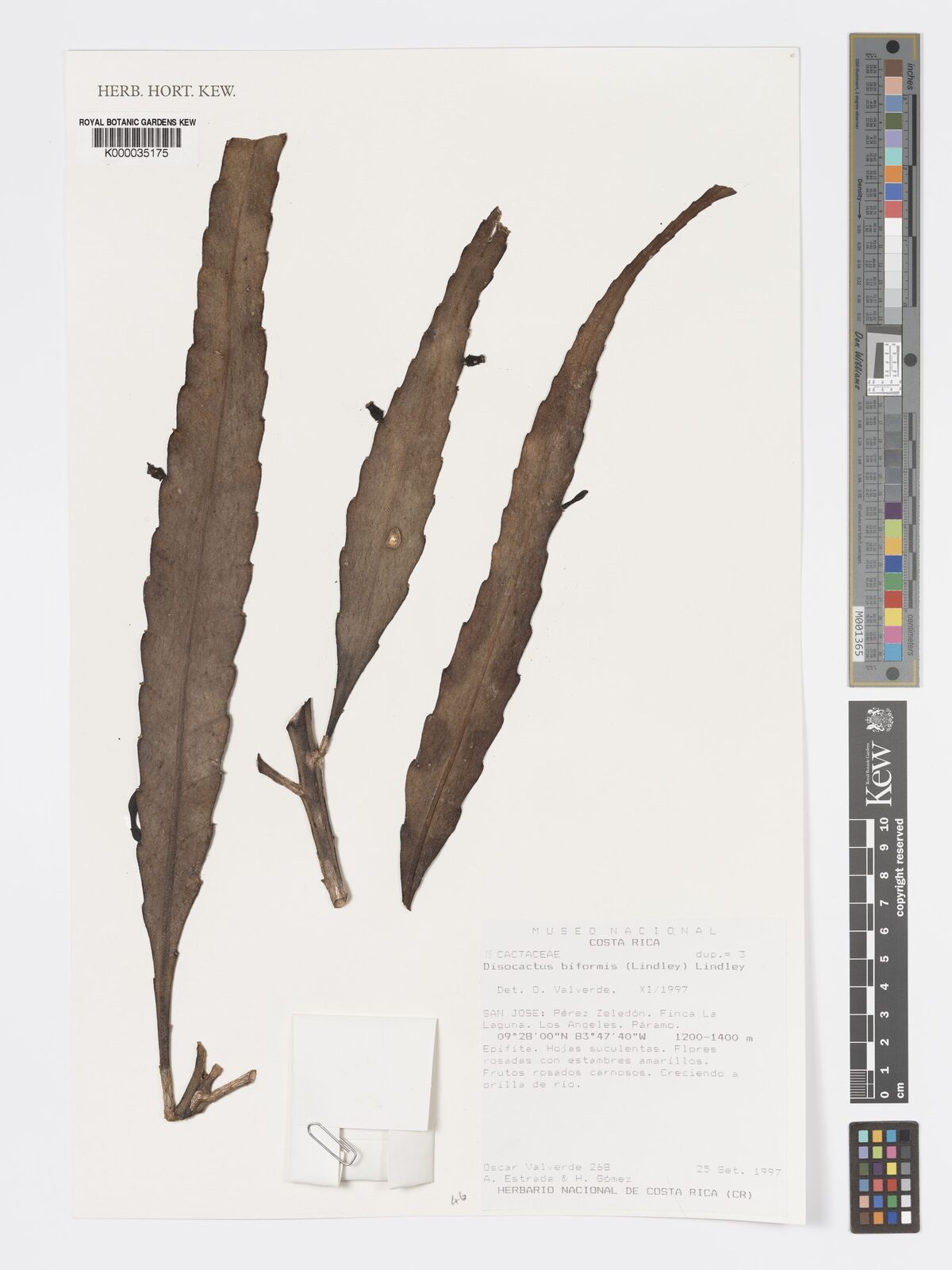 Reference image
Biform Disocactus
Disocactus biformis is a tropical epiphytic cactus species in the family Cactaceae, highly valued for its elegant, cascading habit 1. It is an exceptional and graceful plant commonly grown in hanging baskets.
Originally described by John Lindley as Cereus biformis, this species was subsequently transferred to the genus Disocactus 2. It is also known under synonyms like Disocactus eichlamii. The specific epithet "biformis" refers to the dimorphic stems which transition from cylindrical bases to flattened branches.
Native to Central America, its range extends through the seasonally dry tropical forests of Guatemala and Honduras 1. It thrives in tree canopies as an epiphyte, receiving filtered light and high humidity.
The plant develops weeping, flattened, leaf-like lanceolate stems with slightly wavy or scalloped margins. In late spring and summer, it produces tubular, diurnal flowers of a brilliant magenta-red hue 2. These are followed by small, decorative red berries.
Unlike arid-land cacti, this epiphyte prefers high humidity and bright, filtered indirect light. It thrives in porous, organic-rich media that are kept consistently but moderately damp during the active growing season.
Treating it like a desert cactus by allowing prolonged droughts or, conversely, over-watering in dense, compacted soils are the primary causes of stem loss and root rot.
Protect from harsh direct sun; bright indirect or filtered sunlight is best.
Water when the topsoil dries; it requires more frequent watering than desert cacti.
Well-drained, airy epiphytic mix containing pine bark, peat, and perlite.
Virtually spineless, non-toxic, and completely safe for households with pets.
Moderate difficulty; requires balancing humidity and moisture without waterlogging.
Grows as an epiphyte on tree trunks in the tropical forest canopies of Guatemala and Honduras.
