
Light
Filtered Sun
Filtered sunlight or bright indirect light; avoid harsh direct afternoon sun.
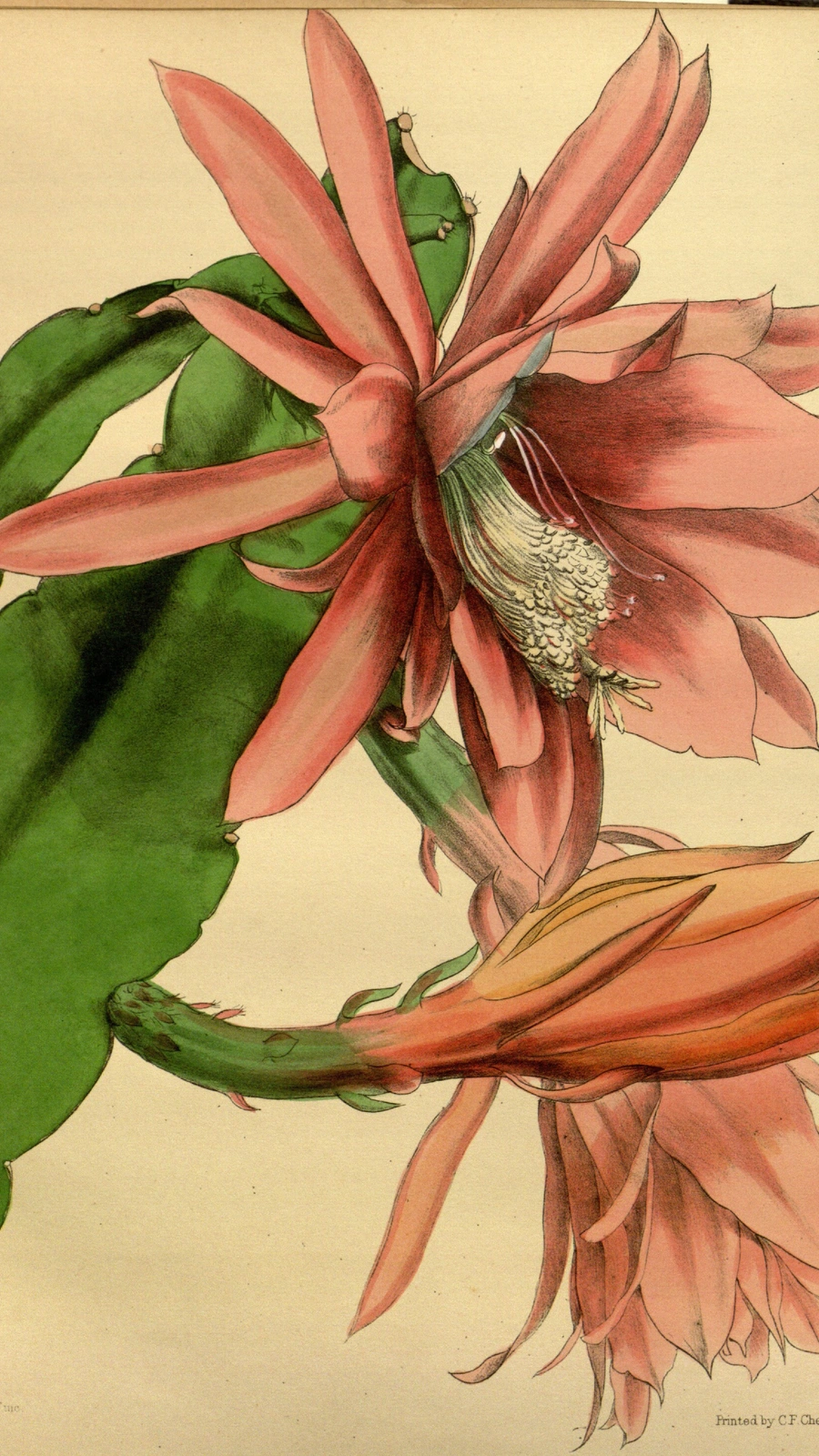 Reference image
Charlton's Orchid Cactus
Disocactus × charltonii is a hybrid epiphytic cactus belonging to the family Cactaceae. Known for its cascading growth habit, this taxon is highly valued in horticulture for its spectacular, large blossoms and flattened, leaf-like cladodes 1.
The genus Disocactus comprises tropical epiphytic cacti. The hybrid formula "×" in its scientific name denotes its cultivated origin. It represents targeted breeding efforts within the tribe Hylocereeae to maximize floral displays 2.
As a horticultural hybrid, this plant does not have a direct native range in the wild. Its parental species, however, are native to the moist, shaded canopies of montane and cloud forests in Central and South America, where they grow non-parasitically on trees 1.
The stems are green, flattened, and leaf-like with scalloped or wavy margins. True spines are absent or reduced to tiny bristles within the areoles. The striking, funnel-shaped flowers typically emerge in shades of pink, red, or magenta during spring.
Unlike desert cacti, this hybrid requires filtered light, high humidity, and a well-draining yet moisture-retentive substrate. It should never be exposed to scorching afternoon sun, which quickly bleaches the delicate stems.
The most frequent mistakes include treating it like an arid desert cactus by keeping it completely dry, or using heavy, poorly draining soils that lead to root rot 2.
Filtered sunlight or bright indirect light; avoid harsh direct afternoon sun.
Water when the top soil dries out; keep slightly drier during the winter rest.
Well-draining, airy mix rich in organic matter (coco coir, orchid bark, perlite).
Non-toxic to pets and humans, making it a safe choice for indoor hanging baskets.
Moderate; requires attention to ambient humidity and avoiding overwatering.
A cultivated hybrid not found in the wild. Its ancestral species inhabit the humid subtropical and tropical cloud forests of Mesoamerica and South America, growing nestled in tree branches.
