
Light
Filtered Sun
Provide bright, filtered light. Avoid direct, scorching midday sun.
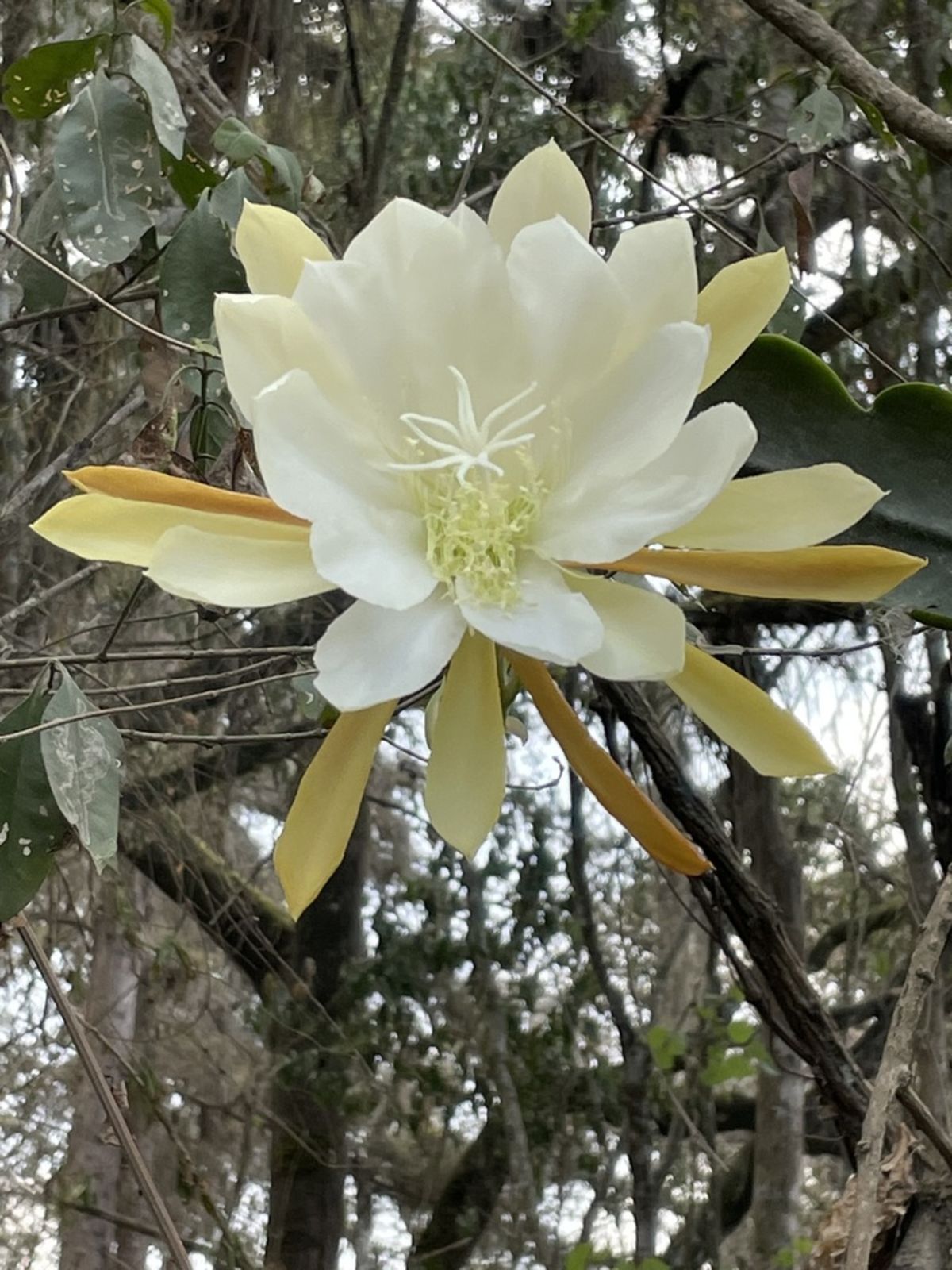 Reference image
Crenate Orchid Cactus
Disocactus crenatus (formerly widely known as Epiphyllum crenatum) is an epiphytic cactus species celebrated for its large, fragrant, creamy-white flowers. Growing on trees or rock crevices in the wild, this magnificent species has played a pivotal role in the history of hybrid orchid cacti, serving as a primary parent for countless Epiphyllum cultivars 1.
Originally described by John Lindley in 1844 as Cereus crenatus, it was subsequently moved to Epiphyllum and more recently transferred to Disocactus based on phylogenetic evidence 2. The specific epithet 'crenatus' refers to the rounded, scalloped margins of its flattened, leaf-like stems.
This species is native to a broad region stretching from Mexico through Guatemala and Honduras to Panama. It thrives in seasonally dry tropical forests, growing as an epiphyte on trees or occasionally as a lithophyte on rocky cliffs at elevations between 1000 and 1750 meters 1.
Disocactus crenatus features semi-erect, eventually arching or trailing stems that can reach up to 1 meter in length. The primary stems are woody and terete, while the secondary branches are flattened, leaf-like, and deeply lobed. Its spectacular blossoms open at night, measuring up to 29 cm long and 20 cm wide, releasing an intense, sweet fragrance 2.
Unlike desert cacti, this epiphytic species prefers filtered sunlight and higher humidity. It requires a highly organic, free-draining substrate such as an orchid-bark and peat mix. Watering should be thorough once the top layer of soil dries, with a dry, cool rest period in winter.
The most prevalent error is using dense, heavy soil and overwatering, which quickly causes root rot. Conversely, keeping the plant under direct, harsh afternoon sun will scorch the delicate flattened stems.
Provide bright, filtered light. Avoid direct, scorching midday sun.
Water thoroughly when the top soil dries out; reduce watering significantly in winter.
Use a well-aerated mix of peat moss, perlite, and orchid bark.
Non-toxic and safe for homes with cats, dogs, and children.
Moderate. Requires attention to watering and humidity, but very rewarding.
Native to the seasonally dry tropical forests of southern Mexico and Central America down to Panama, where it grows nestled in tree branches or rocky crevices.
