
Light
Filtered Sun
Bright, filtered sunlight or partial shade. Avoid direct, intense afternoon sun.
 Reference image
 Reference image
Red Orchid Cactus
Disocactus × jenkinsonii is a highly popular, eye-catching epiphytic hybrid cactus belonging to the family Cactaceae. Renowned for its cascading growth habit and massive, funnel-shaped vivid red flowers that bloom in spring, it is a staple in hanging basket cultivation worldwide.
This taxon is an artificial hybrid resulting from the cross between Disocactus phyllanthoides and Disocactus speciosus 1. It has been historically classified under various horticultural names including Epicactus × jenkinsonii and Phyllocactus × jenkinsonii. It belongs to the tribe Hylocereeae within the cactus family.
While its parent species are native to the humid montane cloud forests of Mexico, where they grow as epiphytes on tree trunks, Disocactus × jenkinsonii itself does not have a native wild distribution. It exists purely as a cultivated hybrid widely distributed in global horticulture 2.
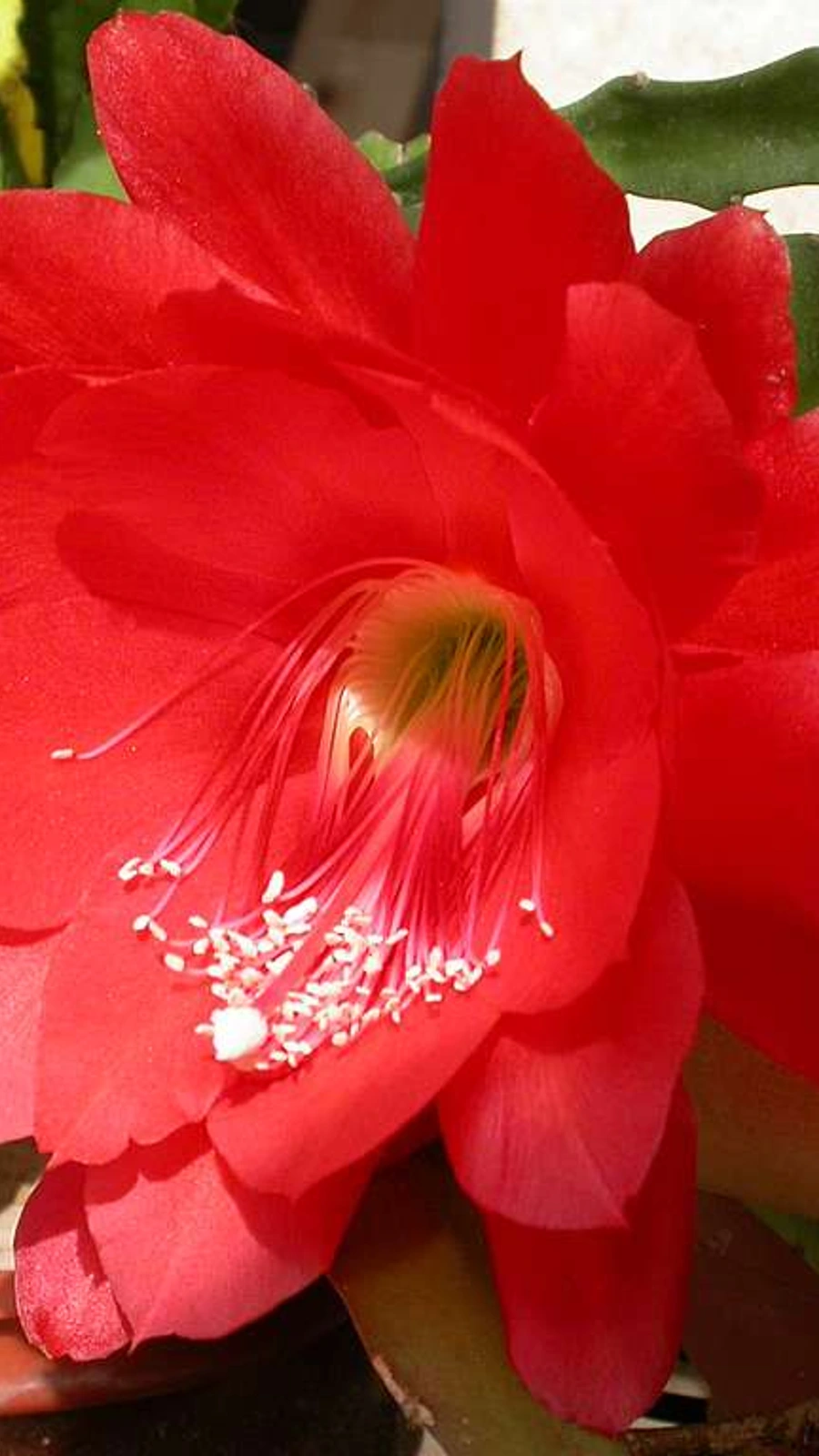
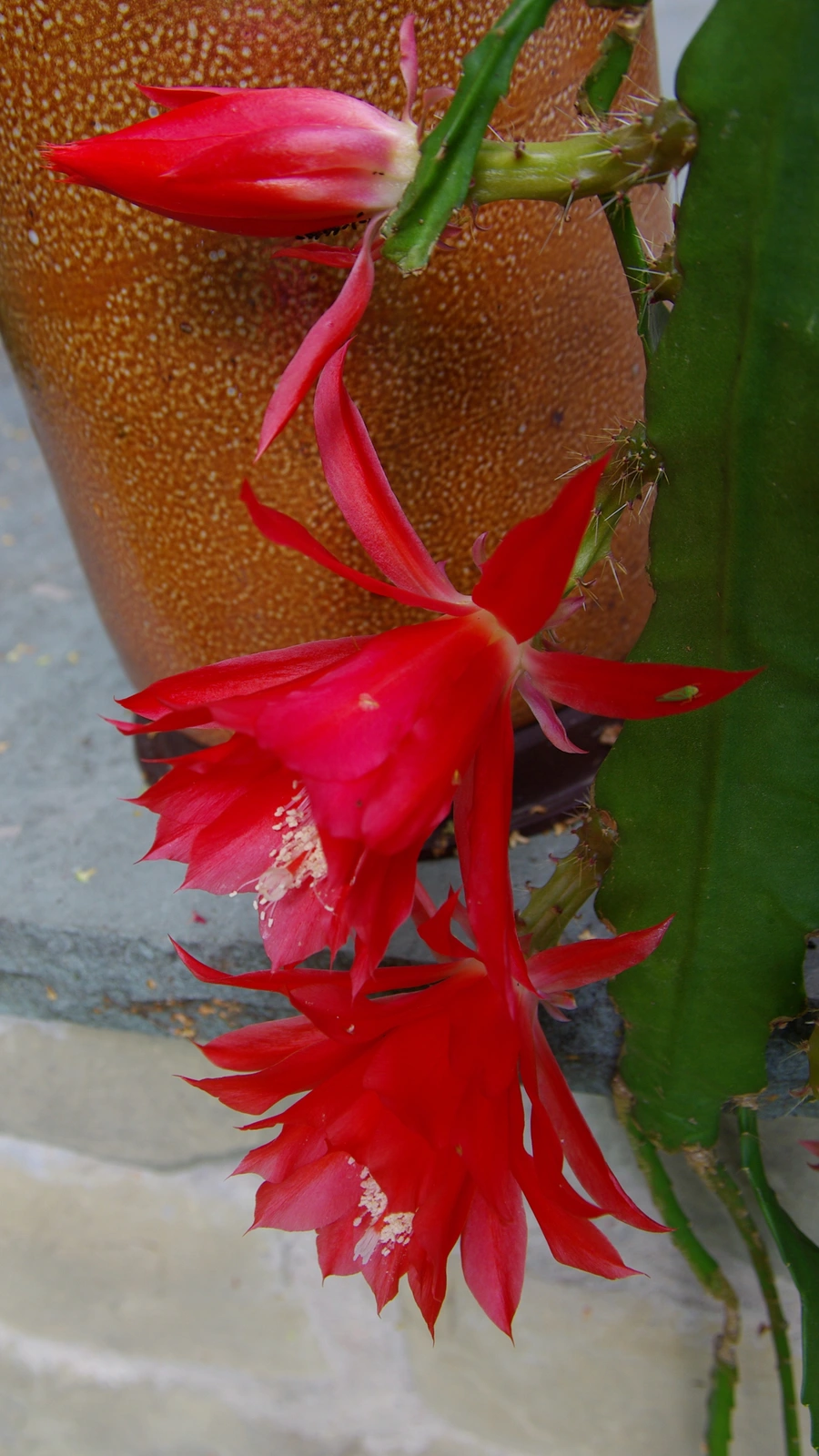
The plant produces flattened, leaf-like, green stems with scalloped margins that gracefully drape downwards. The star attraction is the spectacular, funnel-form flowers, measuring up to 10-15 cm in diameter. The petals exhibit a brilliant scarlet to crimson hue with a subtle purplish sheen.
Unlike desert cacti, this forest epiphyte prefers bright, indirect or filtered sunlight and high humidity. It thrives in a well-draining, organic-rich soil mix mimicking its natural tree-dwelling habitat. Regular watering during the growing season is essential, followed by a dry, cool winter rest.
Overwatering in heavy, clay-rich soil is the leading cause of root rot. Lack of a cool winter dormancy period will significantly reduce or entirely prevent spring flowering.
Bright, filtered sunlight or partial shade. Avoid direct, intense afternoon sun.
Water thoroughly when the top inch of soil feels dry in summer; keep nearly dry in winter.
Highly porous, organic epiphytic mix containing peat, perlite, and orchid bark.
Non-toxic to cats and dogs. Handle with care due to minor bristles along stem margins.
Easy; ideal for beginners who can balance watering and winter cooling.
An artificial horticultural hybrid bred from parent species native to the humid, high-altitude montane forests of Mexico, where they naturally grow nestled in tree branches.
