
Light
Filtered Sun
Prefers bright, indirect light or filtered morning sun. Avoid harsh midday sun.
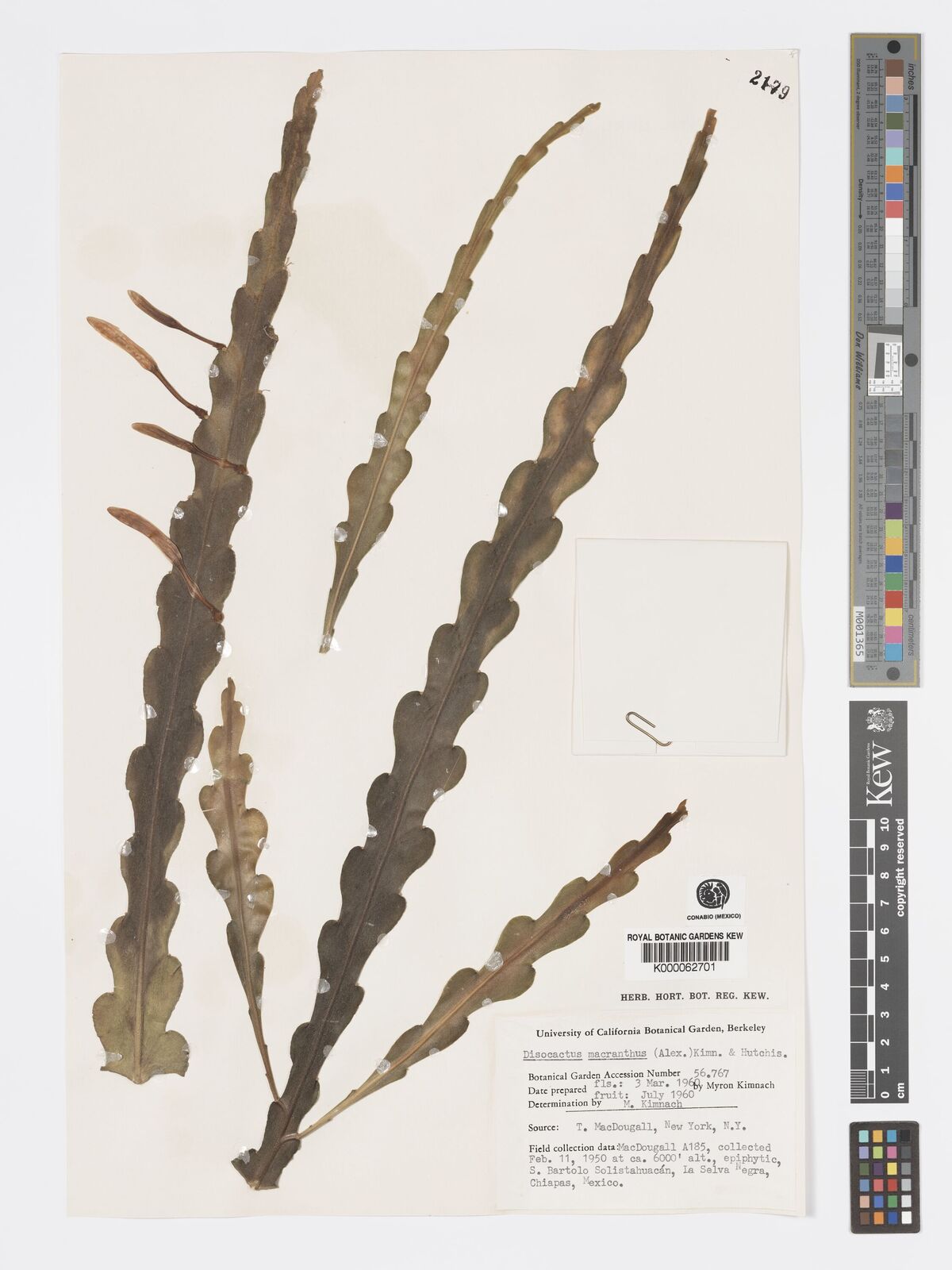 Reference image
Yellow-Flowered Epiphytic Cactus
Disocactus macranthus is an outstanding epiphytic cactus species belonging to the Cactaceae family, prized for its pendulous habits and highly fragrant, yellow-green blossoms. Unlike desert cacti, it lives on tree trunks in moist, shady tropical forests, making it an excellent hanging basket specimen 1.
It was originally described by Alexander in 1947 as Pseudorhipsalis macrantha and was later moved to the genus Disocactus by Myron Kimnach in 1993 2. It is still often found in older literature under its taxonomic synonym Pseudorhipsalis macrantha.
This species is native to southern Mexico (including Veracruz, Oaxaca, and Chiapas) and Guatemala. It is typically found in wet tropical mountain forests and cloud forests at elevations of 800 to 1800 meters, growing epiphytically in areas of high relative humidity 1.
It produces flat, leaf-like, jointed stems with wavy margins. The branches cascade downwards, reaching lengths of 60 to 90 cm. The flowers, which appear in late winter to early spring, are tube-shaped with pale yellow to greenish outer tepals and creamy white inner tepals, releasing a sweet fragrance 2.
It thrives in bright, indirect or filtered light and high humidity. It should not be treated as a desert cactus; the potting medium must remain slightly damp, using a well-draining epiphytic or orchid-like mix rather than standard sand-rich cactus soil 1.
The most frequent mistake is exposing the plant to harsh, direct sunlight, which scorches the stems. Overwatering in heavy soils without adequate drainage leads to root rot. Neglecting ambient humidity can cause the buds to drop before blooming.
Prefers bright, indirect light or filtered morning sun. Avoid harsh midday sun.
Keep the soil evenly moist but never waterlogged. Reduce watering in winter.
Epiphytic soil mix containing peat, perlite, and fine orchid bark for aerated drainage.
Generally spineless and non-toxic, making it safe for homes with pets and children.
Moderate care level, requiring monitored humidity and watering compared to desert cacti.
Native to the mountain slopes of southern Mexico and Guatemala, where it grows as an epiphyte in humid, mid-to-high elevation cloud forests.
