
Light
Bright Indirect Light
Bright indirect or filtered sunlight; protect from harsh direct midday sun.
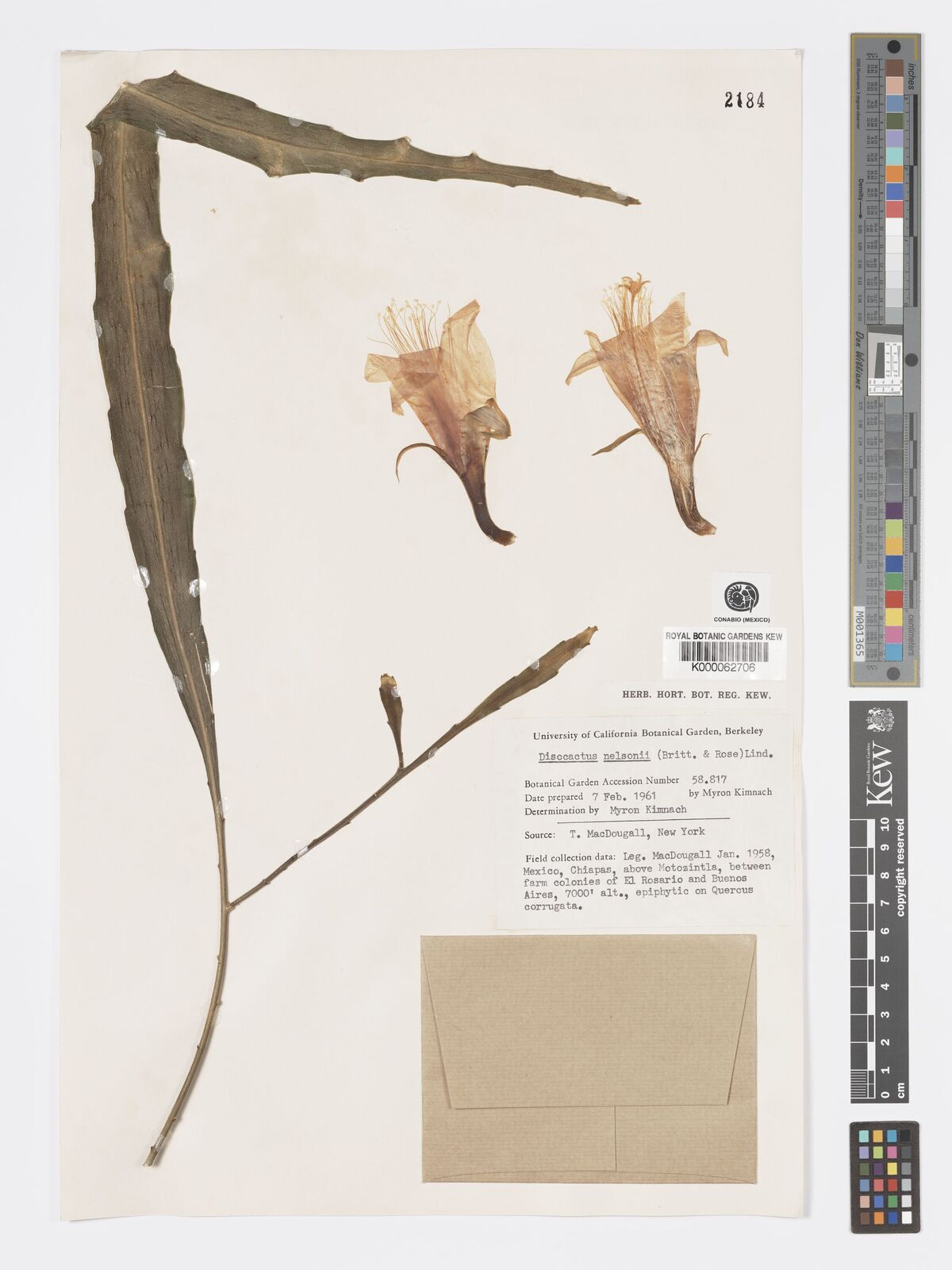 Reference image
Nelson's Epiphytic Cactus
Disocactus nelsonii is a captivating, pendulous epiphytic cactus species belonging to the family Cactaceae. In its native habitat, it grows nestled on tree trunks or within rock crevices. It is widely cultivated for its cascading, leaf-like flattened stems and spectacular pink-to-purple tubular flowers that bloom abundantly in spring 1.
Originally collected by Edward William Nelson, this species is botanically recognized as Disocactus nelsonii (synonymized in some older literature as Chiapasia nelsonii) 2. As part of the Hylocereeae tribe within the Cactaceae family, it represents a lineage of cacti specialized for canopy life.
This species is native to southern Mexico (including Chiapas, Oaxaca, and Tabasco) and Guatemala. It thrives in seasonally dry tropical forests as well as montane cloud forests, where it grows as an epiphyte on trees or occasionally as a lithophyte on moist rock faces 1.
The stems are branched from the base, initially erect but soon becoming gracefully arching or pendulous. The primary stems are woody and rounded, while the secondary segments are flattened, leaf-like, with scalloped or crenate margins. The striking funnel-shaped flowers reach lengths of 7-10 cm, displaying vivid shades of magenta, pink, or purplish-red 2.
Unlike desert cacti, Disocactus nelsonii prefers filtered bright light or partial shade. It requires a well-aerated, moisture-retaining yet highly porous growing medium rich in organic matter, such as a mix of peat, perlite, and orchid bark. Water thoroughly once the topsoil dries out, and reduce moisture during the winter dormant phase 1.
The most frequent mistake is overwatering, which leads to root rot. Additionally, exposure to direct, harsh summer sunlight can cause permanent stem scorch, whereas extremely low atmospheric humidity may result in premature flower bud drop.
Bright indirect or filtered sunlight; protect from harsh direct midday sun.
Water when the top of the soil dries out; reduce watering during winter dormancy.
Rich, well-draining epiphytic mix containing pine bark and perlite.
Non-toxic to pets; almost entirely spineless and safe to touch.
Moderate; requires attention to watering and humidity balance.
Native to the cloud forests and seasonally dry tropical woodlands of southern Mexican states such as Chiapas and Oaxaca, extending into Guatemala, where it grows high up in the tree canopy.
