
Light
Bright Indirect Light
Thrives in bright, filtered sunlight; direct sun can bleach or scorch the flattened stems.
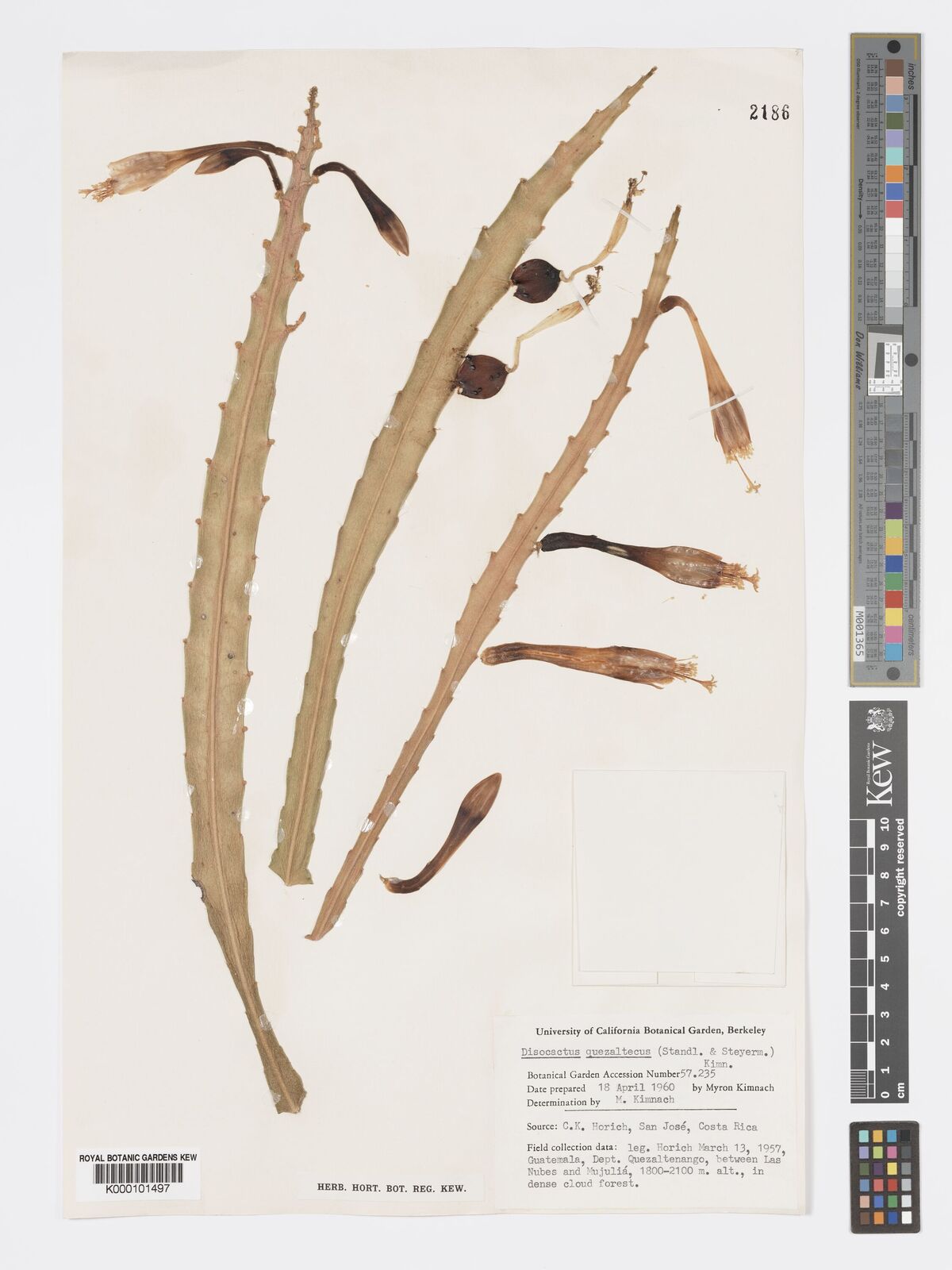 Reference image
Quezaltenango Epiphytic Cactus
Disocactus quezaltecus is an elegant, pendulous epiphytic cactus belonging to the family Cactaceae, admired for its unique growth habit and delicate spring blooms.
Originally described under the genus Epiphyllum as Epiphyllum quezaltecum, modern phylogenetic studies placed this species within the genus Disocactus 1. Its specific epithet refers to the department of Quetzaltenango in Guatemala.
This species is native to the cloud forests and seasonally dry tropical montane regions of Guatemala, typically growing on trees at elevations between 1500 and 2000 meters above sea level 2.
It features many-branched, flattened, leafy green stems with slightly scalloped margins. The flowers are tubular, brilliant reddish-pink, and emerge from the stem margins in late spring.
As an epiphyte, it thrives in bright, filtered light and highly porous, organic-rich growing media. Watering should be thorough but infrequent enough to allow the substrate to dry partially between applications.
Overwatering and using heavy, compacted garden soil are the primary causes of root rot. Insufficient air humidity or extreme temperature drops can also cause the plant to drop its flower buds prematurely.
Thrives in bright, filtered sunlight; direct sun can bleach or scorch the flattened stems.
Water when the top half of the soil feels dry. Reduce watering significantly in winter.
Requires an airy, acidic substrate mixed with bark, peat, and perlite for optimal drainage.
Safe and non-toxic to cats, dogs, and other household pets.
Moderate care level, requiring mindful humidity management and proper epiphytic potting media.
Native to the humid montane forests and seasonally dry tropical woodlands of southwestern Guatemala, specifically near Quetzaltenango.
