
Light
Filtered Sun
Prefers bright, filtered sunlight; avoid direct midday sun to prevent scorching.
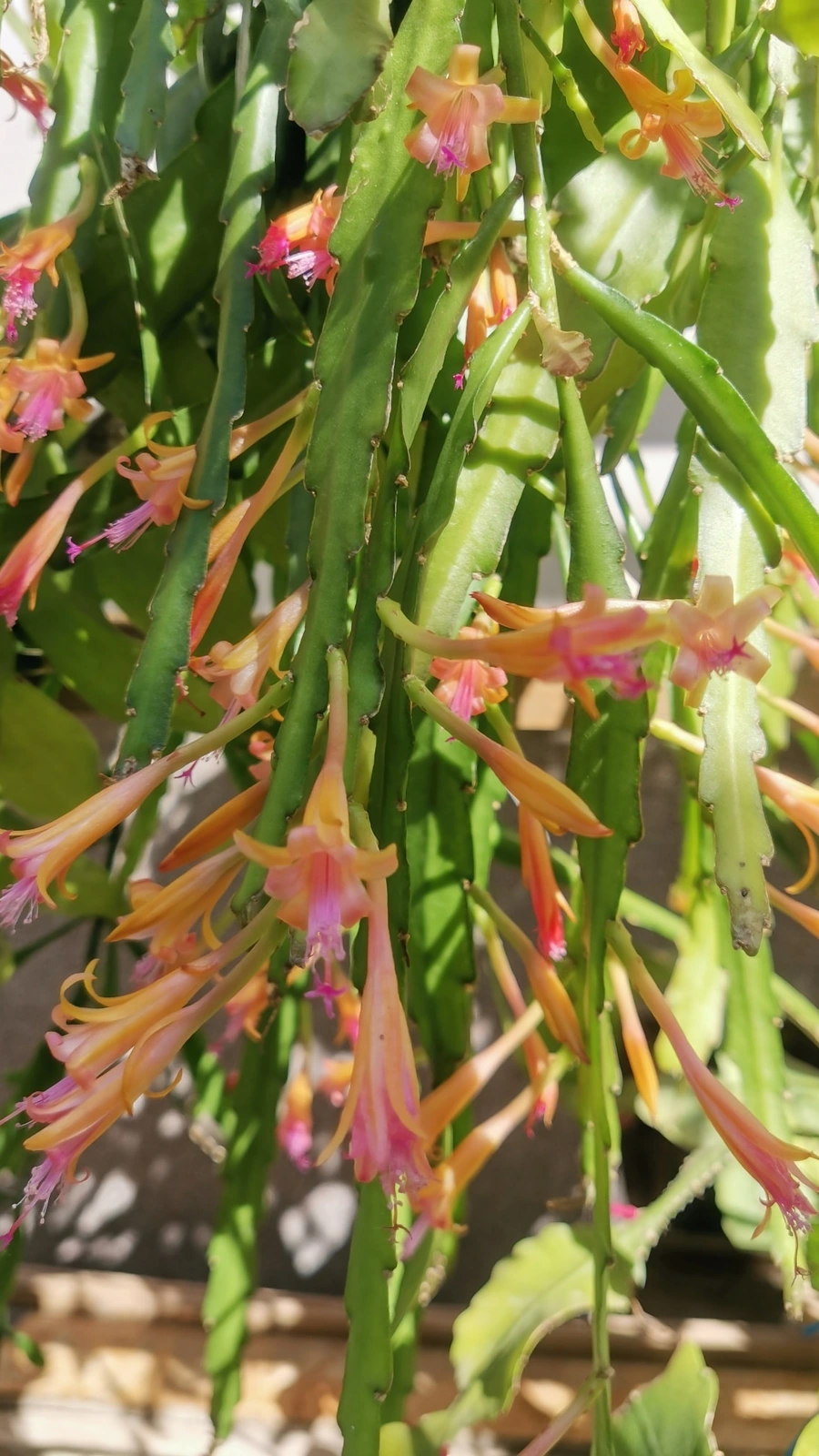 Reference image
El Salvador Disocactus
Disocactus salvadorensis is an epiphytic cactus species within the family Cactaceae, characterized by its cascading growth habit and beautiful tubular pinkish-red flowers 1. It is highly prized by collectors of forest cacti.
Belonging to the tribe Hylocereeae, this species was named 'salvadorensis' after its country of discovery, El Salvador 2. It has previously been classified under the genus Pseudorhipsalis, but modern phylogenetic analyses place it firmly within Disocactus.
The species is native to Central America, specifically El Salvador 1. It thrives in seasonally dry tropical forests, growing as an epiphyte on trees at elevations ranging from 500 to 1000 meters, where it benefits from high humidity and frequent air movement 2.
The stems are flattened, leaf-like, and pendulous, with scalloped margins that can blush reddish under bright light. The flowers are small, funnel-shaped, typically pale pink to magenta, followed by small round purple fruits when pollinated.
In cultivation, it requires bright, indirect light and a well-draining potting medium rich in organic matter. Unlike desert cacti, it prefers consistent moisture and a humid microclimate, making it ideal for hanging baskets in bright bathrooms or shaded patios.
The most frequent mistakes are treating it like a desert cactus by letting it dry out completely for long periods, or planting it in heavy, poorly drained soil, which leads to rapid root rot.
Prefers bright, filtered sunlight; avoid direct midday sun to prevent scorching.
Keep the soil lightly moist. Water when the top inch of soil feels dry.
Rich, well-draining epiphytic mix with perlite, peat, and orchid bark.
Non-toxic to cats, dogs, and humans, making it a safe choice for pet owners.
Moderate. Requires consistent humidity and correct watering balance compared to desert cacti.
Originates from the seasonally dry tropical forests of El Salvador, where it grows hanging from tree branches, absorbing nutrients from rain and decaying organic matter.
