
Light
Filtered Sun
Prefers bright, filtered light; protect from intense direct afternoon sun.
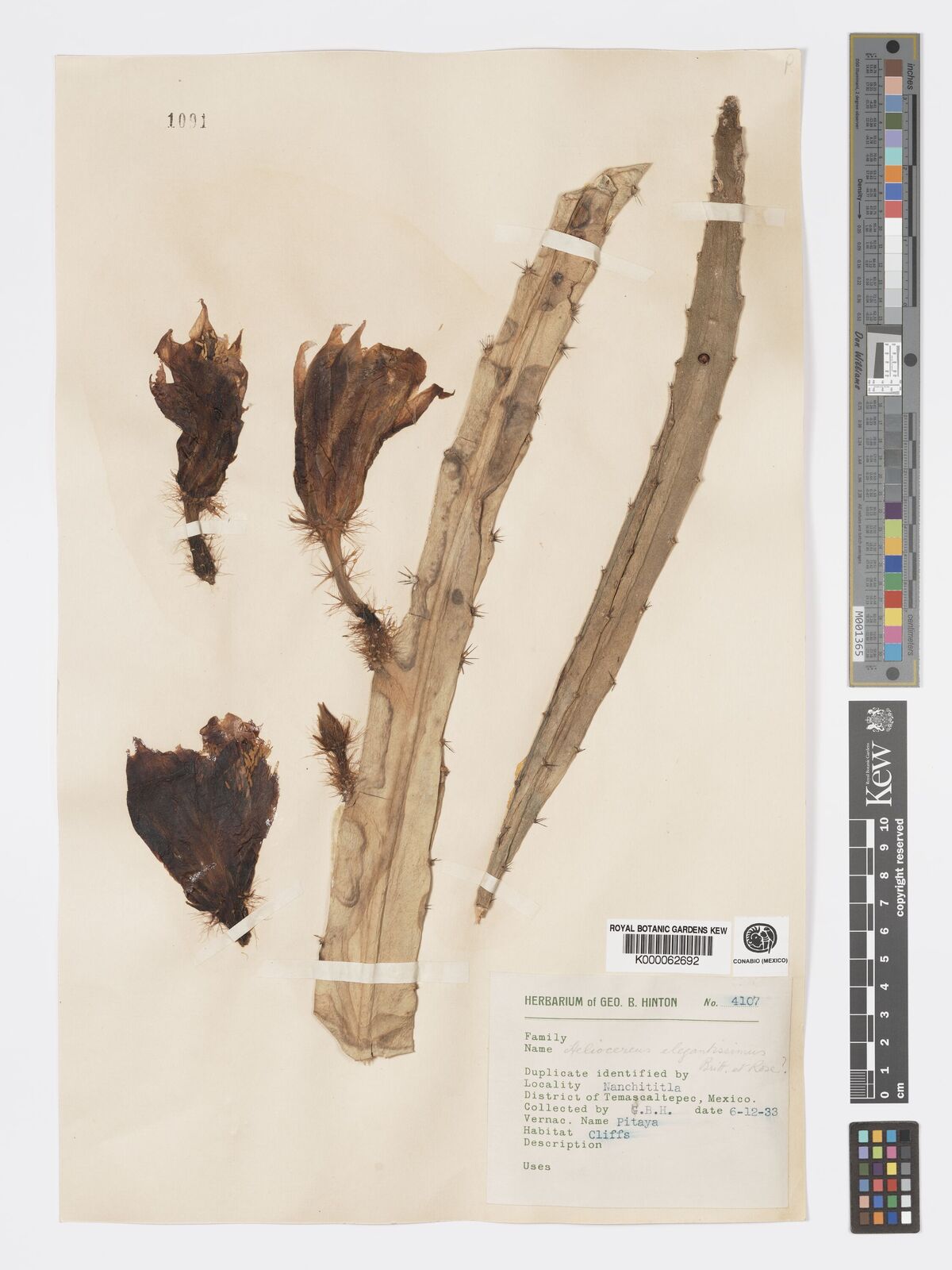 Reference image
Showy Epiphyte Cactus
Disocactus speciosus is a spectacular epiphytic or lithophytic cactus renowned for its large, vibrant scarlet-red flowers with a brilliant purplish-blue sheen. It is one of the parent species of many modern orchid cactus hybrids (epiphyllums) 1.
Belonging to the family Cactaceae, this species was previously classified under the genus Heliocereus as Heliocereus speciosus. Taxonomic revisions placed it under Disocactus, emphasizing its evolutionary relationship with other forest-dwelling epiphytic cacti 2.
This species is native to Mexico and parts of Central America, including Guatemala and Honduras 1. It thrives in seasonally dry tropical biomes, growing on tree trunks or rocky cliffs at mid-to-high elevations where it benefits from high humidity and air movement 3.
The stems are green, arching or pendent, typically featuring 3 to 5 wavy ribs with small, bristly spines along the margins. The flowers are funnel-shaped, up to 15 cm wide, exhibiting an extraordinary scarlet color with an iridescent violet interior throat 2.
It prefers bright, filtered sunlight and should be protected from harsh, direct midday rays. Cultivation requires a highly porous, organic-rich epiphytic substrate. Regular watering is essential during the active growing season, followed by a cool, dry rest period in winter 3.
Treating it like a desert cactus by allowing prolonged drought during summer or planting it in dense, heavy soil leads to root rot and poor, non-existent flowering.
Prefers bright, filtered light; protect from intense direct afternoon sun.
Keep soil slightly moist in summer, but allow to dry out significantly in winter.
Requires loose, airy, organic-rich epiphytic or orchid-style mix.
Non-toxic to pets, but stems have small, sharp spines that can cause irritation.
Moderate, requiring more humidity and structured watering than desert cacti.
Naturally distributed across highland cloud forests and seasonal dry forests in Mexico, Guatemala, and Honduras, where it hangs from trees or clings to rock faces.
