
Light
Bright Indirect Light
Bright, indirect light or filtered morning sun. Avoid harsh midday sun.
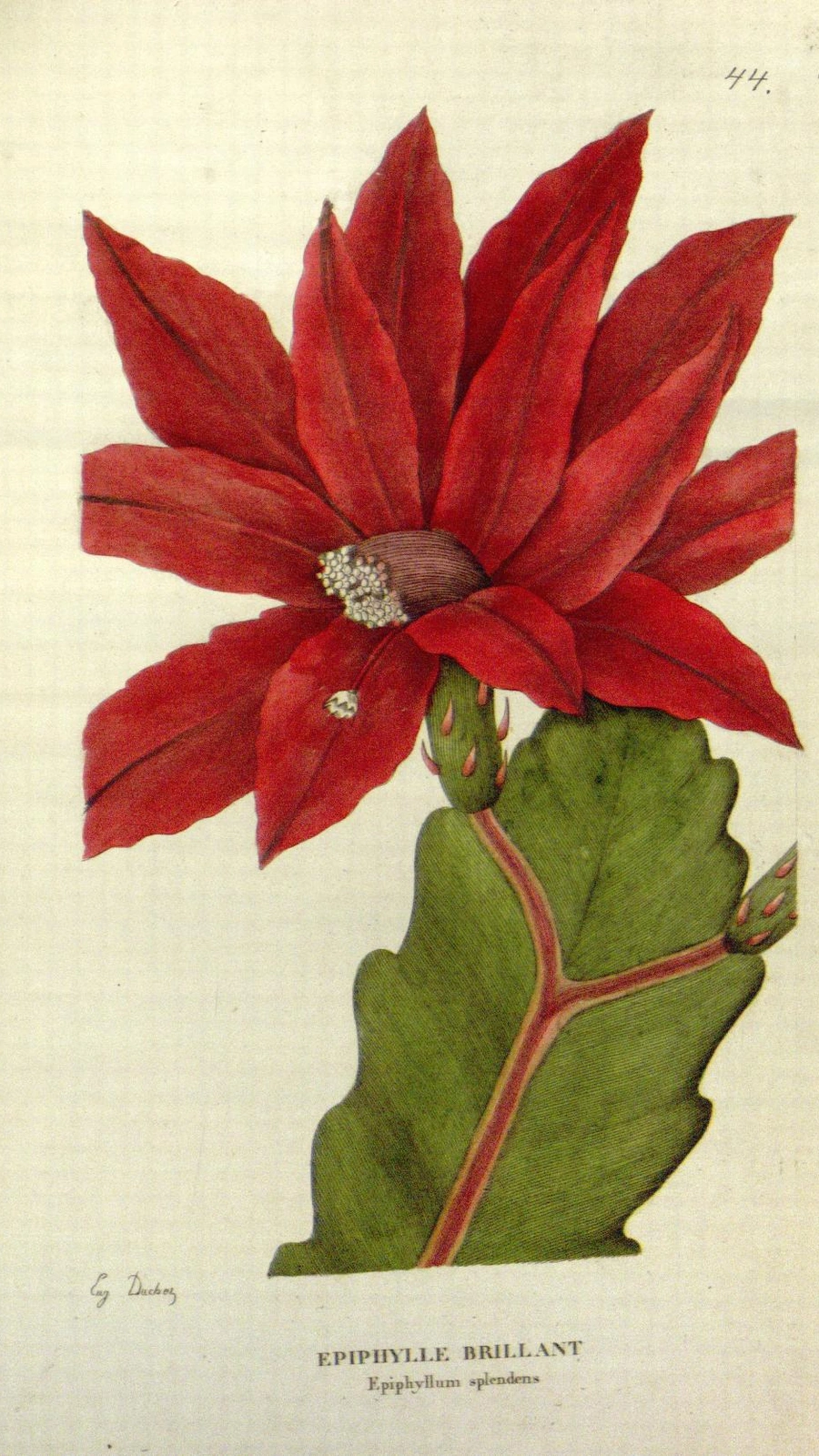 Reference image
Splendid Orchid Cactus
Disocactus × splendens is an eye-catching hybrid cactus belonging to the family Cactaceae. Known primarily for its spectacular, large, and vibrantly colored reddish-pink blossoms, it is highly sought after by collectors of epiphytic cacti 1.
This taxon is a historic horticultural hybrid resulting from the cross between Disocactus phyllanthoides and Disocactus speciosus. Historically, it has been categorized under various genera including Heliocereus and within the informal group of Epicactus or Orchid Cactus hybrids 2. The genus name Disocactus derives from Greek, signifying its distinct dual-formed stems.
While its parent species are native to the montane cloud forests of Mexico where they grow on tree branches as epiphytes or on rocky cliffs as lithophytes, Disocactus × splendens itself is of cultivated origin. It thrives in environments that mimic high-altitude, humid canopy conditions.
The plant features elongated, flattened, trailing green stems with scalloped or lobed margins. In late spring, spectacular funnel-shaped flowers emerge from the areoles along the stem margins. The blooms display a luminous quality, capturing light with satin-textured petals 3.
Unlike desert cacti, this epiphyte prefers bright, filtered light and moderate to high humidity. The potting medium should remain airy but moist, using a well-drained organic mix. Restricting watering during the cooler winter months induces a dormancy period that is crucial for next season's flower development.
Overwatering in heavy, compacted soil leads rapidly to root rot. Insufficient light results in weak, spindly growth and a complete lack of flowers. Keeping the plant in drafty, freezing conditions or excessively warm winter rooms will also impair its overall health 3.
Bright, indirect light or filtered morning sun. Avoid harsh midday sun.
Keep soil lightly moist during the growing season; reduce significantly in winter.
Well-draining, porous epiphyte mix with perlite, peat, and bark.
Non-toxic to cats and dogs, making it a safe choice for pet owners.
Moderate. Requires attentive watering and winter cooling for flowering.
An artificial or natural hybrid derived from parental species native to the humid cloud forests of Mexico, adapted to dappled light and high humidity.
