
Light
Full Sun
Requires at least 6-8 hours of direct, unfiltered sunlight daily to maintain its shape.
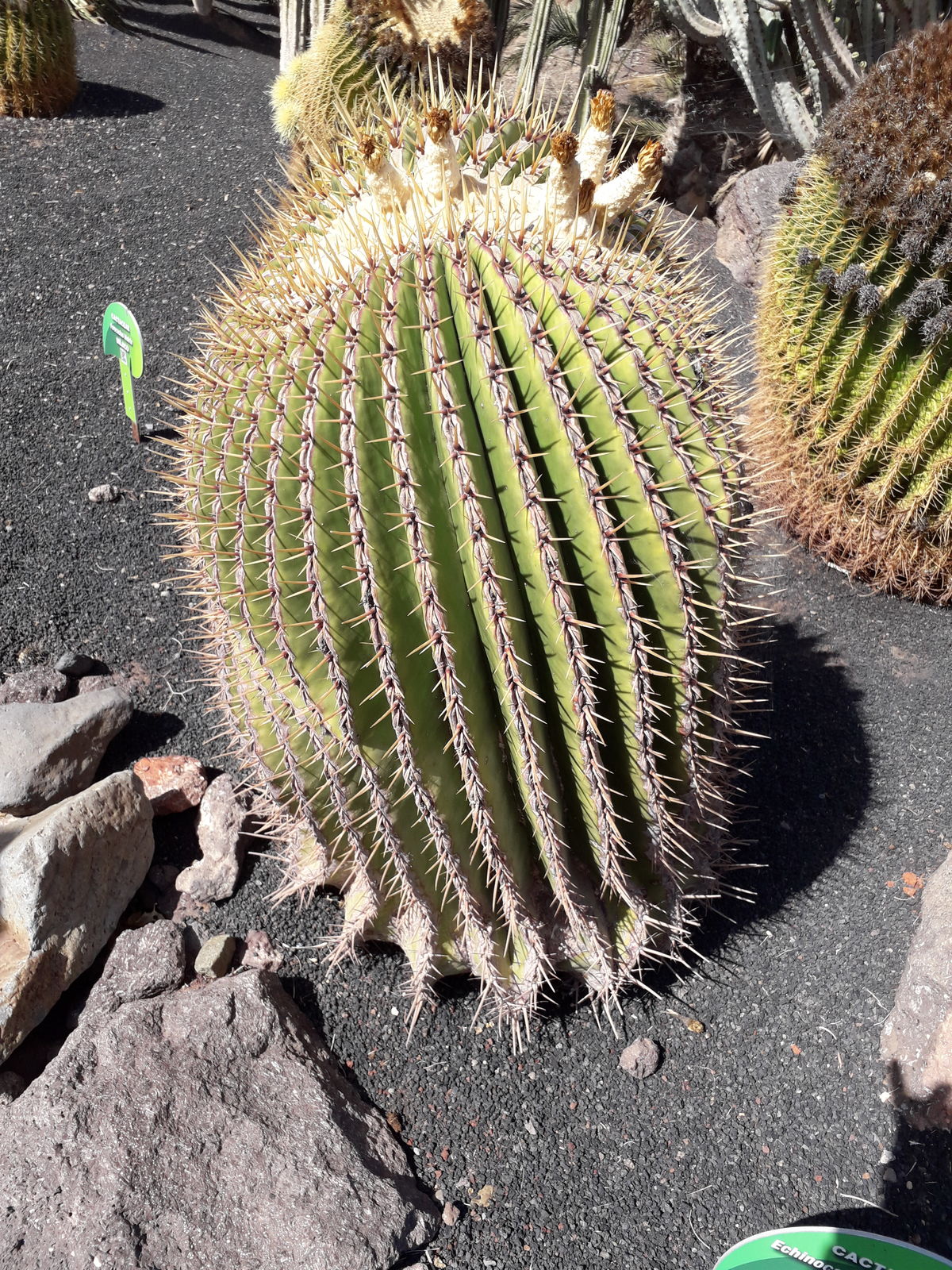 Reference image
Giant Barrel Cactus
Echinocactus platyacanthus, commonly known as the giant barrel cactus, is one of the most majestic and largest species in the family Cactaceae. Native to Mexico, this iconic plant is famous for its massive globular to cylindrical stems that dominate the dry arid landscapes 1.
Described initially by Link & Otto, the genus name Echinocactus derives from Greek meaning 'spiny cactus'. The specific epithet platyacanthus translates to 'flat-spined', referencing its characteristic wide, flattened spines. Historical synonyms include Echinocactus ingens and Echinocactus grandis 2.
This species is widely distributed across the dry deserts and limestone slopes of northern and central Mexico, including Guanajuato, San Luis Potosí, Hidalgo, and Puebla 1. It thrives in xerophytic shrublands, adapting perfectly to calcium-rich soils.
Young specimens start as globose stems, which eventually turn cylindrical with age, reaching heights of up to 2.5 meters and widths of 1.5 meters. The stem features up to 50 prominent vertical ribs. Rigid, flattened, gray-brown spines emerge from felted areoles. The apex of mature plants produces a dense yellow wool from which bright yellow, cup-shaped flowers emerge 2.
In cultivation, it is highly appreciated for its architectural form. It requires maximum sunlight exposure and exceptionally well-draining mineral soil. If kept completely dry during winter dormancy, it can survive brief frost periods.
The most frequent issue is root rot triggered by overwatering, particularly in cold seasons. Growing the cactus in low-light indoor environments causes etiolation, where the stem stretches unnaturally toward light [1].
Requires at least 6-8 hours of direct, unfiltered sunlight daily to maintain its shape.
Water deeply but infrequently. Allow the substrate to dry completely between waterings, and keep dry in winter.
Requires highly porous, inorganic, and limestone-rich potting media with excellent drainage.
Non-toxic, but the formidable, sharp, and stiff spines can cause serious skin injuries. Keep away from pets and kids.
Very easy to care for if overwatering is avoided and sufficient direct sunlight is provided.
Widely distributed across the semi-arid central and northern regions of Mexico, primarily found anchoring in limestone soils on dry hillsides and canyon walls.
