
Light
Direct Sun
Requires full, direct sun for at least 6 hours daily to maintain its compact shape.
 Reference image
Pseudo-Cereus Barrel Cactus
Echinocactus pseudocereus is a taxonomically intriguing and rare member of the Cactaceae family 1. It is characterized by its transition from a globose juvenile form to a slightly columnar mature structure, earning it the specific epithet 'pseudocereus' (false cereus).
Historically described under the genus Echinocactus, this species represents a botanical bridge in historical literature between globular barrel cacti and columnar species 2. Today, databases such as Kew's Plants of the World Online keep it as an outstanding representative of desert succulent diversity with historical collector value 1.
Native to the arid, high-altitude desert regions of Mexico, this cactus thrives on limestone rocky slopes, cliffs, and gravelly substrates where solar radiation is intense and drainage is absolute 2.
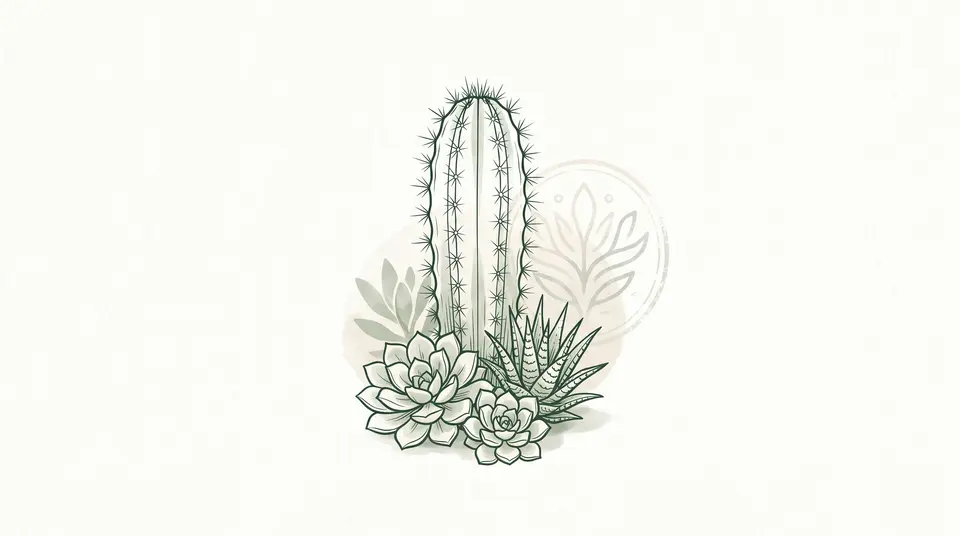
It features a dark green body with prominent, sharp ribs lined with dense areoles. The spines are robust, needle-like, and range from pale yellow to reddish-brown. When mature, it produces small, funnel-shaped yellow flowers at the apical meristem during the peak of summer.
In cultivation, it requires a replication of its harsh natural habitat: maximum direct sunlight, low ambient humidity, and an exclusively mineral-based substrate that prevents water retention around the root system.
Overwatering and low-light placements are the primary causes of failure, leading to rapid root rot or etiolation, where the plant stretches weakly towards light source 1.
Requires full, direct sun for at least 6 hours daily to maintain its compact shape.
Allow the potting mix to dry out 100% between waterings; keep dry in winter.
Thrives in mineral-heavy, porous soils containing pumice, gravel, and minimal organic matter.
Non-toxic to pets, but the stiff, sharp spines pose a physical injury hazard.
Moderate difficulty; highly sensitive to overwatering but very resilient to drought.
Originates from the high-altitude, semi-arid desert regions of Mexico, growing on exposed limestone slopes.
