
Light
Full Sun
Requires full sun, ideally a south-facing window or greenhouse with at least 6 hours of direct sunlight.
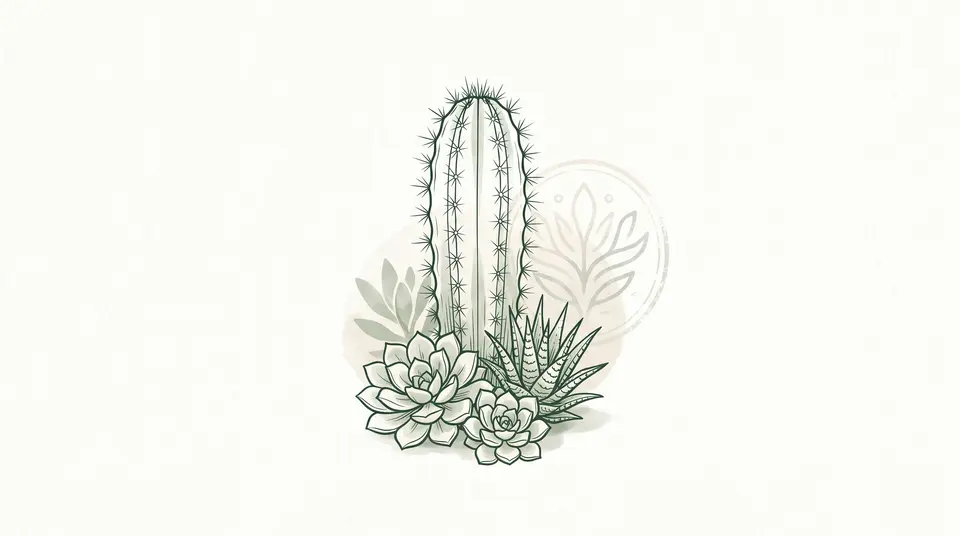 Reference image
Needle-Spined Hedgehog Cactus
Echinocactus raphidocentrus is a rare and highly sought-after cactus species belonging to the Cactaceae family. Characterized by its globose to shortly cylindrical stem and dense, rigid spination, this species poses an exciting challenge for succulent collectors due to its strict watering requirements and susceptibility to root rot 1.
First described in the 19th century, this taxon has been historically linked to both Echinomastus and Sclerocactus genera due to intermediate morphological features 2. Its specific epithet, raphidocentrus, translates to 'needle-centered', referencing the needle-like quality of its central spines. Contemporary databases often treat it within evolutionary clades of desert cacti requiring refined dryland taxonomy.
The natural range of this species spans the arid semi-desert regions of North America. It is typically found growing on limestone hills, rocky outcrops, and alluvial fans where organic material is extremely scarce 1. These harsh environments receive intense solar radiation and experience significant diurnal temperature fluctuations.
The solitary stem is pale green to grayish-green, protected by a dense cage of radial and central spines that emerge from prominent spiraled ribs. The spines range in color from straw-yellow to weathered gray. In late spring, bell-shaped flowers in shades of pink, yellow, or magenta emerge from the apex, followed by dry, scaly seed pods 2.
In cultivation, a strictly mineral-based substrate with exceptional drainage is mandatory. The species is highly susceptible to excess moisture; therefore, watering should only occur during the active spring and summer growing season when the soil is completely dry. A dry, cool winter dormancy is critical for survival 1.
The most prevalent mistake is using standard commercial potting soil that contains peat or organic compost, which retains moisture around the fragile root system and triggers rapid fungal rot 2.
Requires full sun, ideally a south-facing window or greenhouse with at least 6 hours of direct sunlight.
Water strictly on a soak-and-dry method during spring and summer; keep 100% dry in winter.
Highly porous, pure mineral mix consisting of pumice, lava rock, and coarse grit.
Features sharp, rigid spines. Non-toxic to pets, but keep out of reach due to physical hazard.
Highly sensitive to moisture and root rot; recommended for experienced cactus collectors.
Native to the dry limestone slopes and rocky flats of the Chihuahuan and Sonoran deserts, thriving in mineral-rich, low-organic soils.
