
Light
Full Sun
Requires full sun or very bright indirect light for healthy spine growth and flowers.
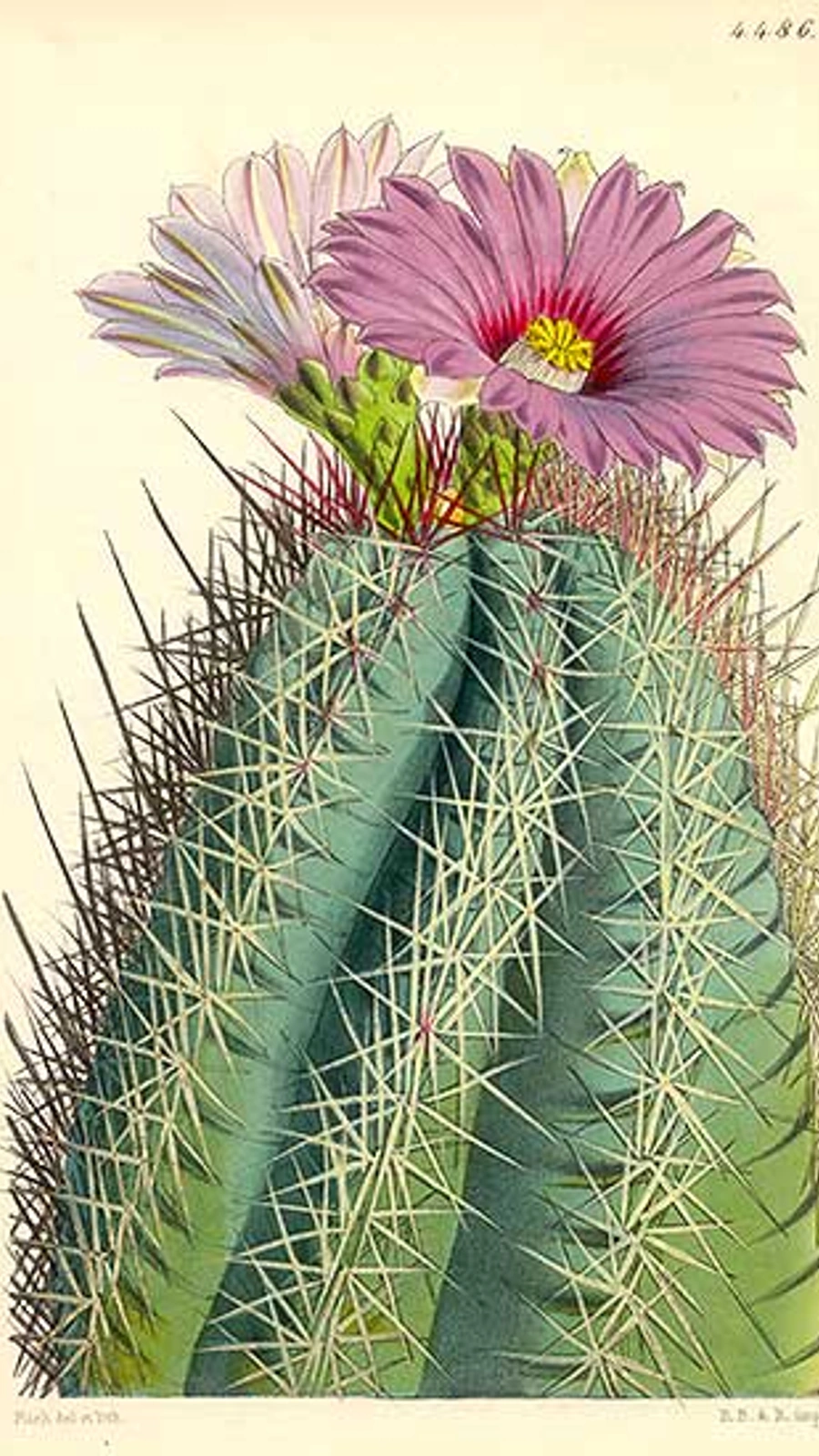 Reference image
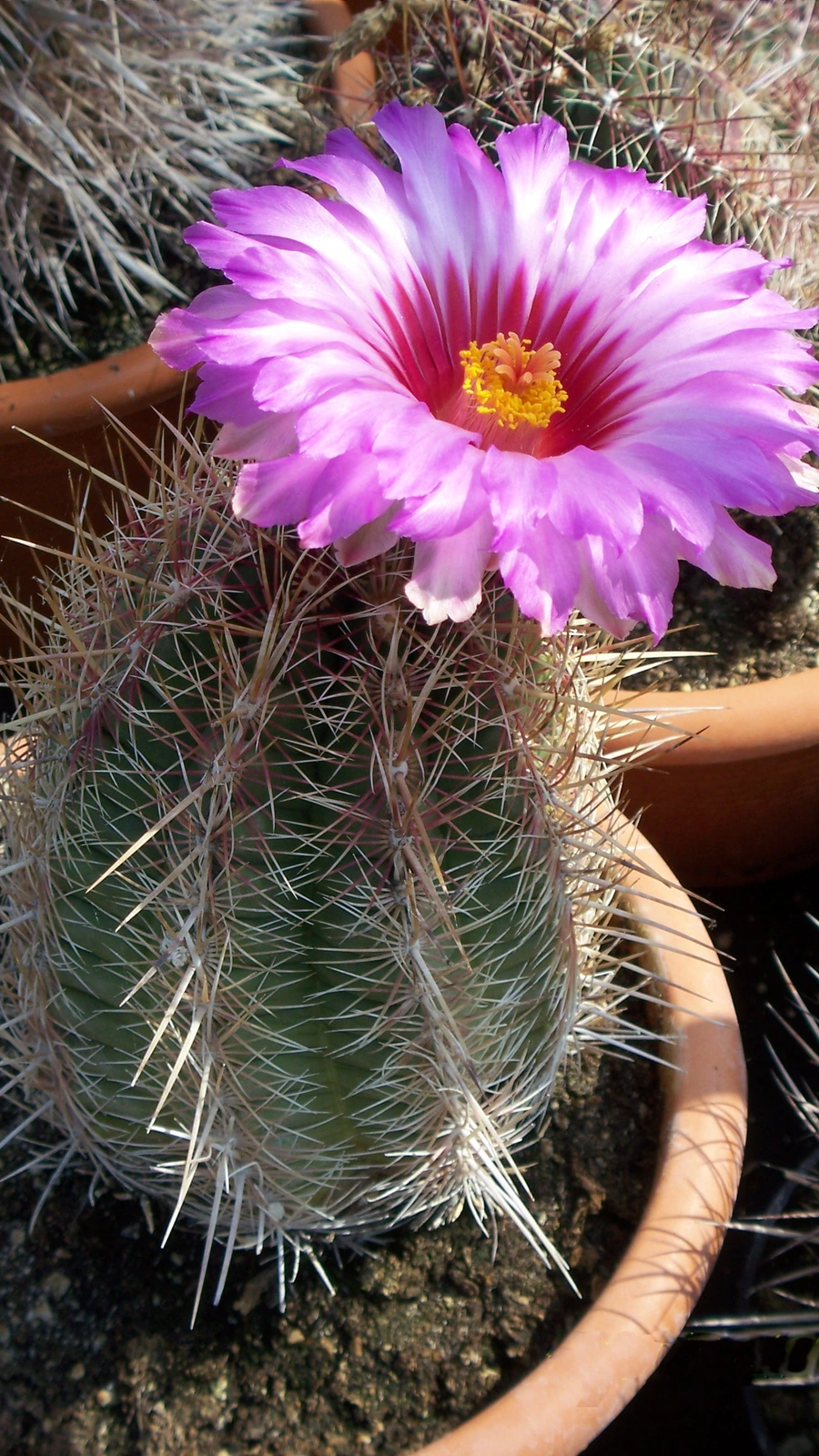 Reference image
Red-Eyed Cactus
Echinocactus rhodophthalmus is a striking, globose to cylindrical cactus known for its beautiful bicolored flowers. Historically described under Echinocactus, modern taxonomy generally places this taxon as a synonym or variety of Thelocactus bicolor 1.
First described by Sir William Jackson Hooker in 1845, the specific epithet rhodophthalmus translates from Greek as 'rose-eyed,' highlighting the brilliant magenta-pink throat of its large flowers 2. It belongs to the tribe Cacteae within the family Cactaceae.
This species is native to the arid Chihuahuan Desert of northern Mexico and parts of southern Texas. It thrives on rocky, limestone-rich slopes, desert scrublands, and alluvial plains, enduring long periods of intense direct sunlight and drought 1.
The stem is solitary or slowly clustering, olive-green, with pronounced ribs and dense clusters of strong, colorful spines that range from yellow to deep reddish-brown. The crown of the plant produces magnificent, funnel-shaped flowers up to 8 cm in diameter, featuring a vibrant magenta coloration with a darker reddish core.
In cultivation, it requires maximum sunlight to develop its dense spine cover and to trigger blooming 2. It requires extremely well-draining mineral soil with minimal organic matter. Water thoroughly during the hot summer months only when the substrate is completely dry, and maintain a strict dry period during winter.
The most frequent cause of failure is root rot from overwatering or poorly draining soil. Insufficient light during the growing season will lead to pale, stretched stems (etiolation) and a lack of flowering.
Requires full sun or very bright indirect light for healthy spine growth and flowers.
Water thoroughly in summer only when soil is completely dry. Keep dry in winter.
Highly porous, grit-based mineral soil mix with excellent drainage.
Non-toxic to pets, but has sharp, stiff spines. Keep out of reach of children and pets.
Very easy for beginners if overwatering is avoided and adequate light is provided.
Native to the stony, lime-rich hillsides of the Chihuahuan Desert, where it grows in full sun exposures.
