
Light
Full Sun
Requires at least 6 hours of direct hot sun daily. Poor light leads to weak, stretched growth.
 Reference image
 Reference image
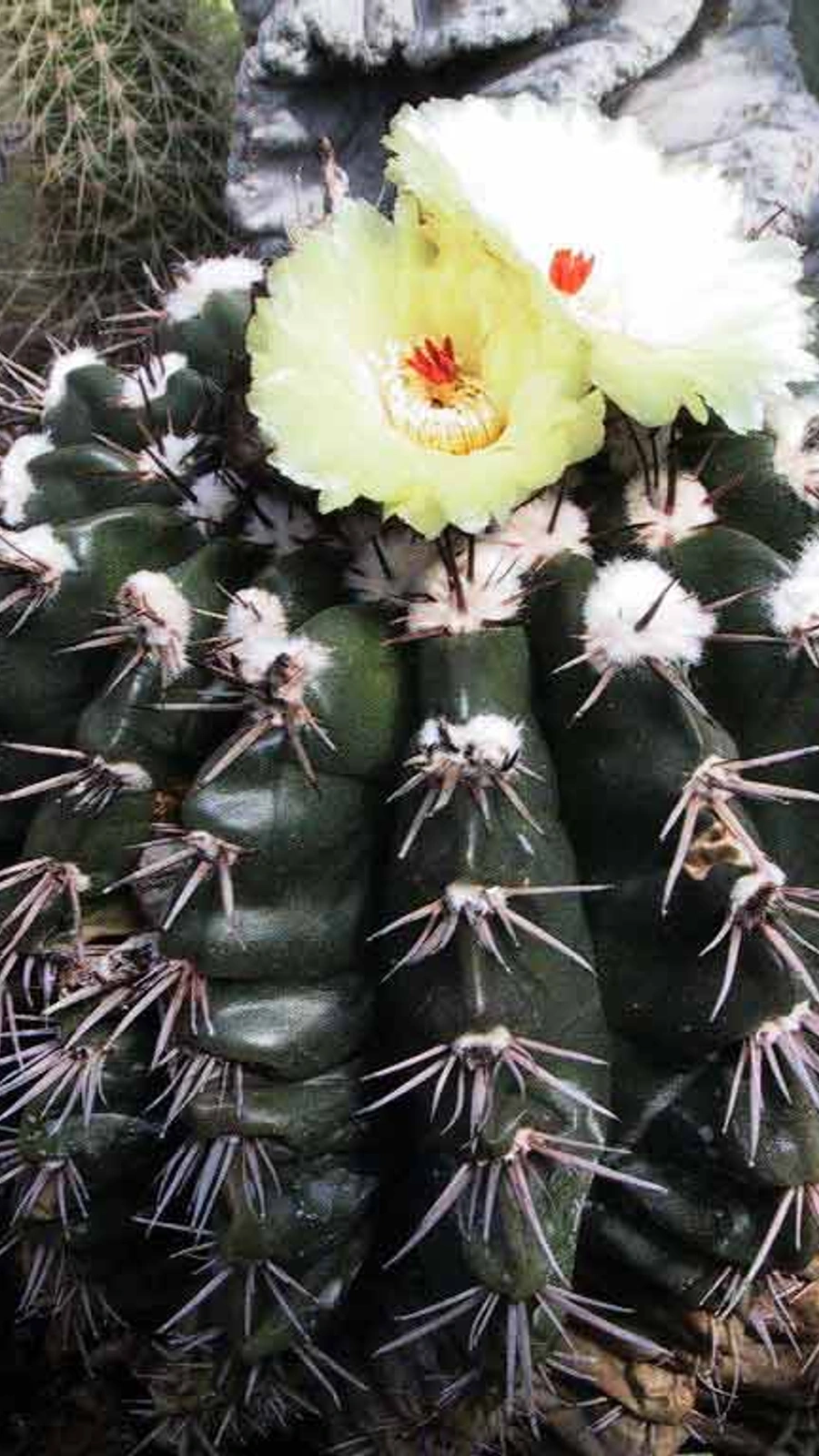
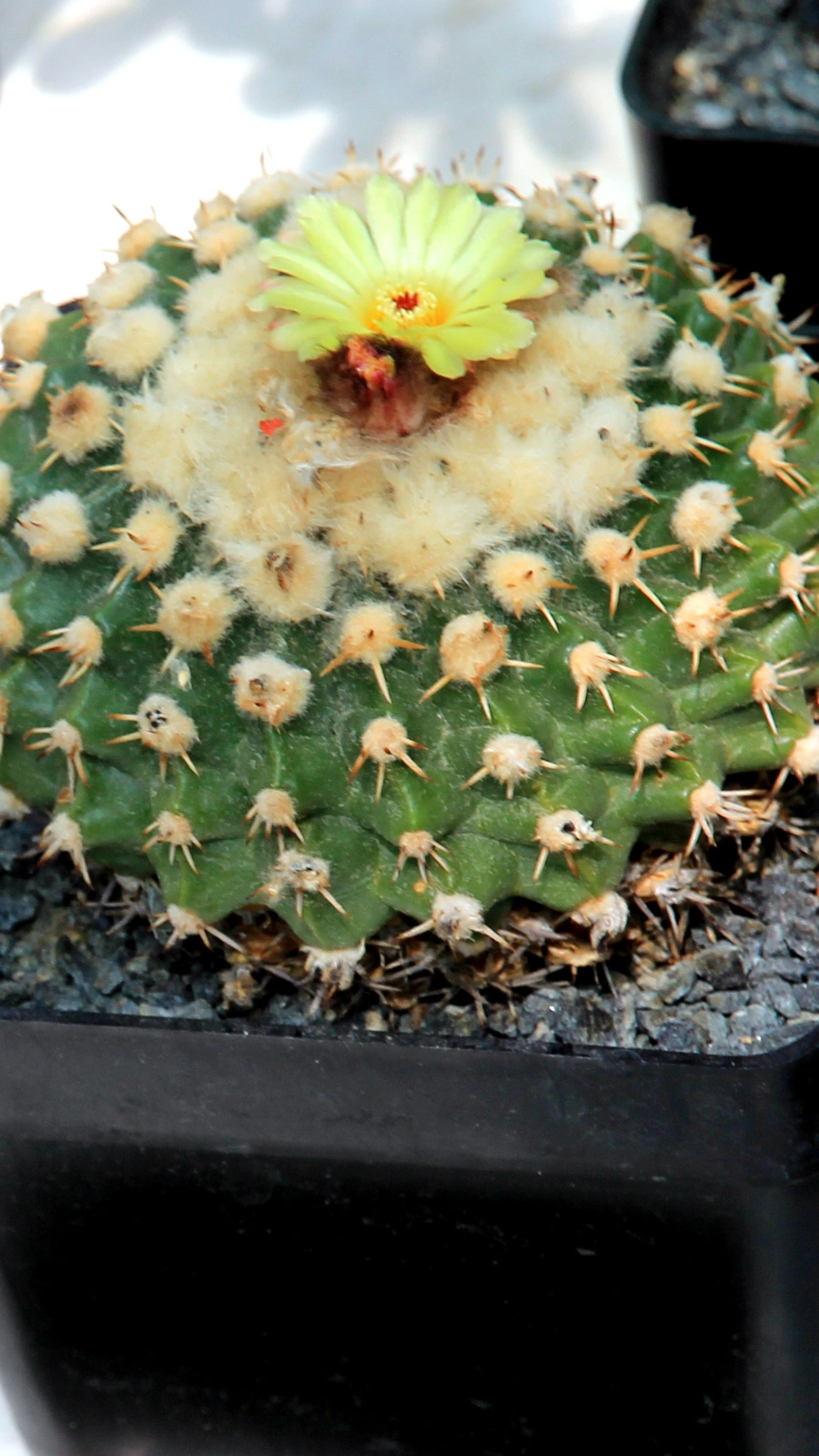
Sessile-flowered Barrel Cactus
Echinocactus sessiliflorus is a slow-growing, majestic globose-to-cylindrical cactus in the family Cactaceae. Modern taxonomists generally class this taxon as a synonym or local form of the widespread Echinocactus platyacanthus 1. It is highly prized for its massive ribbed stem, stout spines, and woolly apex.
Originally described by Sir William Jackson Hooker, the specific epithet "sessiliflorus" derives from Latin, meaning "sessile-flowered" 2. This refers to the characteristic yellow flowers that emerge directly from the woolly crown of the cactus without a distinct pedicel.
This species is native to the arid and semi-arid high plateaus of Mexico, particularly within the Chihuahuan Desert 1. It thrives on limestone slopes, rocky cliffs, and dry alluvial plains, well-adapted to extreme solar radiation and drastic diurnal temperature shifts.
Spherical in its youth, it gradually matures into a stout, column-like specimen. The stem features prominent, sharp vertical ribs lined with large woolly areoles. These areoles bear robust, rigid spines. During summer, sessile, bright yellow flowers emerge from the densely felted crown.
Cultivation requires an extremely porous, mineral-based substrate with excellent drainage 3. It demands full sun to maintain its compact, heavily-spined form. Watering must be generous but infrequent during the growing season, keeping the soil completely dry in winter.
Overwatering and insufficient sunlight are the most common issues. Poor drainage quickly triggers root and stem rot. Lack of light causes etiolation, where the cactus loses its compact globose shape and stretches weakly toward the light source.
Requires at least 6 hours of direct hot sun daily. Poor light leads to weak, stretched growth.
Allow the substrate to dry 100% between waterings. Keep dry during winter dormancy.
Use a low-organic, mineral-heavy substrate with plenty of pumice, grit, and sand.
Non-toxic, but the extremely rigid, sharp spines pose a physical hazard to pets and children.
Low-maintenance but demands strict watering discipline to avoid fungal rot.
Found natively across the high-altitude arid plateaus and limestone slopes of central and northern Mexico, deeply embedded within the Chihuahuan desert biome.
