
Light
Full Sun
Requires at least 6 to 8 hours of direct, unfiltered sunlight daily.
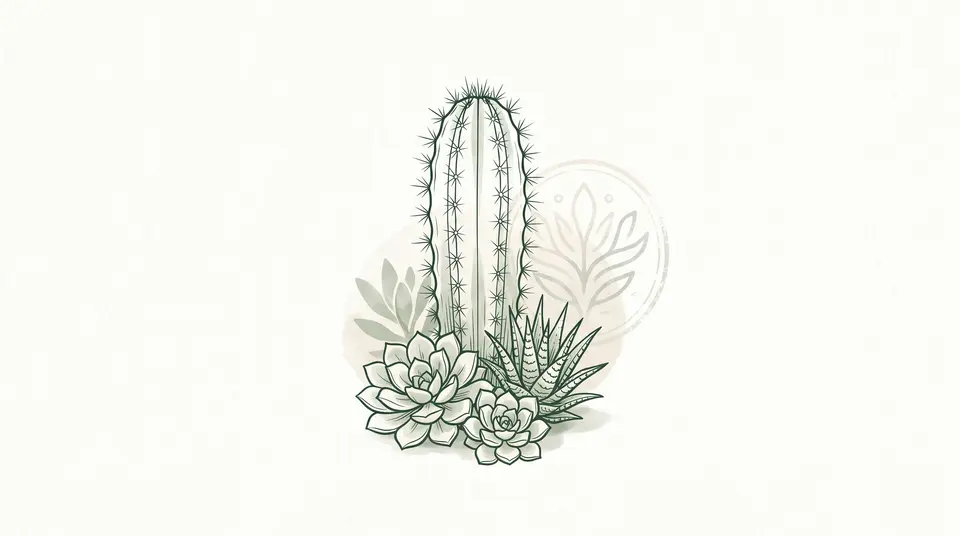 Reference image
Ursel Cactus
Echinocactus urselianus is an intriguing and relatively rare cactus species belonging to the genus Echinocactus within the Cactaceae family. Known for its globose growth habit and robust spine structure, this species is highly prized among succulent and cactus collectors 1. It is characterized by slow growth and excellent drought tolerance.
The species Echinocactus urselianus has sometimes faced taxonomic debates, with some experts grouping it with other globose South American cacti, while others maintain its distinct species status 2. The specific epithet 'urselianus' likely honors an early botanical collector or location connected with its discovery.
Native to South America, particularly dry rocky regions and pampa biomes in countries like Brazil and Uruguay, it thrives in stony, highly mineral soils 1. These habitats are characterized by strong solar radiation and rapid water drainage 2.
This cactus features a globose stem that may become slightly columnar with extreme age. It possesses deep, well-defined ribs lined with woolly gray or yellowish areoles. The spines are strong, rigid, and slightly curved, giving the plant a formidable defensive shield. Pale yellow flowers emerge from the woolly crown during the peak growing season 1.
Growing this species successfully requires replicates of its dry habitat. It demands maximum sunlight and a gritty, inorganic soil mix consisting primarily of pumice, lava rock, and coarse sand. Water should only be applied when the substrate is thoroughly dry.
The most prevalent issue is root rot caused by overwatering or compacted soil. Additionally, insufficient sunlight leads to etiolation, where the cactus loses its tight globose form and stretches towards light sources.
Requires at least 6 to 8 hours of direct, unfiltered sunlight daily.
Water every 14 days in summer, and reduce to once every 45 days in winter.
Highly porous, mineral-based soil containing pumice, gravel, and sand.
Features sharp, sturdy spines that can cause puncture wounds. Keep away from pets.
Moderate difficulty; sensitive to moisture but highly drought-tolerant.
Hailing from the rocky grasslands and dry pampas of South America, this cactus has adapted to survive in stony environments with poor organic matter and prolonged dry spells.
