
Light
Direct Sun
Requires full, direct sun to maintain its dense gray spine color and compact structural growth.
 Reference image
 Reference image
Ashy Hedgehog Cactus
Echinocereus canus is a rare and highly sought-after cactus species belonging to the family Cactaceae, characterized by its extremely dense spine cover and compact habit 1.
The genus name Echinocereus is derived from the Greek echinos, meaning hedgehog, and the Latin cereus, meaning wax candle. The specific epithet canus translates to 'ash-colored' or 'grayish-white' in Latin, directly referring to the characteristic dense shroud of pale spines covering the plant 2.
This species is endemic to West Texas in the South-Central USA, particularly restricted to the Solitario region 1. It thrives in arid desert shrublands, growing on rocky limestone slopes under harsh, sun-drenched conditions.
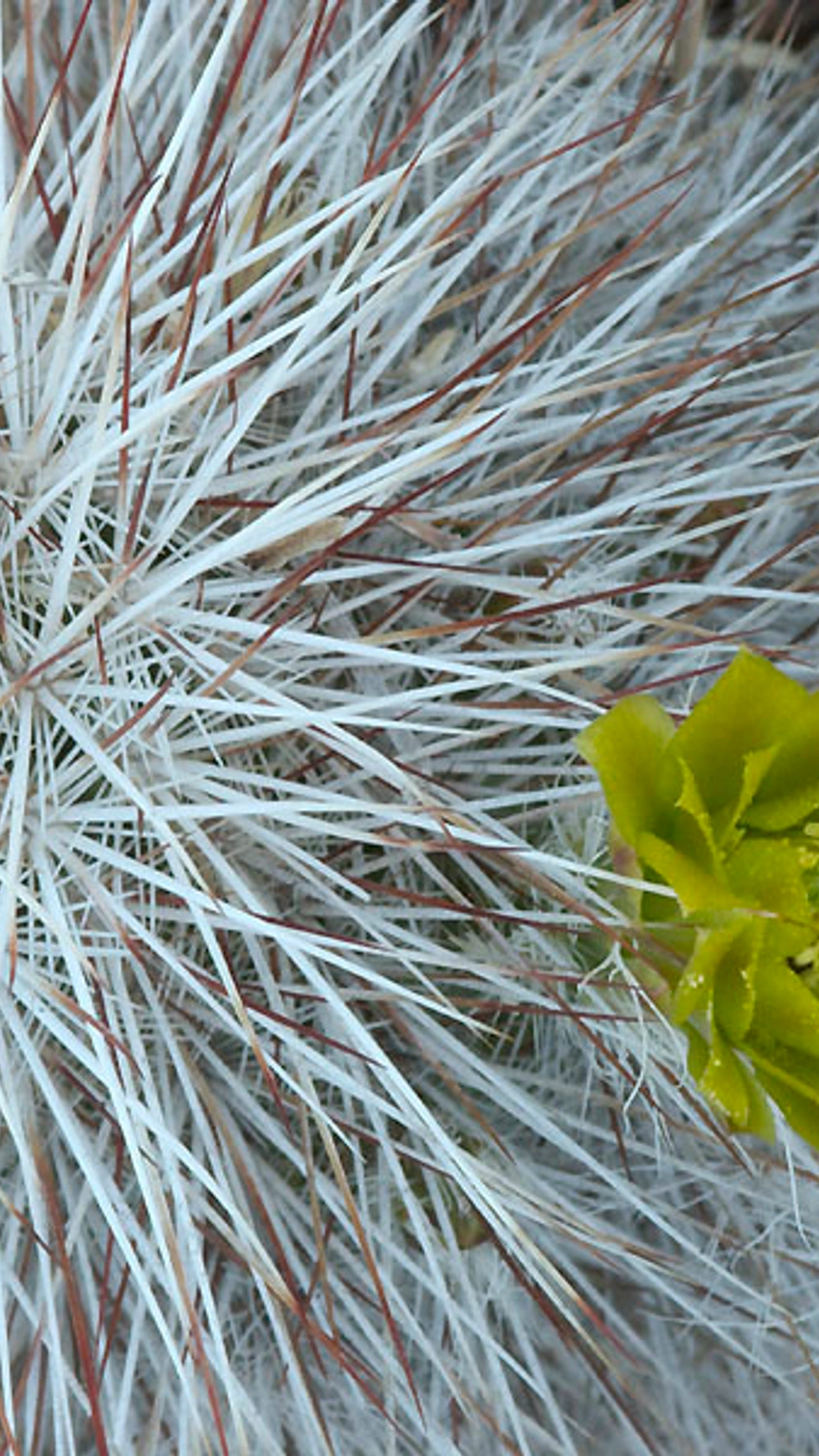
It features small, cylindrical to globose stems that can be solitary or cluster from the base. The stem is tightly wrapped in heavily appressed radial spines of chalky-white, gray, or pale pinkish-brown hues. In late spring, beautiful yellowish-green flowers emerge from the crown, providing a brilliant contrast.
Echinocereus canus demands full sun and excellent air circulation. The potting medium must be purely mineral and dry out quickly. Water moderately during the hot growing season and keep completely dry during the cold winter dormancy 2.
The primary mistake is overwatering or using water-retaining soils. Lacking winter chill and dryness will prevent flowering and can trigger root rot.
Requires full, direct sun to maintain its dense gray spine color and compact structural growth.
Water only when the substrate is fully bone-dry, and keep completely dry throughout winter.
Use a mineral-rich substrate containing plenty of pumice, grit, and very little organic soil.
Non-toxic, but the extremely dense and sharp spines pose a physical hazard to pets and children.
Moderately easy for growers who can respect the strict winter dry season.
Endemic to the arid limestone outcrops of the Solitario geological formation in West Texas, growing in barren desert landscapes.
