
Light
Direct Sun
Requires full sun or very bright indirect light. Intense sunlight is necessary for robust spine development and flowering.
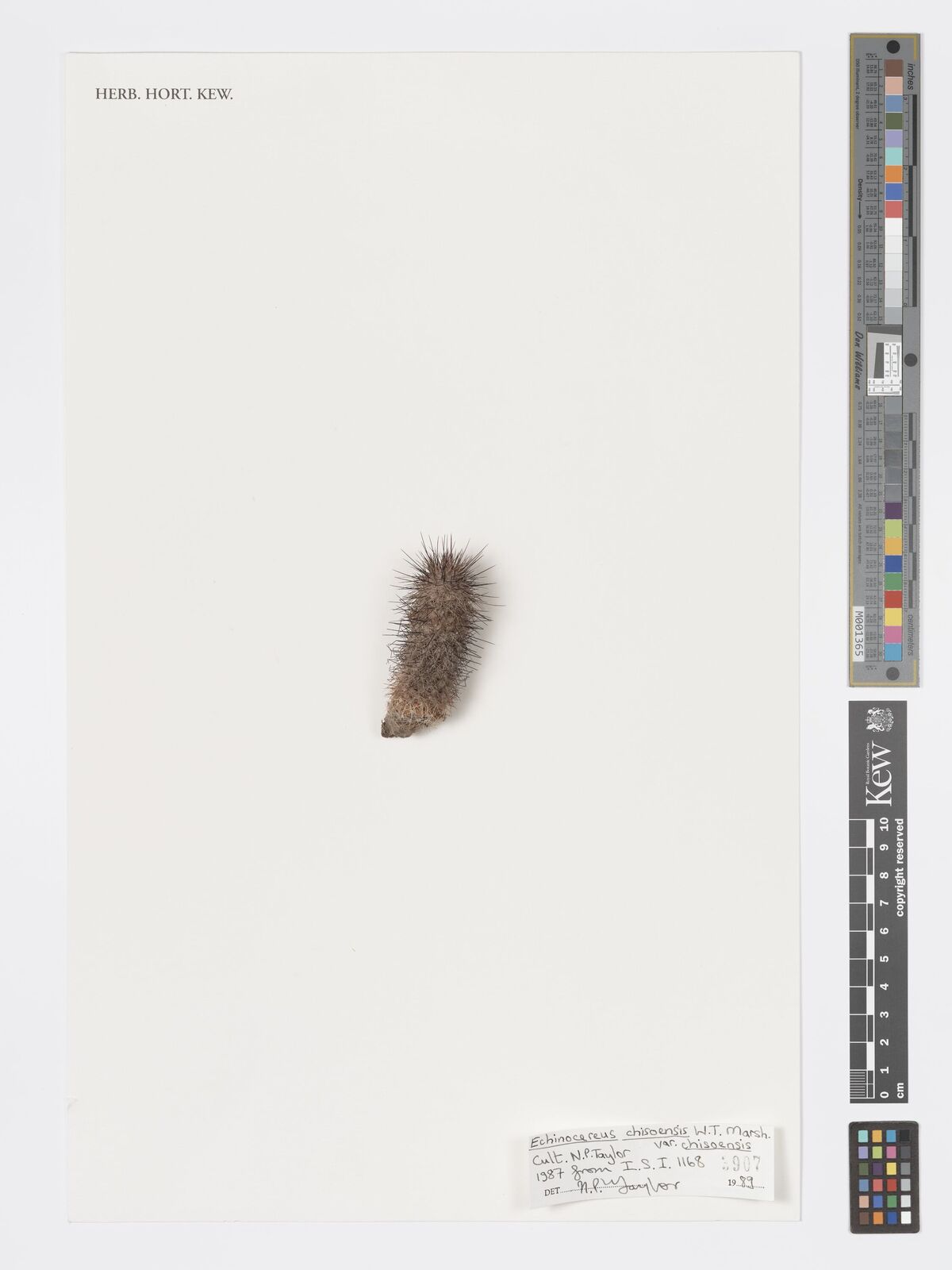 Reference image
Chisos Mountain Hedgehog Cactus
Echinocereus chisoensis, commonly known as the Chisos Mountain hedgehog cactus, is a rare and threatened succulent species belonging to the Cactaceae family. Characterized by its slender stems, delicate spination, and stunning magenta blossoms, it is a highly sought-after specimen for specialized cactus collectors 1.
The species was first described in the mid-20th century by the American botanist W. Taylor Marshall. The specific epithet chisoensis directly refers to its type locality in the Chisos Mountains of Texas 2. The genus name Echinocereus combines the Greek word for hedgehog (echinos) with the Latin term for a wax candle (cereus), referencing its spiny, columnar growth.
This species is narrowly endemic to the Chihuahuan Desert, specifically found in the Big Bend National Park region of West Texas, USA, and adjacent areas in Coahuila and Chihuahua, Mexico 3. It typically inhabits alluvial flats, limestone gravel slopes, and desert shrublands under the protective canopy of nurse plants.
The stems of Echinocereus chisoensis are cylindrical, grayish-green, and usually solitary or clustering sparsely from the base. They feature 13 to 16 low, tuberculate ribs. The radial spines are needle-like, spreading outwards. In spring, the plant produces large, funnelform flowers that are vibrant pink to magenta with a distinct white-green throat 2.
In cultivation, it requires a very bright position with plenty of direct sunlight to maintain its compact growth and produce flowers. A highly porous, strictly mineral substrate is essential. Water should be applied thoroughly during the active growing season, but only when the potting medium has dried out completely 3.
The most prevalent error is utilizing organic-rich, heavy soils that retain moisture. Combined with poor ventilation or winter watering, this leads to irreversible root rot.
Requires full sun or very bright indirect light. Intense sunlight is necessary for robust spine development and flowering.
Water thoroughly in summer only when soil is completely dry. Keep bone-dry during the winter dormancy.
Requires an extremely fast-draining, mineral-only grit mix. Avoid standard commercial potting soils.
Spines are sharp and needle-like. Non-toxic to pets, but keep out of reach to avoid physical injury.
Moderate difficulty. Requires strict watering discipline, making it more suited for intermediate growers.
Native to the unique limestone gravel habitats of the Chihuahuan Desert, spanning the Big Bend region of Texas and the dry shrublands of Coahuila and Chihuahua in Mexico.
