
Light
Full Sun
Requires at least 6 hours of direct sunlight daily; best suited for south-facing windows or outdoor patios.
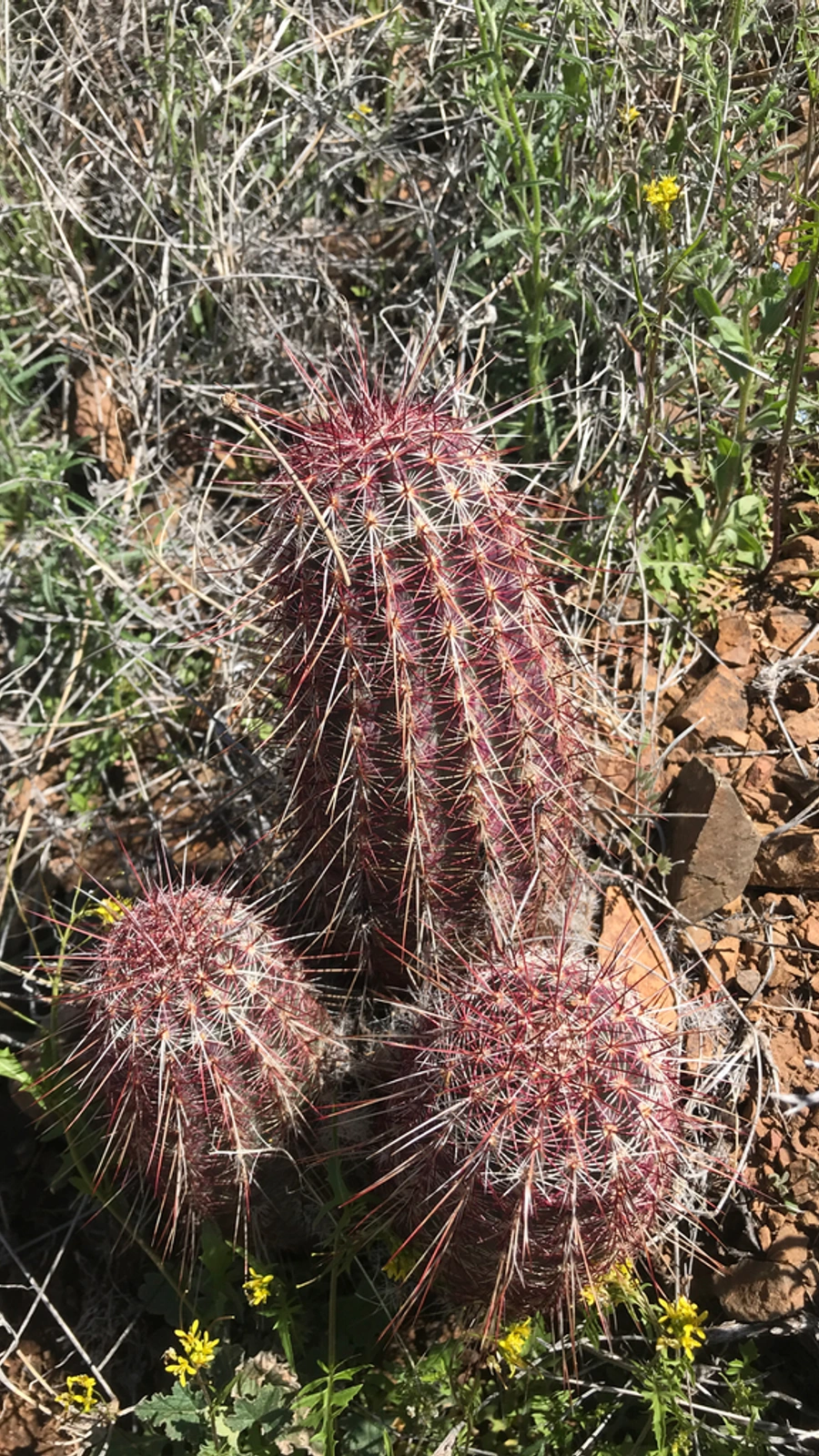 Reference image
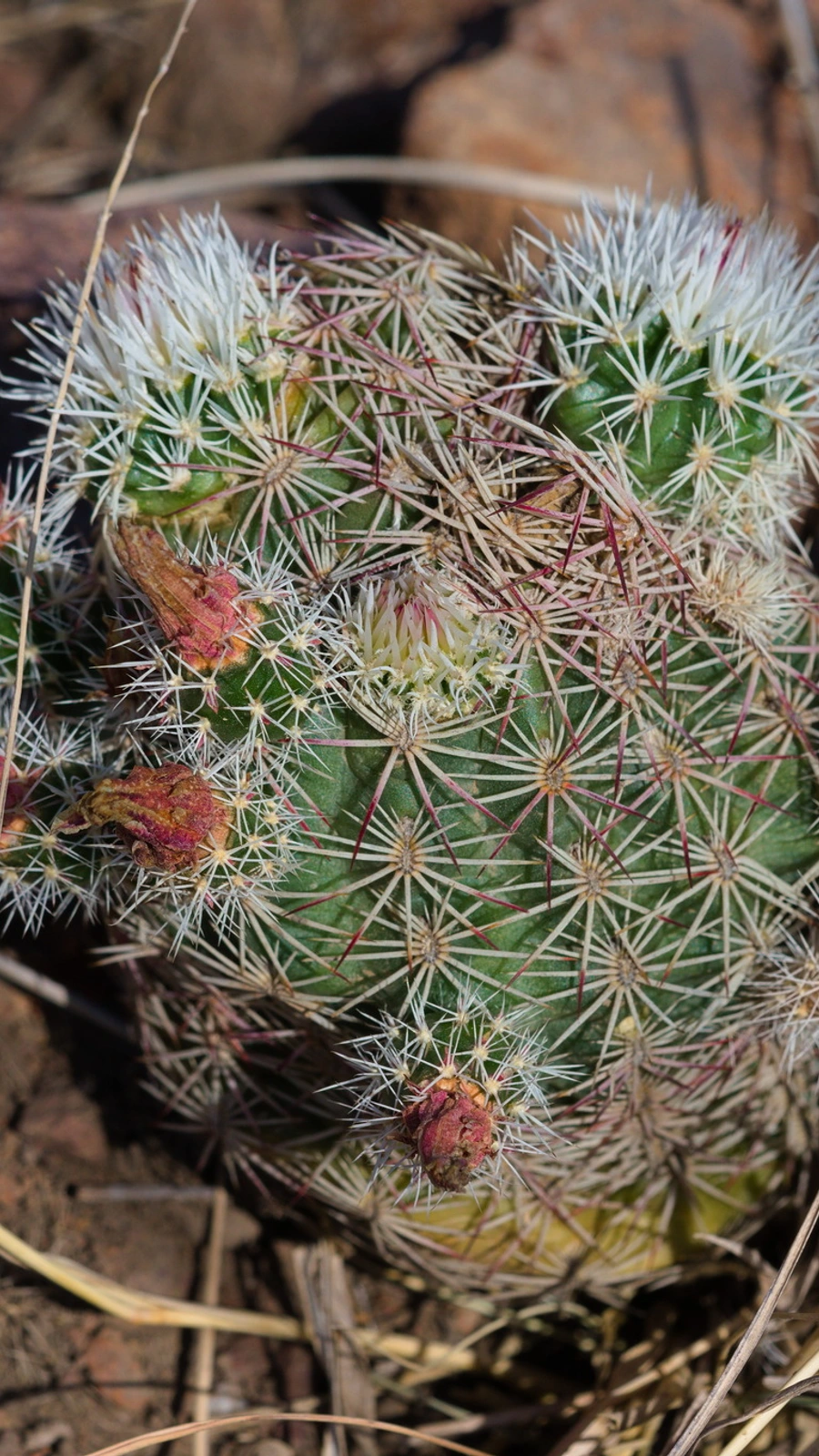 Reference image
Green-flowered Hedgehog Cactus
Echinocereus chloranthus is a small to medium-sized, cylindrical, perennial succulent cactus belonging to the family Cactaceae 1. Commonly referred to as the "green-flowered hedgehog cactus," it is widely appreciated by collectors for its dense, colorful spination and unique chartreuse or brownish-green blossoms.
Originally described by George Engelmann, the species belongs to the diverse genus Echinocereus 2. The specific epithet "chloranthus" is derived from the Greek words "chloros" (green) and "anthos" (flower), referencing its distinctive bloom color. Taxonomically, it is closely linked to and sometimes classified as a subspecies of Echinocereus viridiflorus 1.
Native to Southwestern United States (specifically Texas and New Mexico) and Northern Mexico, this species thrives in arid environments 2. It is commonly found on limestone hills, gravelly slopes, and dry shrublands at elevations ranging from 1,000 to 2,400 meters above sea level.
The stems are typically solitary or sparsely branched, cylindrical, reaching 7-25 cm in height. The entire stem is densely covered with pectinate spines that form beautiful bands of white, yellow, red, or brown. In spring, it produces small, funnelform flowers from the sides of the stem, exhibiting a unique translucent yellowish-green to bronze hue 1.
This species demands full sun and excellent air movement. It is exceptionally cold-hardy, tolerating temperatures down to -15°C (5°F) if kept completely dry during the winter months. Grow in highly porous, strictly mineral soil and water only when the growing medium has fully dried out.
The most prevalent issues are etiolation (stretching) due to insufficient light and root rot caused by overwatering. Watering during the winter dormancy period is almost always fatal to this species.
Requires at least 6 hours of direct sunlight daily; best suited for south-facing windows or outdoor patios.
Water thoroughly only when the soil is bone-dry in spring and summer. Keep completely dry in winter.
Prefers a highly mineral substrate with low organic content, enriched with pumice, gravel, and limestone.
Non-toxic, but possesses sharp, dense spines that can cause physical injury to pets and humans.
Very easy to maintain, provided its light requirements are met and it is not overwatered.
Naturally distributed across the Chihuahuan desert slopes, thriving on rocky, limestone-rich soils under intense sunlight.
