
Light
Direct Sun
Requires at least 6 hours of direct sunlight daily; a south-facing window is highly recommended.
 Reference image
 Reference image
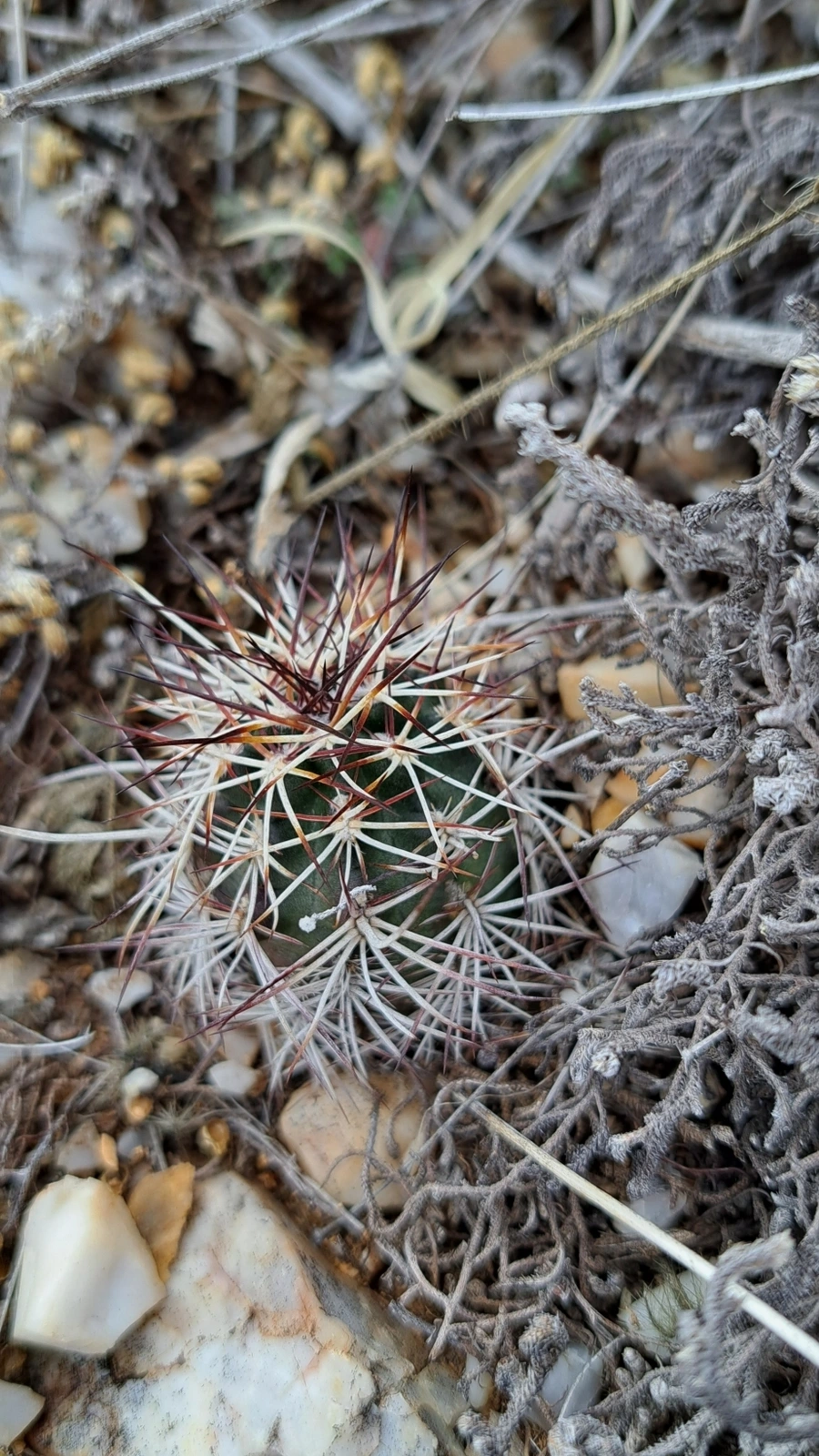
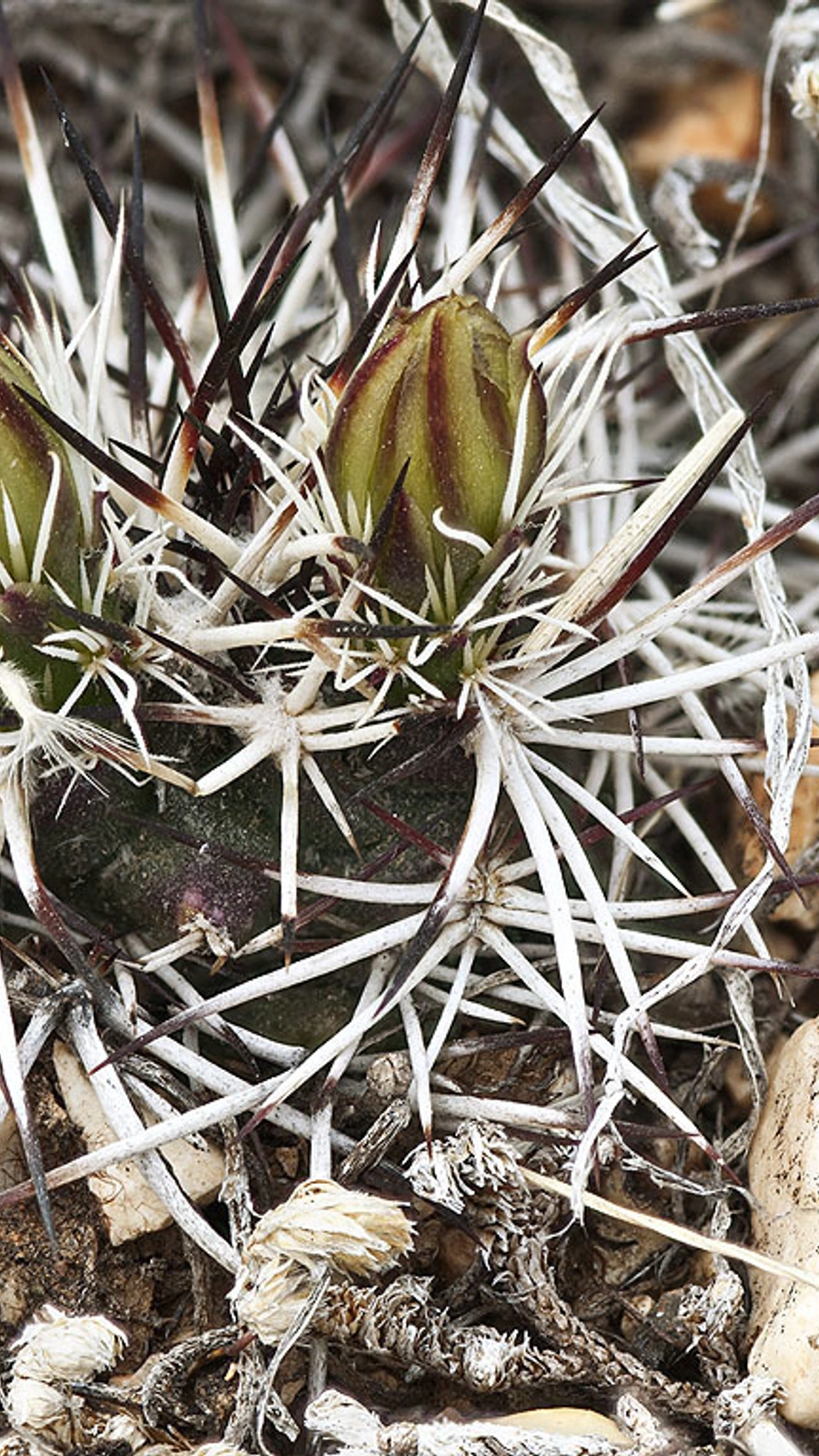
Davis' Hedgehog Cactus
Echinocereus davisii is one of the smallest and most fascinating members of the Cactaceae family. Often growing flush with the ground and virtually invisible in its natural habitat, this miniature cactus is highly prized by collectors 1.
First described in 1940, the species was named after the amateur botanist Albie Davis. While some taxonomists classify it as a variety of the green pitaya (Echinocereus viridiflorus var. davisii), its distinct morphological features and isolated habitat support its standing as a separate species 2.
The species is micro-endemic to Brewster County in Texas, USA. It grows exclusively on novaculite (siliceous sedimentary rock) outcrops and hillsides, thriving in mineral-rich, stony soils under harsh, desert conditions 1.
The globose stem rarely exceeds 2-3 cm in height, making it a true dwarf cactus. It features 6 to 9 ribs bearing small areoles with yellowish-gray radial spines. In early spring, it produces relatively large, fragrant, greenish-yellow flowers that can almost obscure the tiny stem 2.
In cultivation, it requires an extremely porous, mineral-based potting medium. It exhibits remarkable cold tolerance if kept completely dry during the winter. It thrives under direct sunlight with regular, controlled watering during the spring and summer active growth phases.
The most frequent mistake is overwatering or using soil high in organic matter, which inevitably leads to root rot. Neglecting the dry winter dormancy period also prevents the plant from flowering.
Requires at least 6 hours of direct sunlight daily; a south-facing window is highly recommended.
Allow the soil to dry out completely between waterings. Keep absolutely dry throughout the winter.
Requires a gritty, highly porous mineral substrate rich in quartz and pumice.
Non-toxic to pets and humans, but handle with care due to its fine, sharp spines.
Classified as moderate due to its strict watering requirements and susceptibility to rot.
Endemic to a very restricted area in Brewster County, Texas, where it adapts to arid novaculite formations in dry desert grasslands.
