
Light
Full Sun
Requires at least 6 hours of direct, intense sunlight daily to maintain its compact form.
 Reference image
Strawberry Hedgehog Cactus
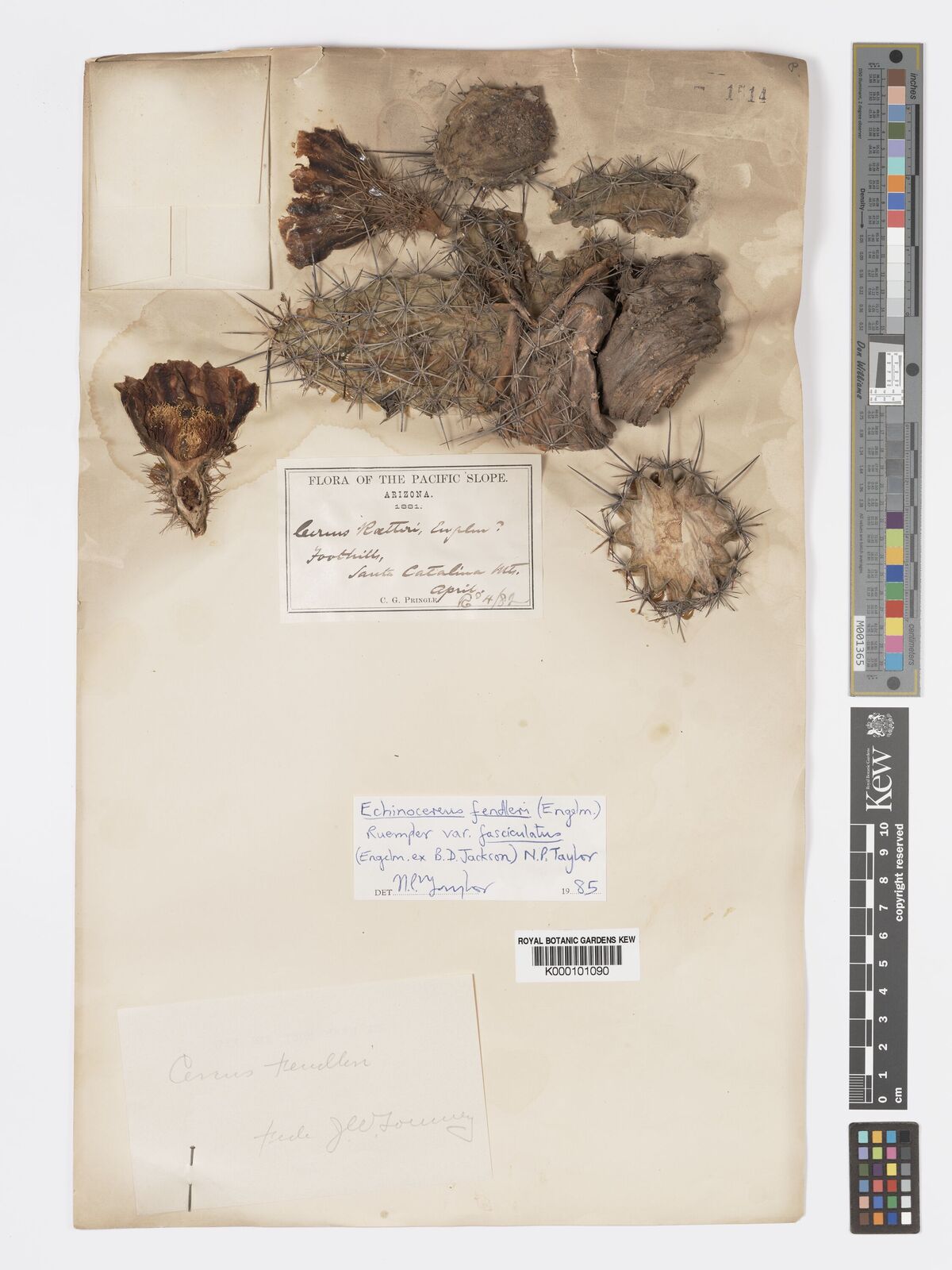
Echinocereus fasciculatus, commonly known as the strawberry hedgehog cactus, is a cold-hardy, clumping succulent subshrub belonging to the Cactaceae family. Highly appreciated for its spectacular magenta blooms and robust, spiny clusters, it represents a classic element of North American desert landscapes 1.
Originally described by George Engelmann, the species is classified under the genus Echinocereus, which refers to the hedgehog-like appearance of the spiny stems. In common parlance, it is referred to as the strawberry hedgehog cactus or pink-flowered hedgehog cactus due to its bright pinkish-red spring flowers 12.
This species is native to the Southwestern United States (primarily Arizona and New Mexico) and Northwestern Mexico. It thrives in desert environments, dry shrublands, alluvial fans, and rocky hillsides, typically at elevations ranging from 1,000 to 1,500 meters 1.
Echinocereus fasciculatus forms loose to dense clumps of 5 to 30 cylindrical stems. Stems are light green to grayish-green, reaching heights of 10 to 30 cm. Each stem has 8 to 18 ribs adorned with clusters of sharp, needle-like spines that vary from straw-colored to dark brown. In late spring, funnel-shaped, vibrant magenta-pink flowers emerge near the stem tips 2.
In cultivation, this cactus requires full sun exposure and extremely gritty, well-draining soil. Watering should be done thoroughly but only when the potting medium has dried out completely. It exhibits excellent frost tolerance when kept entirely dry in winter, surviving temperatures down to -10°C 12.
The most prevalent issue is root rot caused by overwatering or poorly draining soil. Lack of adequate direct sunlight leads to etiolation (stretching) and prevents the plant from producing its signature colorful flowers 2.
Requires at least 6 hours of direct, intense sunlight daily to maintain its compact form.
Water only when the substrate is 100% dry. Keep dry in winter to prevent rot.
Use a specialized mineral-heavy cactus soil mix with high pumice or perlite content.
Equipped with very sharp spines. Place away from high-traffic areas and pets.
Very easy to maintain if provided with bright sun and kept safe from excessive moisture.
Native to the Sonoran and Chihuahuan deserts of Arizona, New Mexico, and Northern Mexico, where it thrives on rocky slopes and dry, gravelly flats.
