
Light
Full Sun
Full, direct sun is ideal; needs at least 6 hours of sunlight daily for vibrant spines.
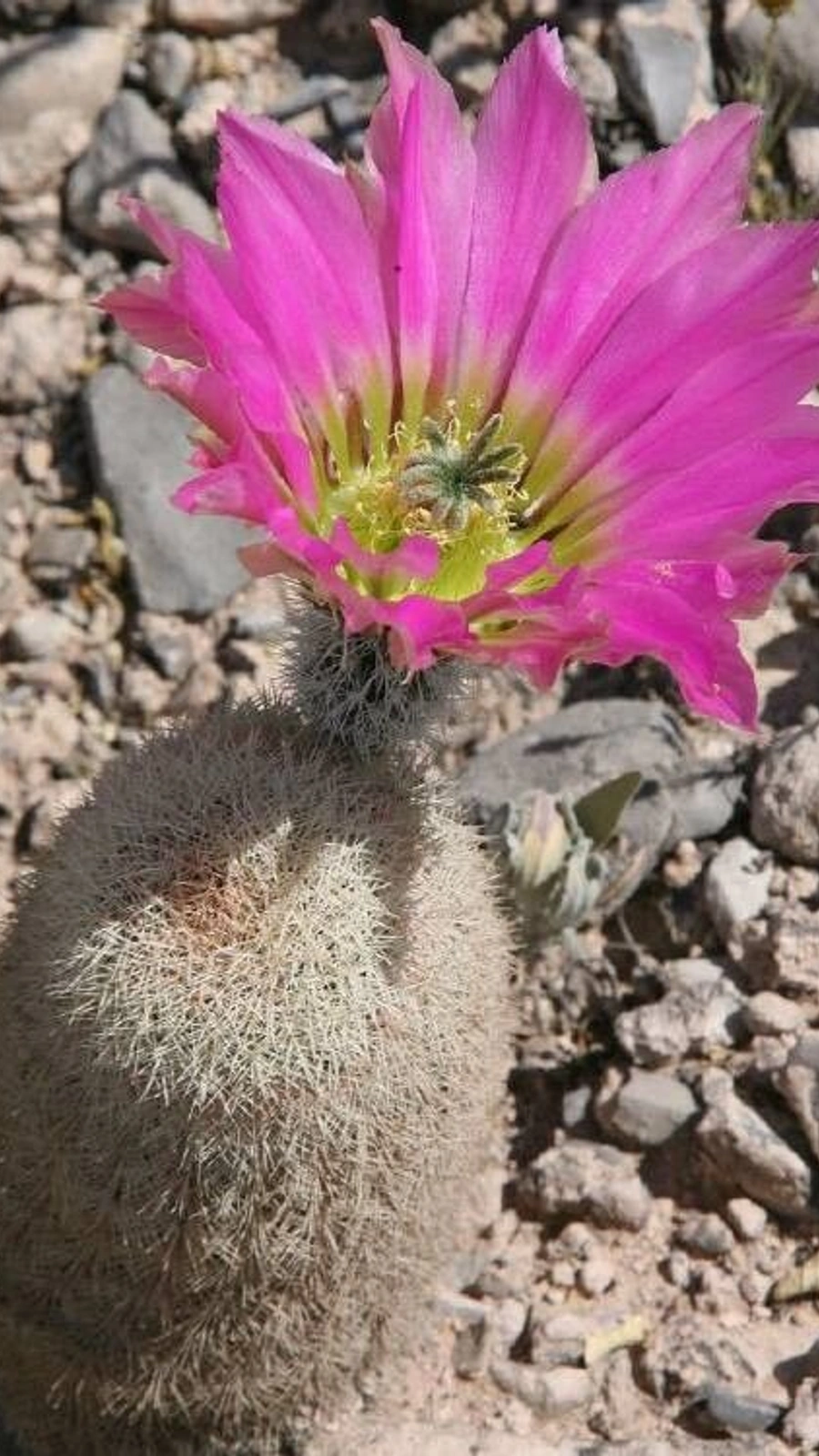 Reference image
Felix's Hedgehog Cactus
Echinocereus felixianus is a prominent succulent subshrub belonging to the Cactaceae (Cactus) family 1. Well-adapted to harsh arid desert environments, it is highly valued among collectors for its stout spination and showy floral displays.
Classified within the genus Echinocereus, its generic name combines the Greek word 'echinos' (hedgehog) with the Latin 'cereus' (wax candle) 2. The specific epithet "felixianus" honors individuals or regional localities tied to its botanical exploration.
This species is native to Mexico, with rich populations spanning across states like Durango, Coahuila, Hidalgo, Aguascalientes, Chihuahua, Tamaulipas, Guanajuato, Nuevo León, and San Luis Potosí 1. It thrives in dry shrublands and desert biomes, typically growing on rocky slopes and limestone-rich soils.
Growing as a succulent subshrub, it features cylindrical stems characterized by well-defined ribs. Spines arise from prominent areoles along the ribs. In late spring and summer, it produces large, funnel-shaped, brightly colored flowers that attract native pollinators 2.
This cactus requires full sun to maintain its compact growth and dense spination. A highly mineral, gritty, and fast-draining potting medium is essential. Water deeply during the active summer growth phase only after the soil has completely dried, and keep dry in winter 1.
The most frequent mistakes are overwatering and utilizing dense, moisture-retentive soils, which rapidly cause root rot. Lack of adequate winter chill combined with damp conditions can also prevent flowering and promote fungal infections.
Full, direct sun is ideal; needs at least 6 hours of sunlight daily for vibrant spines.
Water thoroughly in summer when soil is dry, keep almost completely dry in winter.
Gritty, highly porous cactus soil mixed with coarse sand, pumice, and gravel.
Non-toxic to pets and humans, but sharp spines require careful handling.
Easy; very low-maintenance if not overwatered and given adequate sunlight.
Native to the arid desert regions and dry shrublands of northern and central Mexico, where it grows primarily on rocky limestone slopes.
