
Light
Direct Sun
Thrives in full, direct sun; minimum 6 hours of direct sunlight daily is ideal.
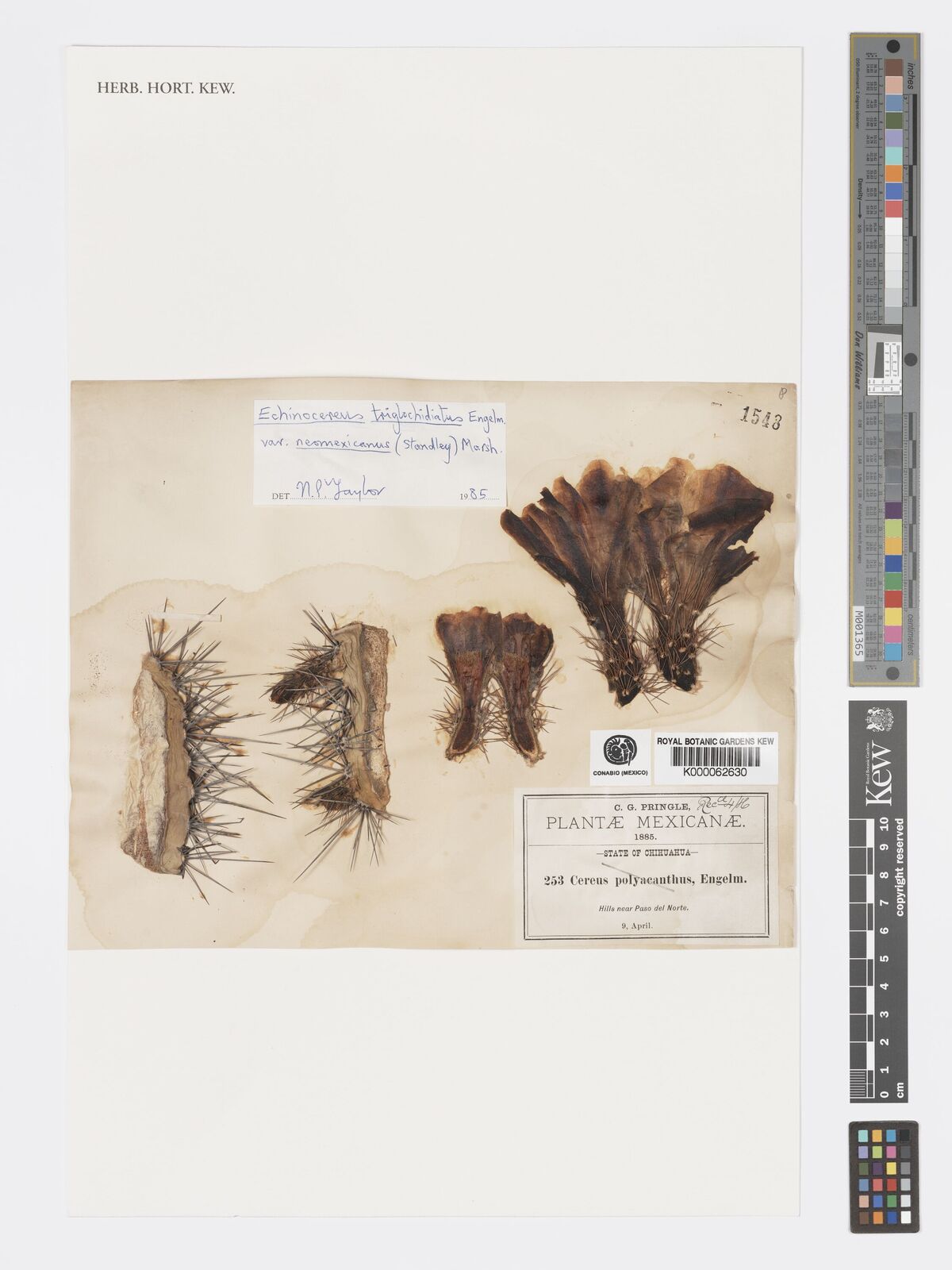 Reference image
New Mexico Hedgehog Cactus
Echinocereus × neomexicanus is a naturally occurring hybrid cactus within the family Cactaceae 1. Renowned for its cylindrical, ribbed stems clad in sharp spines and its brilliant scarlet to orange-red spring blooms, this succulent subshrub is highly valued by collectors for its extreme drought tolerance and cold hardiness.
This taxon represents a natural hybrid, historically identified as a cross between Echinocereus coccineus and Echinocereus viridiflorus (or closely related taxa like E. chloranthus) 2. The "×" symbol in its scientific name denotes its hybrid lineage, while the specific epithet "neomexicanus" refers to its native presence in the New Mexico region.
Its native range spans the south-central United States (specifically New Mexico and Texas) and various northern and central states of Mexico 1. It typically thrives in desert shrublands, rocky slopes, limestone ledges, and dry canyons, often at mid-to-high elevations where it experiences significant temperature fluctuations.
This perennial succulent subshrub forms small clumping mounds over time, branching primarily from the base. The individual stems are cylindrical, pale-to-dark green, and heavily ribbed. The areoles carry dense, rigid, needle-like spines. In spring, it produces funnel-shaped, vibrant reddish-orange flowers that attract pollinators.
In cultivation, it requires an extremely well-draining, mineral-heavy substrate. It demands full sun exposure to maintain its compact growth form and promote flowering. Providing a cool, dry winter dormancy is critical, as cold vernalization triggers the production of flower buds in early spring 2.
The most prevalent issue is overwatering, especially in soil with poor drainage, which rapidly leads to root rot. Keeping the substrate wet during its winter rest is particularly lethal. Insufficient light exposure causes etiolation, where the stems stretch, weaken, and lose their dense spination.
Thrives in full, direct sun; minimum 6 hours of direct sunlight daily is ideal.
Water thoroughly only when the soil is bone-dry in summer; keep completely dry in winter.
Requires an extremely porous mineral mix composed of pumice, perlite, and coarse sand.
Equipped with very sharp, stiff spines that can cause mechanical injury to pets and humans.
Moderate difficulty; requires careful water management and cool winter dormancy.
Native to the rocky canyons, limestone slopes, and high-altitude desert shrublands of New Mexico, Texas, and northern Mexican states where winters are cold and dry.
