
Light
Direct Sun
Requires full direct sun to maintain its dense spine structure and to stimulate flower buds.
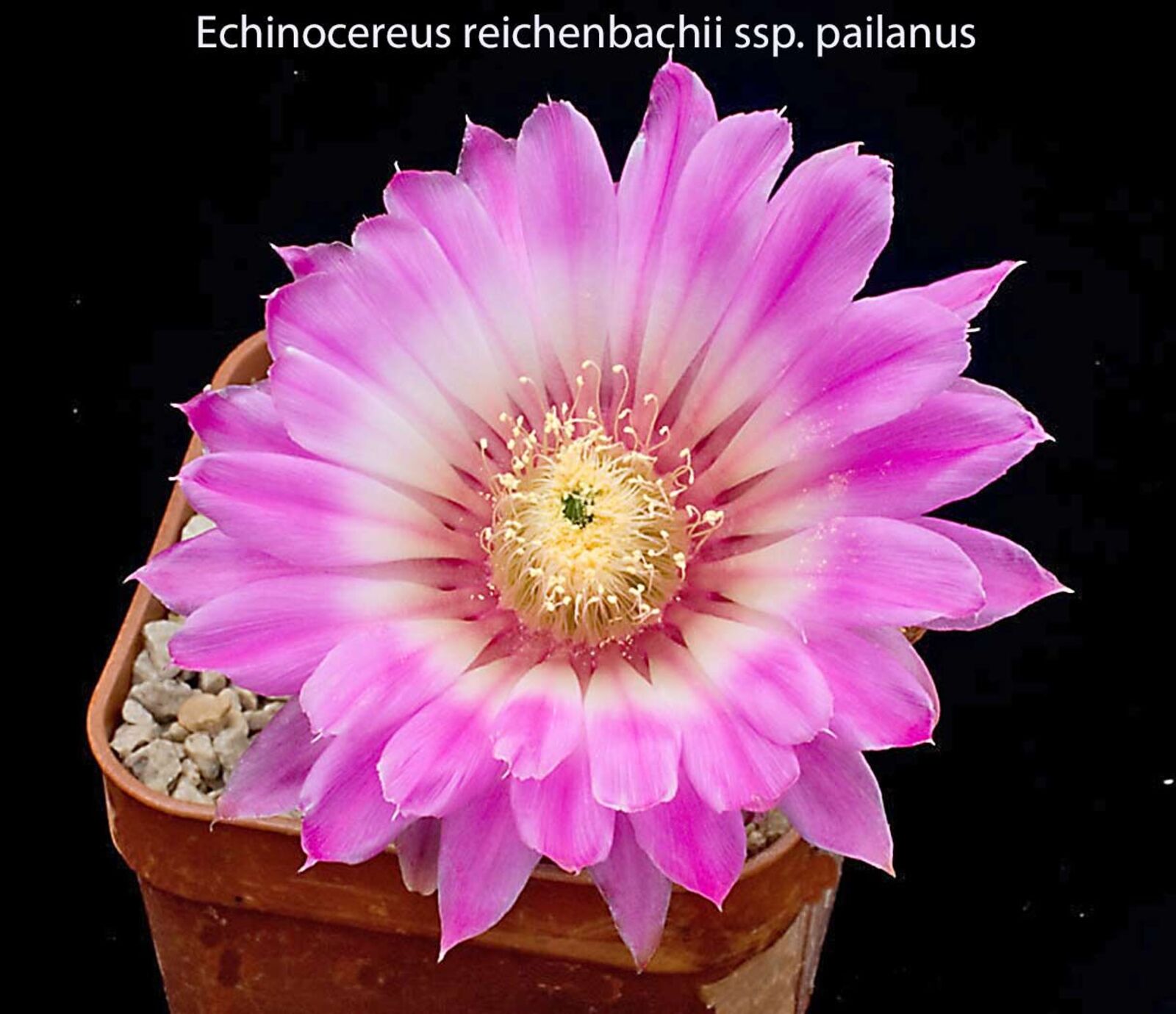 Reference image
Lace Cactus
Echinocereus reichenbachii, commonly known as the Lace Cactus, is a highly cold-tolerant and visually stunning species within the Cactaceae family. It is famous for its intricate, comb-like spination that resembles delicate lace 1.
Originally described by Engelmann, the species epithet honors the German botanist Ludwig Reichenbach. Its common name, Lace Cactus, refers to the neatly arranged, pectinate radial spines that cover the stems in a dense pattern 2.
This cactus is native to the South-Central United States, ranging from Texas, Oklahoma, and Kansas down into Northern Mexico 1. It typically grows on limestone hillsides, gravelly plains, and dry grasslands, showcasing remarkable resilience.
It usually forms single or sparingly branched cylindrical stems, reaching 10 to 25 cm in height. The radial spines are pressed flat against the stem ribs. In late spring, it produces large, showy, magenta-to-pink flowers with a darker, reddish center, which are highly fragrant.
This species thrives in full sun and well-ventilated spaces. It is exceptionally cold-hardy, tolerating temperatures down to -20°C if kept bone dry during winter 2. Water moderately during spring and summer, and provide excellent drainage.
The most prevalent issue is root rot caused by waterlogging or watering during the winter dormancy. Keeping the plant in poorly drained soil or a shaded position will lead to weak, etiolated growth and poor spine development.
Requires full direct sun to maintain its dense spine structure and to stimulate flower buds.
Water thoroughly only when the soil is dry. Keep completely dry throughout winter dormancy.
Requires a gritty, highly porous mineral substrate with low organic matter.
Non-toxic to pets, but the dense, sharp spines can cause skin irritation; handle with care.
Very easy to maintain, especially for outdoor growers in temperate climates due to its hardiness.
Distributed across the dry plains, limestone slopes, and open woodlands of the South-Central United States and northern regions of Mexico, adapting to intense sun and severe winter frosts.
