
Light
Direct Sun
Requires at least 6 hours of direct sunlight daily to prevent stretching and encourage blooming.
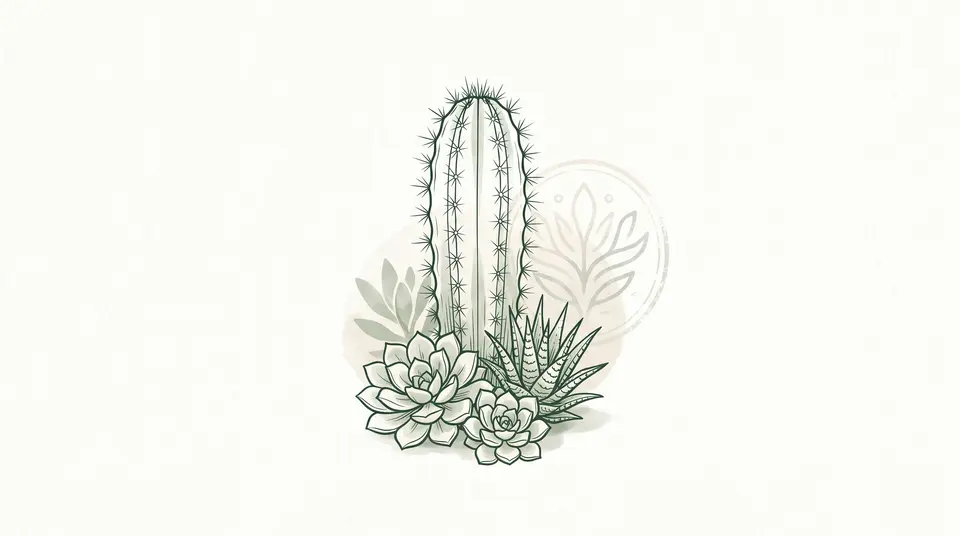 Reference image
Reich's Hedgehog Cactus
Echinocereus reichii is a rare and highly sought-after miniature cactus species belonging to the family Cactaceae. Known for its compact body shape and fine spination, it is a prized specimen among succulent and cactus enthusiasts worldwide 1.
The genus Echinocereus comprises various showy-flowered, spiny cacti native to North America and Mexico. The specific epithet 'reichii' honors Dr. Reich, who contributed significantly to its recognition. In modern taxonomy, it is often studied within the complex of Echinocereus fitchii or Echinocereus reichenbachii, sometimes treated as a distinct subspecies or local variety 2.
This species is native to the arid and semi-arid regions of Northern Mexico. It thrives on limestone hillsides, gravelly slopes, and alluvial plains where the substrate is highly mineralized and exceptionally free-draining. It is well-adapted to hot, dry summers and cool, dry winters 1.
Echinocereus reichii features cylindrical to globose stems that usually grow solitary but may occasionally branch from the base with age. The ribs are prominent, lined with closely spaced areoles that produce delicate, grayish-white radial spines. These dense spines act as a natural sunscreen for the epidermis. In late spring, it produces spectacular, funnel-shaped flowers in shades of pink to deep magenta, often with a darker center 2.
In cultivation, providing maximum sunlight and an ultra-porous potting medium is essential. Direct sun is critical for maintaining its dense, tight spine formation and promoting seasonal blooms. Water should be applied thoroughly only when the soil is completely dry, and kept completely dry during winter dormancy 1.
The most frequent issues include etiolation (stretching due to lack of light) and root rot caused by watering during the winter resting phase or using dense, moisture-retaining soil.
Requires at least 6 hours of direct sunlight daily to prevent stretching and encourage blooming.
Water only when the substrate is bone dry. Avoid any water during the winter months.
Use a highly mineralized soil mix with plenty of pumice, coarse sand, and minimal organic soil.
Features sharp, fine spines. Handle with thick gardening gloves or tweezers. Non-toxic to pets.
Very easy to maintain if you avoid overwatering and provide sufficient sunlight.
Native to the dry, stony habitats of Northern Mexico, specifically found growing in limestone cracks and rocky desert slopes.
